Don’t hit send (yet)


Maybe the truth is that nobody is helping new employees focus their efforts in order to produce better reports or emails. And by better, I mean some of the items that are in this checklist (below). Perhaps, instead, it is the excitement and eagerness to hit the send button too soon.

Let’s walk through 5 things you can do to ensure that your email or your report or slide deck does not suffer from a few preventable ailments and risk being deemed as “not ready yet” for further distribution. Delivering work that is incomplete or incorrect will not lead to being considered for more responsibilities any time soon. Want to move up? Focus on the quality of your work first.

All names spelled correctly

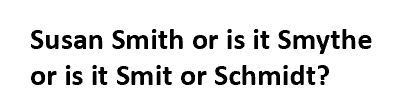
Most people find it annoying to read minutes of meetings or a report which names them but misspells their first or last names. This is completely avoidable these days. With the internet and most people having Linkedin accounts, or in the same company you can look people up on the email system. There is no reason why we should be misspelling people’s names these days. When you do not take the time to double-check, it comes across as callous, lazy, or just not committed to producing quality work.
All dates are correct

Not all countries use the same format for dates. This would be the first point to consider – who will read your email/report? Check (online if needed): how do they write dates in that country? If you have a distribution list including people from multiple countries, consider writing the date out more: 3 Mar 2019 (for example)

The second point is more often a bugbear of mine – dates in the same document contradicting one another. For example: on page 2 of the slide deck it states that the project is completed on 2 Dec of that year, on page 5 it states that the project will run well into the new year and completion is projected to be the end of March of the next year. Which one is correct? If they are both correct – explain the term completion used on slides 2 and 5. Always check the latest version of your reference material or project schedule before you finalize your section on dates. It reflects badly on the creator of a document or slide deck where dates are misaligned and confusing. Check first!

Spelling or grammar errors

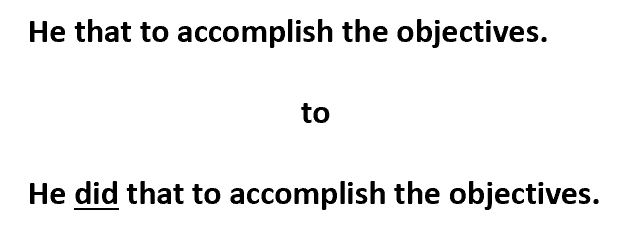
It is very avoidable these days to produce and send documents or slides to others without spelling errors. Use the built-in spell-check in Microsoft suite or a similar feature in other packages used. Some packages will also pick up grammar errors and flag it for you – if you have that feature turned on! Sometimes a missing word is not picked up by built-in checks. Read your own text back to yourself – aloud. Say each word. And make sure the words are not correctly spelled but actually the wrong word for the context. Examples would include: they’re/their/there or hear/here/hair
Use sane fonts

Some companies have branded templates to use for creating reports or slides. If your company does not have rules around branding which include the font colors, types, and sizes to use in company documents and slides, I would go with common sense. This would include – not using all the colors of the rainbow and multiple types of font in a project progress report and not varying the size of the font in every bullet-point you use. [Of course, if you are in the creative world and these variations are a design part of your project (as would be normal in advertising or other creative endeavors) this message is not for you].

Make it easier

Is there a clear structure to your work? Think about the message you want to communicate. What are the main points, what are the next level of detailed points to support each of the main points? Structuring your reports or emails greatly enhances the readers’ abilities to quickly understand what it is about, what the options are, and what you are proposing.

Use headings for distinct paragraphs and consider a bulleted list to align points that are grouped together under a heading. If the sequence or number of points are relevant, why not use a numbered list instead?

Speed in sending out reports is often not the biggest priority. Sending out something fast while the items listed above are incorrect or incoherent can truly harm your reputation. You would not come across as someone who has self-discipline, pride in the quality of your work, or who is seen as thorough – someone your boss can trust to give more responsibilities to! Pause, check, then hit send!

3 Templates to start your employee development program


Upgrading skills in specific employee groups could be achieved by introducing a new development program. Goals for the program could range from cross-training in key functional knowledge areas to accelerating development of specific groups. Development programs often run over several weeks or months and are attached to pre-defined outcomes to address specific identified learning needs.

Structuring your employee development plan, you will need to pay attention to at least 3 important aspects:

  1. Setting up the curriculum
  2. Preparing managers to be supportive
  3. Preparing attendees to succeed

The overall program

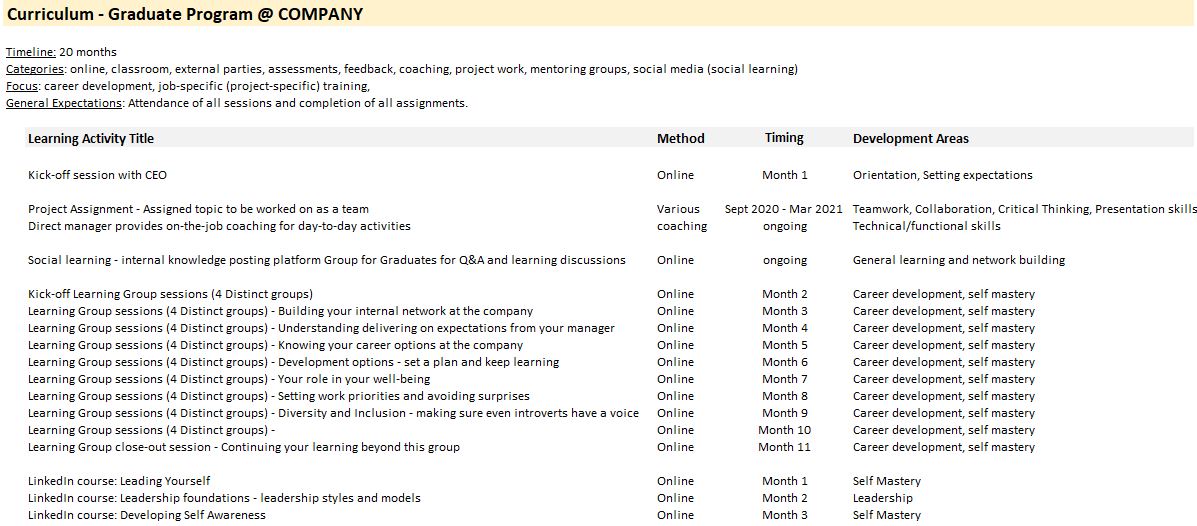
Setting up the curriculum over the development period means you decide how the various learning solutions are scheduled and planned to strengthen and support key messages throughout the time period that your program runs. Each aspect strengthens what had already been covered while adding additional knowledge. Including various learning methodologies (blended learning) enhances the learning experience and keeps it interesting.

Snapshot of a learning program for graduates

Note:

  1. Always start by understanding what you are trying to address before you start designing your development program. What is the learning need? What is the business value of employees having this knowledge and experience?
  2. When does the business need employees with these new skills, understanding and experiences? Is it short-term (within the next year), medium-term (between 1 and 2 years) or is it longer term (more than 2 years)? Knowing the timeframe also helps you decide what to develop internally vs outsourcing the entire program or parts of it.
  3. Who needs to learn these new skills/behaviors? Be very clear who is your target population for this development program (How many years of experience do they have right now? What kind of experience do they already have – functional, geographic etc.).

Preparing managers to support learners

Employees are more motivated and do better when their managers are onboard with their participation in the development program. Be sure to engage with managers before participants are told about the program. Managers need to understand the business context of the development program, why someone on his/her team is included in the program (if they were not nominated by the manager) and how to support the employee throughout the program. Some manages may need training or coaching in this regard.

Snapshot of a manager checklist

Employees participating in these kinds of development programs are often still working in their current roles. Supportive managers not only expect good results in their departments or projects, but also hold employees accountable for completing program assignments. This gives employees the best chance of completing the program successfully.

Preparing attendees to succeed

Development program attendees need to understand more than just the program contents and overview of dates. An orientation session for intended program attendees could help with that. The session gives them an opportunity to understand the business context and benefits to their own careers plus they can ask clarifying questions before committing to invest the time and effort needed to successfully complete the program.

Snapshot of Program Attendee checklist

And orientation session with development program attendees should include at least these topics:

  • A welcome message from an executive, usually the sponsoring executive, explaining the business value of the development program and also career benefits for attendees.
  • A message from Talent Development explaining program expectations, the blended learning approach, deadlines, the team assignment and any other relevant details of the program that attendees should know about at the start.
  • If the program existed before and there was a redesign or some changes were applied, explain how the current programs differs from previous versions some attendees may have heard about in the past.
  • Provide the opportunity for some Q&A

Keeping learners motivated when a development program runs over many months can be a challenge. Helping to keep attendees focused on assignments and deadlines can be easier when you build in challenges which generate leader boards (friendly competition) or where individuals can earn points or badges by completing specific tasks. Adding recognition by the manager/group/department can also be helpful. Recognition can include anything from a small token offered to attendees after completing a specific portion of the program to being mentioned in the company newsletter.

Hopefully these three templates (see download links above) are useful as you review your own planned development program. Do download the 3 files above if you need to see the templates in detail.

Avoid Leader Derailment


The Center for Creative leadership’s (CCL) research on executive success and failure identified the significance of “derailers”, and how they differ from just mere weaknesses. They studied leaders who made it to at least the General Manager level, but then their careers had involuntarily stalled, or they had been demoted, dismissed, or asked to take early retirement.

A derailer is not just a weakness. We all have many weaknesses that we may never choose to improve, and some weaknesses do not impact our career success in a major way. A derailer is a weakness that requires improvement if employees wish to realize their full potential in their careers and especially as leaders.

Why do leaders fail?

Leaders most often fail due to unaddressed weaknesses, derailers, and if left unaddressed for long enough these become habits that start to shape a leader’s style of interacting with others. The steady number of reported incidents involving significant leadership behavior issues in companies of all sizes and across industries is a strong reminder not to think that it cannot happen in your company.

Most leadership derailers will not cause the fall of an entire organization. But they can certainly lead to a failed career. The question you need to ask yourself is: “What type of derailers would cause a leader in my organization to fail?” Or, as a leader, “Which derailers am I prone to and how can I address them?”

How do successful leaders avoid derailment?

  1. They seek feedback throughout their careers from people at various leadership levels and from various functions both within the organization and external to the organization (as appropriate).
  2. He or she seeks developmental opportunities that can help overcome flaws and ask for developmental advice from other trusted leaders, coaches, or confidants.
  3. They seek extra support and coaching during transitions and especially when a possible “trigger” event occurs, which they do not cope well with.
  4. They remain aware that new jobs require new approaches and behaviors and successful leaders not only recognize this but reach out to ensure they have the right support and advice to successfully navigate through a transition into a new role.

How can the organization help to avoid a leader from derailing?

Organizations can take actions to ensure that leaders are aware of weaknesses which could derail them in the future and the following cautions can help with that:

  • Consider career paths that include time spent in various different groups, business units, or functions instead of a career path that simply moves in a straight vertical line within the organization.
  • Encourage and promote feedback to employees that focuses on “how you did it” instead of “what you did” only.
  • Beware to not consider one failure by a leader as a sign that he or she is completely “off the track” and using it as a critical development need to address instead.
  • Avoid moving managers to new roles too fast and instead allow them to remain in a role long enough to experience the consequence of business decisions and learn from it. A strong culture of learning and “failing forward” is a great environment for leaders to address high-risk weaknesses at an early stage of their careers.

Identify possible derailers – Self Assessment for leaders

This self assessment can be done between a leader and his or her coach to open up conversations about “what can stop me from reaching my leadership goals and ambitions?”

An honest look at the listed factors can help a leader identify perhaps the one or two behavioral traits that could possibly derail him or her in the future. Working with a coach, a leader can explore different ways to handle some of the situations which they had not handled well in the past.

Both organizations and leaders within the organization need to take responsibility for identifying signs of weaknesses that could derail a leader in future and then commit to addressing the issue before it becomes a derailer. The costs of failure in this area is not only public humiliation for the leader and a public relations challenge for companies, but also has tangible costs when one considers for example costs associated with a high staff turnover, which often accompanies groups where the derailed leader has worked over the years.  

Learning Book


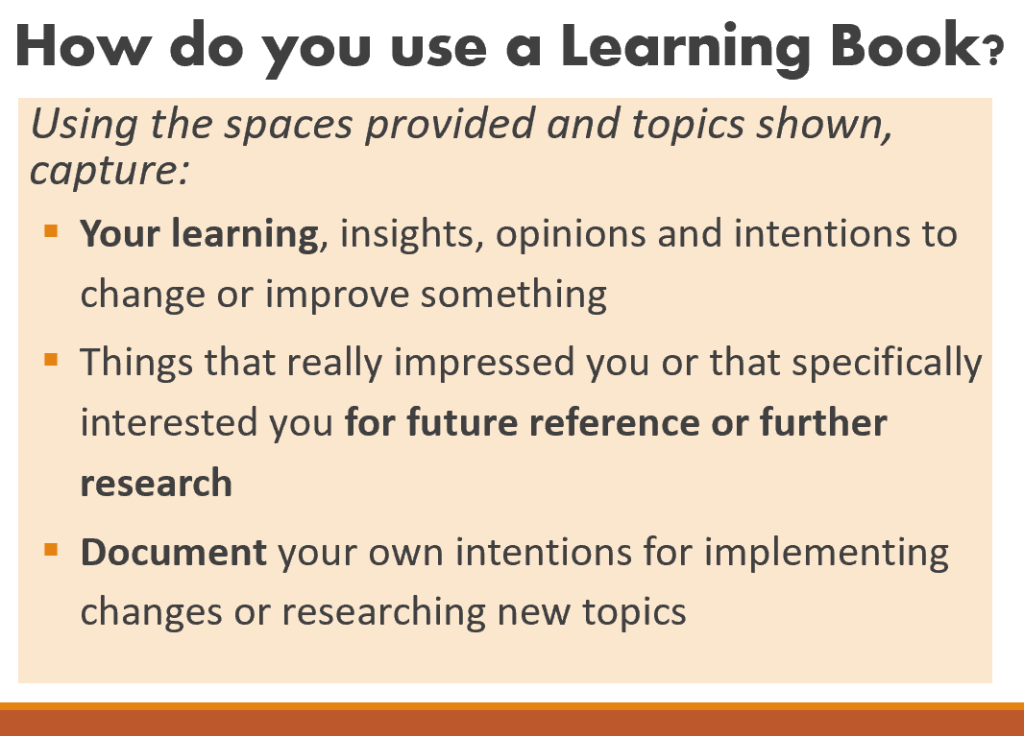
A learning book is a great tool to use for learners who are keen to capture the key points of learning moments. It is also useful for coaches or trainers who may want to make them available to coachees or class participants to help them along on their learning journey. A pdf version of a learning book is available for free download below – letter size, A4 size an A5 size.

To really learn something new, one must chew on it – write it down, read what you wrote and then consider how it changes your perspective or increases your awareness or understanding. The learning book helps learners to capture ideas and thoughts. It gives them a chance to go back and review what they had written before to remind learners of what they had thought at the time and planned to do about their own continued learning.

“Whoever ceases to be a student has never been a student.”

– George Iles –

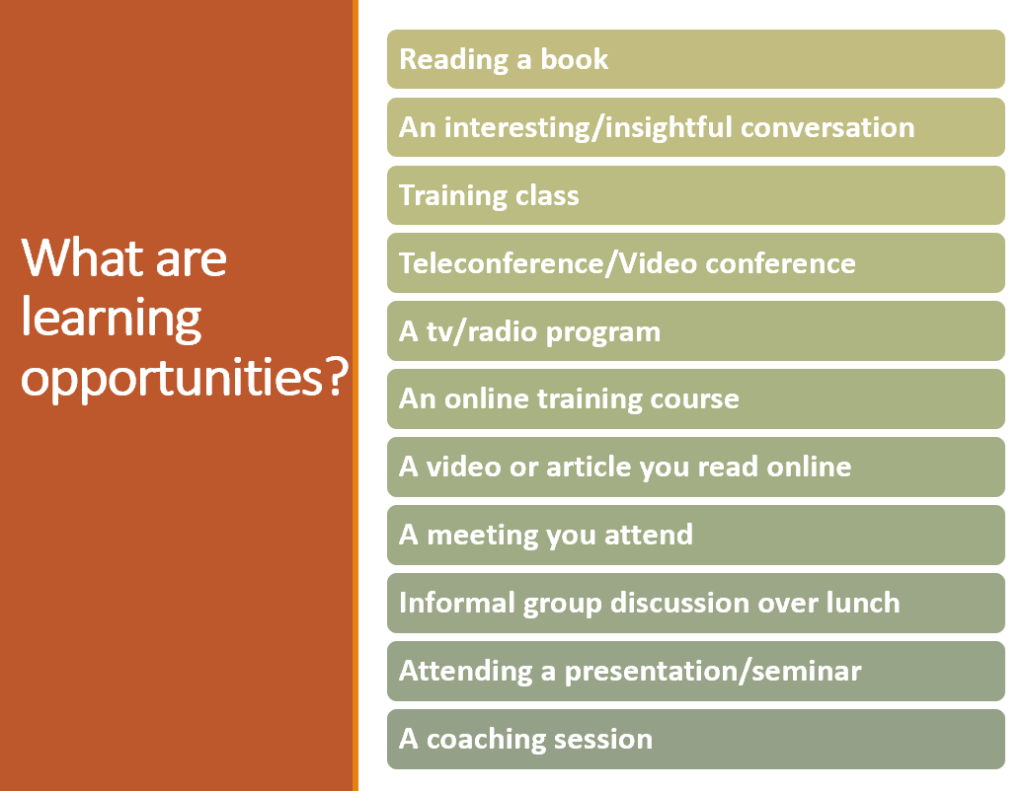
There are many ways that someone can learn something. Classroom sessions are not the only option. See the list of opportunities to learn below: (and this list is not exhaustive)

The learning book is a place to capture all new thoughts, ideas, and areas that a learner wants to learn more about in one place.

Feel free to add additional pages that would help guide the learner along a developmental path.

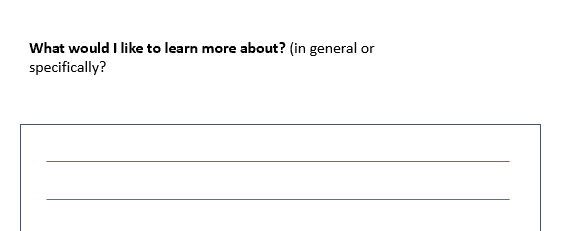
The book is broken down into 3 parts: Prepare to learn, Learning, and Follow-up. In the preparation to learn section, there is space to capture the topics that the learner would like to know more about.

Prepare to learn

Learning

The learning section has a few pages to prompt learners about aspects that may be important for them to remember later. It covers aspects such as areas to research further after the learning event. Or maybe they want to capture the highlights of their learning journey a particular week. Maybe there were a few statements of quotes that they really want to remember – the learning book has a page for that. There is also a page to capture any favorite speakers or writers that they came across and want to know more about.

Follow up

After a learning event or conference, we often have great plans for new initiatives to implement or people to contact – topics to research. And unfortunately, many of those great ideas dissipate when our normal lives resume. The Follow-up section is about capturing the actions you plan to take and it gives you a section to capture dates or months when you plan to work on it.

It’s a great way to help you check back on how you are doing with follow-up activities.

Reviewing your own learning notes from the last few months can help you pick-up again on an interesting point you still wanted to follow up on. Perhaps you had planned to call someone or to do an internet search, but somehow you forgot about it. Having it written down in your learning book and being able to review it, you can pick up on those points and ensure that you do complete the task that you had planned to do.

The download file links below contain *.pdf versions of a learning book for 3 different printed sizes: letter size, A4 size and A5 size (which is half the size of an A4).

Closing the Skills Gap Using Global Assignments


Accelerate Talent Development Through Strategic Assignments

Strategic assignments are powerful tools for cultivating high-potential employees. By aligning specific development goals with real-world challenges, organizations can foster growth and prepare individuals for future leadership roles. This structured approach ensures that employees gain the necessary skills and experience to advance their careers while contributing to the organization’s success.

The template (download link below) ensures transparency regarding developmental focus and management expectations of the outcomes of an assignment.

An assignment may require a change in location, but not always. An assignment could also be a temporarily changed reporting relationship or being part of a different group or business unit. A different group of colleagues and managers to work with provides an assignee with the opportunity to broaden his or her internal network and learn to build relationships fast. International assignments can add additional learning objectives such as developing more cultural awareness and skills involving collaboration and communicating across cultures.

The example shown helps to illustrate how one would go about using the developmental assignment template I am sharing above (see download link).

What should he/she learn?

The areas to develop (called Leadership Aspects in the example) would depend on the competencies that have been selected for leadership development and the latest ratings from the performance management process can be used to provide you with the ratings for each leader. This helps you to focus on the development needs with the highest priorities at that time. A conversation with the leader’s direct manager could be very useful in selecting the highest priorities. If the employee had been included in a recent talent review, there may be additional information available to complete the template and select the focus areas for his or her leadership development.

How will he/she learn?

When selecting the development activities, it is important to first understand specifically which aspect of that development priority the employee needs to learn more about.

  • Theoretical (mainly improving awareness)? Then an online self-paced course could be the answer. Or even sending the employee to attend an external class or read a book (or selection of books).
  • Learning new behaviors? Coaching and feedback based on actual examples encountered could be a good approach. You could also do a pre-test and post-test with some experiential workshop or learning intervention taking place between the tests. Workshops that include options to practice new behaviors can be great solutions.

A combination of learning interventions is the best way to address development needs. Look at each high-priority learning need and look for ways to combine classroom training, self-paced learning, short On The Job (OTJ) assignments or tasks, and perhaps coaching too. Each of the interventions would then strengthen learning and reinforce the principles introduced.

Be sure to document who will mentor or coach the employee. He or she needs to understand the support you are making available to him/her on the journey of learning new skills.

What is the definition of Done?

Spend some time considering how you will close out the assignment with the specific learning needs. Will you want a written report detailing the learning that took place over the assignment period? Or will you want a report and also a presentation? Or perhaps just assign a presentation to be developed whereby the assignee is asked to share his or her key learning achievements with a panel of senior-level stakeholders? Assign the completion activity early so the assignee can prepare for it from the moment he or she starts the new assignment.

Include stakeholders early

Share rating templates with the intended evaluation panel and the assignee before the final event or evaluation of a written report. The transparency helps all concerned to anticipate the level of detail required and where the focus areas will be. This helps the employee prepare from early on in the assignment to provide the required final product or presentation.

Documenting the learning objectives of an assignment helps to orient and align all stakeholders on how to positively impact the development of that leader – the leader himself/herself, his/her direct manager or supervisor, his/her coach and HR or L&D staff supporting the assignment.

Spotting Employee Flight Risks: A Retention Checklist


20200524 risk ass

It has been said that your most valuable asset walks out of the doors every single day and you can but hope they come back the next day – your employees!

Keeping employees from leaving a company could be as simple as engaging with them, including them, helping them develop new skills and listening to their ideas. While that sounds deceptively simple, not every leader finds it easy to act when they hear that advice.

Get the facts

Understanding Your Team’s Pulse

Before diving into solutions, it’s essential to pinpoint the problem areas. Are employees considering leaving? If so, who’s most likely to exit and why? By asking the right questions and gathering data, you can identify potential risks and take proactive steps to boost employee retention.

The self-audit list below may be a good place to start assessing how much anyone on your team may be tempted to leave your team or the company.

Self Audit template

Completing the checklist requires you to answer yes or no to a series of statements as they would apply to each employee on your team. Once you have completed the assessment, add up the number of “no” answers you have for each employee and use the Score guide at the top of the page to determine whether each employee would be in the low, medium, or high risk from an employee retention perspective.

The next risk to assess is the impact it would have on your project or team if that particular employee decided to leave. Look at each employee (each column) and consider the unique skills and talents that he or she brings to the project and rate the impact that his/her (unplanned) voluntary departure could have – low, medium, or high.

Map it

Where to start? Map the answers from the self-audit sheet onto the graphic below. The risk that each employee could decide to leave on the horizontal access and the impact on the project, in case that employee did leave, on the vertical axis.

Then write down the names of employees that would be in the “green zone” vs the “yellow zone” vs the “orange zone”.

The orange area requires immediate and high focus, and the yellow zone does require focus, but less so. The green zone requires maintenance. Do not assume that because a retention risk is low today it would stay that way for years. Many talented employees get calls and offers from other companies and recruiters all the time! This means you should never stop reminding them why you are happy that they are on your team! And don’t only tell them, show them! Celebrate milestones and successes, recognize them in meaningful ways, and show them how working with your team or company is the right long-term strategy for them. Make sure you offer them advantages towards their overall life goals, their career goals, their work-life balance goals, etc.

Take action

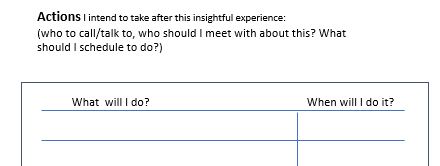
Once you know where to focus, use the last worksheet as a checklist for areas where you can lower the risk that someone may consider leaving the team.

Use one checklist per employee and make sure that you have conversations with each employee about the areas where you either did not know the answers (looking at the self-audit worksheet) or you have not said anything to an employee about a particular area.

When it doesn’t work

Unexpected departures can disrupt teams and projects. That’s why it’s crucial to have a strong bench of talent ready to step up. By investing in employee development and creating clear career paths, you can mitigate the impact of turnover and ensure business continuity.

Taking proactive steps to assess employee retention risk is essential for organizational success. While it doesn’t guarantee zero turnover, it empowers you to identify potential departures early and take steps to improve employee satisfaction and engagement. By investing in your team’s growth and well-being, you’ll create a more stable and productive work environment.

Steps to creating a life you love


sketchguru_20200521195945

When someone wants to change something about his or her life or create new outcomes in key areas, they often need more than just someone telling them to create goals and then implement it. Most people seem to need the steps more clearly spelled out and a workbook or playbook is something they really appreciate.

The steps can be broken down in the steps shown below. The downloadable worksheets link is right here:

Step 1:

Understand the process:

Step 2:

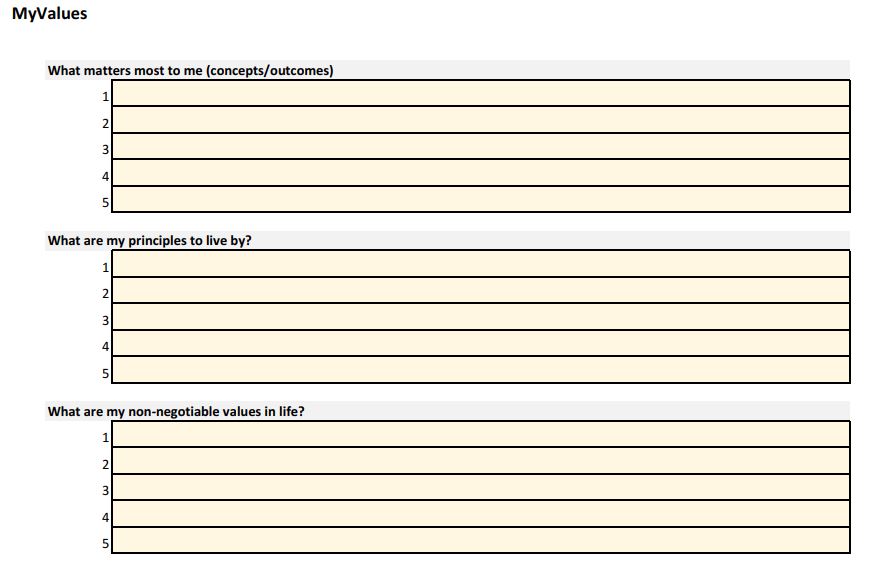
What matters to you?

Being clear on what matters to you makes it easier to understand WHY you would want more of some things in your life and less of others things in your life. While most people think they know the answers to these questions, you will notice how much clearer it gets when you have to write it down and then read it back to yourself.

Step 3:

Do I have time for this?

Most of us would have more time to work on projects that matter to us if we simply started eliminating activities that do not add value to our lives – based on what is important to us. The next two sheets first of all help to highlight how you spend your weeks (typically) and then help you identify how much time you could potentially free up for working on meaningful activities to get you closer to the life that you want for yourself.

Step 4:

What would I like to achieve?

This sheet starts with jotting down new outcomes that one would like to see in some key areas and then it moves to the right planning needed – which activities would do you plan to do in each month? The overall objective is to avoid having competing priorities within the same time of the year. Spacing activities out over a year period helps to ensure you keep focused while making progress in the most important areas over a 12-month period. Note that is is almost always a good idea to pick only maybe two or three projects to work on every month to avoid feeling overloaded and overwhelmed. Those two can lead to feeling demotivated and abandoning all of your plans to create a life you can love.

Step 5:

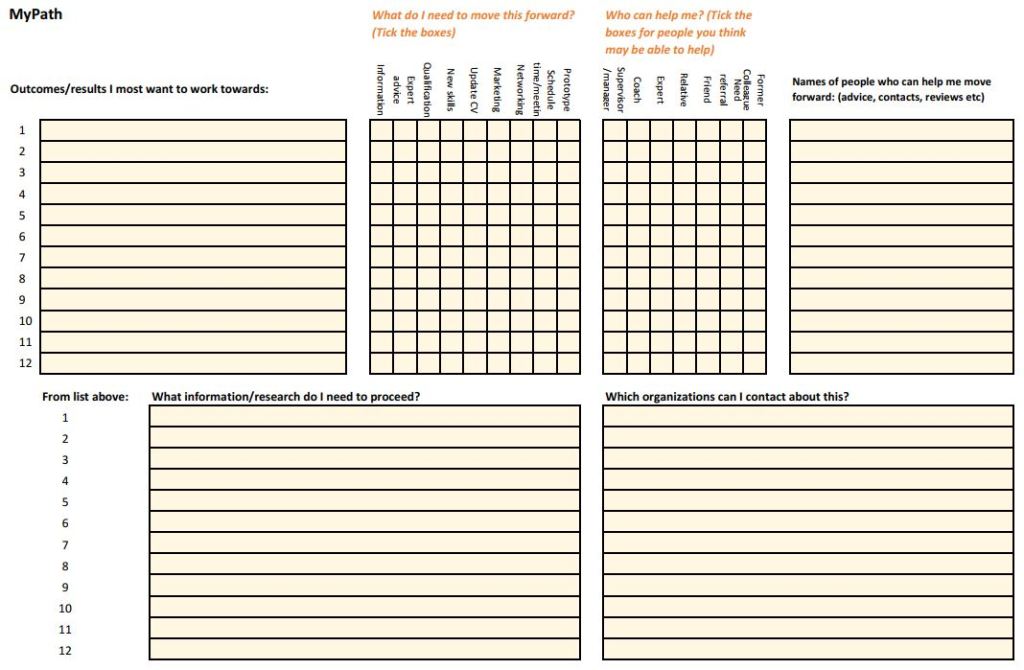
How will I move forward?

This step gets into more detail regarding your plan. There is an area to select what the next step may be for each of the projects you want to work on. It could be that you may need to gather more information or maybe you need to reach out to more people to learn from them or get advice from them- but who? Perhaps you need to build a prototype or get others to give you feedback on your idea? Maybe you need to try to see how it works for you – trying a new way of doing something? The page continues on with identifying whom you know who could help you with advice or maybe introduce you to someone who could help you. And then finally identifying where (place or area of interest) you need to do some research to find out more about what you could explore next and which organizations in your area may be able to help you move forward.

Step 6:

What is my plan for the next few months?

Looking at what needs to be investigated or one over the next few months, this sheet provides a space to keep rack of the top 2 or 3 things you would like to achieve this month to move forward on the projects you have picked for the next few months. There is also a handy check-box which helps you keep track of completed activities versus ones that are still open.

Step 7:

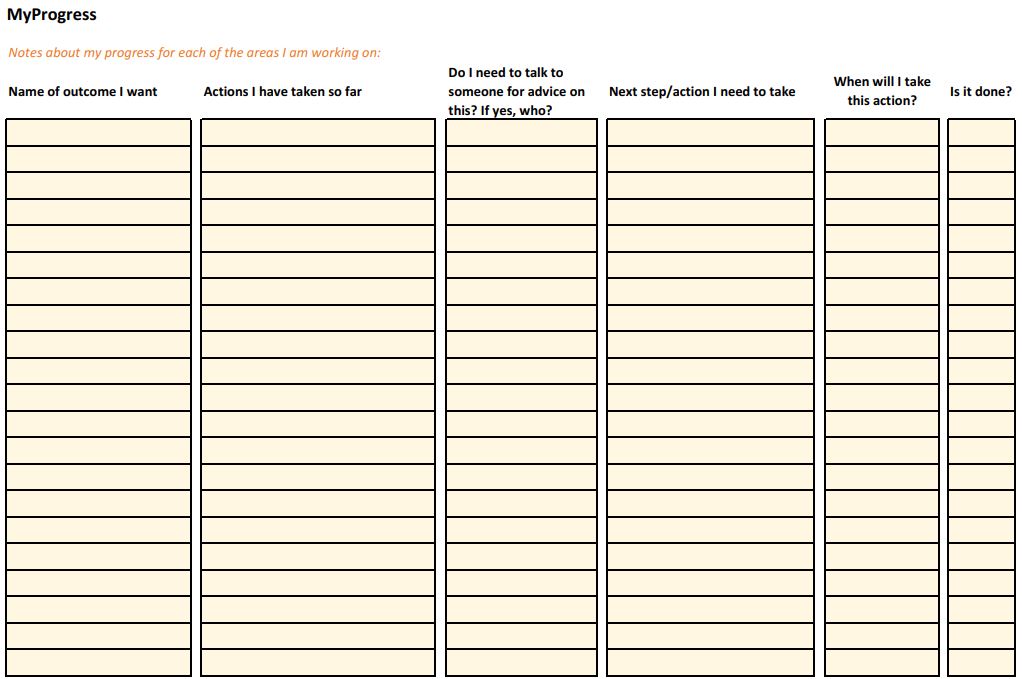
How am I doing?

Sometimes we start on the path of working on life improvement projects and then we get stuck or we get so distracted that we lose our focus. There are many reasons why we might get stuck but getting unstuck is not always easy. This sheet helps you do that.

Taking you from your original objectives, this sheet helps you acknowledge how far you got and what you have completed. Then it helps you think through what the next steps would be. You may need to continue making progress and maybe you need to stop and ask for advice or get more information in order to move forward.

Step 8:

Go back to Step 2 and renew your plans

When you have worked through the sheets and some months have passed it is a good idea to go back and review the reasons you are working on the projects – which are captured in Step 2. Then follow through each of your completed sheets to consider what you might like to change or add to your planning to renew your approach. Some projects end up unfinished because they seem less important once yo have taken more time to do research and talk to people with more knowledge in a specific area. It is okay to decide to abandon these project if they do not matter to you anymore.

Other new projects may be started while a few may continue from your earlier efforts and enter new phases – maybe you are ready to finalize a website or start selling something you have been meaning to put on the market.

I hope these workbook/playbook pages have given you new enthusiasm to plan out and move forward on creating more outcomes in your life that matter to you resulting in having a life that you love!

Mastering Your Career: A Guide to Skill Building


Skill Building: Your Passport to Career Success

To ascend to higher levels within your organization, continuous skill development is essential. By strategically acquiring new competencies, you position yourself for greater challenges and opportunities. Let’s explore how to identify your skill gaps and build a roadmap for career advancement.

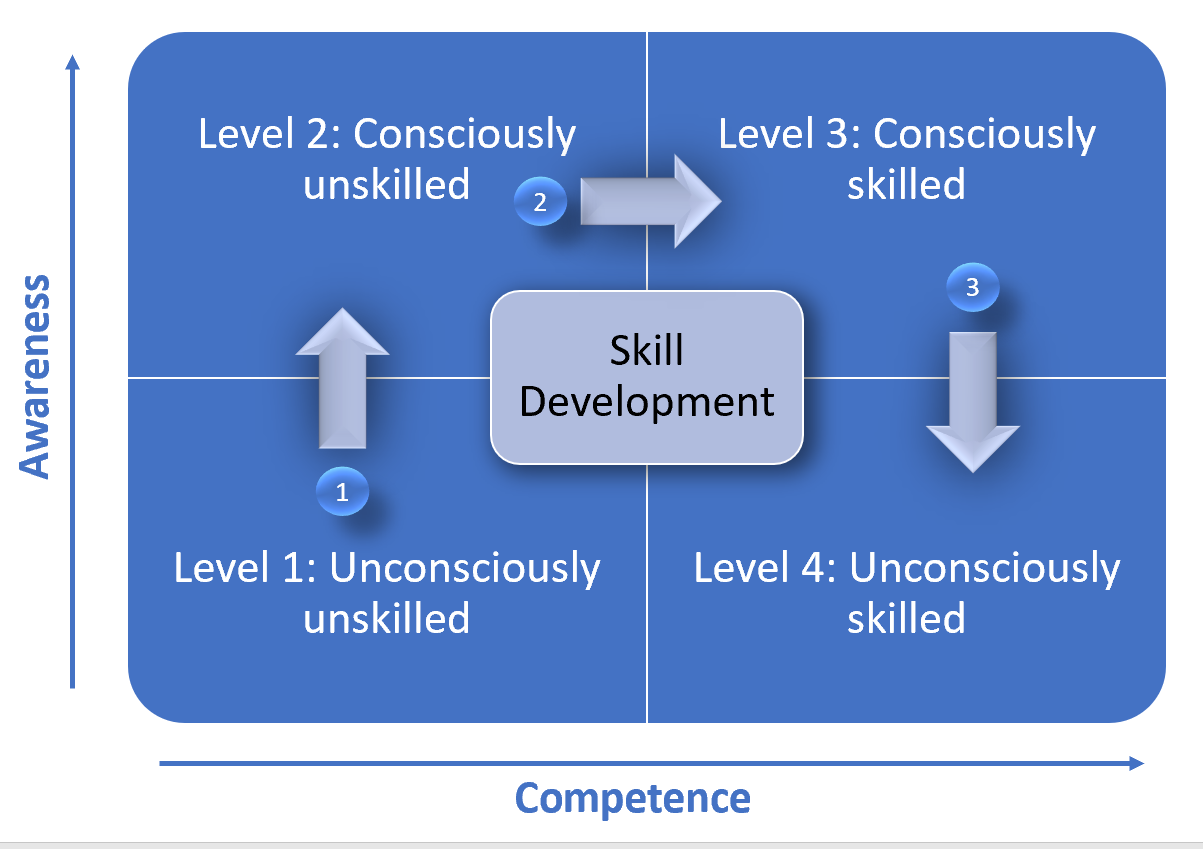
According to competence development, there are four levels that a learner goes through on their journey to being consciously competent at a skill they wish to be good at. Knowing which level you are at for the new skill or competency that you are trying to learn is important, but it is also true that until someone gains awareness almost nobody knows when they are at level 1.

image001-11733152243.png

Level 4 is the goal that any learner wants to achieve, and it is that state of skillfulness that does not require effort to execute. Think for example of how you tie your shoelaces or drive your car. If you have been doing it for a few years you can probably have many other thoughts in your head while you are doing it. This is possible because you have reached Level 4 in the skills required to tie your shoelaces or drive your car.

Going from Level 1 to Level 4

Level 1 means you are not skilled at something specific, but you do not know it. Until someone provides you with feedback in this area or until you are somehow confronted with the fact that you have no or limited skills in a specific area. We do not even think about that area as something we need to work on and we are often blissfully unaware of the potential development need in an area. The main way to move out of level 1 is to ask for feedback and to look for ways to understand how your behavior, actions, communications, and way of working impact others.

From Level 1 to Level 2 – Get input. When was the last time you asked a friend, a co-worker or a family member “Tell me one thing that I would have to get better at if I would be a better friend/co-worker/member of this family or better at my job?”

Going from Level 2 to Level 3 – Learn and practice using new ways of doing or thinking. This is where the heavy lifting comes into play. Making this transition of learning a new skill takes focus, and dedicating time in your busy schedule to actively acquire a new skill. This requires a lot of discipline and you will not only need to schedule the time for this, but you will need to practice what you are learning regularly and keep track of your own progress. It is important also in this stage to get input from others so that you can gauge the progress you are making toward acquiring and demonstrating skillfulness in new areas.

Going from Level 3 to Level 4 – It just happens. There comes a day when someone mentions that you have been demonstrating your skills in a new area without you being aware of making the effort. At that time, you will have acquired an unconsciously skilled state whereby you no longer need to focus or concentrate very hard in order to demonstrate your skill in a particular area.

What is the value of using this model?

If you are a trainer, it is important to know at which stage your training participants are because it would drive the kinds of information you make available, the kinds of practice sessions you build into your training class, and the kinds of tests you provide for them to measure their progress. A pre-test or exercise can often help determine the level of awareness and knowledge that training participants have in the skills area(s) that they will be focusing on during the class. For example, a trainer may use more assessments to increase awareness if the class is at level 1 or the trainer may use more practical exercises and instructional sessions if the person is at level 2 or 3.

As a mentor, it is important to understand not only the goals and development needs that a mentee would like to work on but also what his or her current level of competence is in that particular area. This knowledge helps you to provide helpful guidance to help him or her reach the next level of competence.

As a leader of a department or a function, you will likely have people within your group or team who are at different levels of competence. Situational Leadership will be required from you as you assign tasks, delegate, or provide feedback to each person focusing on the level of competence that he or she is at for that particular skill set that is needed.

Having a framework and process for moving from unconscious incompetence to being consciously competent helps mentors and learners. It is easier to select the right developmental tool or resource for development when it is clear which level of skill the learner is at. The starting point is most often the results from 360 reports for leaders or communication and collaboration style feedback tools and exercises.


Note 1:
In February 1969, management trainer Martin M. Broadwell called the model “the four levels of teaching”. Paul R. Curtiss and Phillip W. Warren mentioned this model in their 1973 book The Dynamics of Life Skills Coaching. In the late 1970s, this model was used at Gordon Training International by its employee Noel Burch. He called it the “four stages for learning any new skill”. Later the model was frequently (but incorrectly) attributed to Abraham Maslow, although the model does not appear in his major works.

Assessing Leadership Behaviors: A Scorecard Approach


A leader’s actions speak louder than words. How leaders behave sets the tone for an entire organization. Their focus areas, decision-making styles, and communication approaches significantly impact employee morale, productivity, and overall company culture. To ensure that leaders are aligned with organizational goals, it’s essential to measure their behavior against defined expectations.

The typical approach to measure how leaders are behaving is to obtain input from those around each leader – those who interact with the leader on a regular basis.  The groups of people asked to provide ratings for each leader could be:

  1. People who report to the leader
  2. People who are colleagues of the leader
  3. People who are more senior than the leader
  4. If appropriate – external parties who interact with the leader on a regular basis.

Process of assessing leaders

The process of assessing leadership behavior typically follows these basic steps: Collecting ratings, consolidating the ratings, providing feedback to leaders and using the results to plan further actions as needed.

201906 process

To accurately measure leadership behavior, you need a well-defined process. Begin by outlining the key leadership actions that align with the competencies you want to assess. Once established, develop a feedback mechanism that captures input from peers, subordinates, and superiors. Remember, open communication is essential. Clearly communicate the purpose of the assessment to all stakeholders involved. By being clear about the task, the purpose, and the methodology, you can ensure better responses during the evaluation process.

The resource above can be downloaded. It is a set of behavioral statements that can be shared with those who need to provide ratings and comments. The scores or ratings relate to actual behavior observed against desired behaviors for each leader that they interact with on a regular basis. Some people automate their chosen feedback gathering using a free tool like http://www.surveymonkey.com

Process notes:

  • Behaviors used for ratings have to be very well defined so that they can be observed and do not require someone to guess at the intentions or motivations of the leader. A behavior must be observable or produce visible results.
  • Ask raters to add comments to help you interpret the scores. This understanding enables the creation of realistic follow-up actions after the results are available.
  • Ratings should not be requested too often – raters get “survey fatigue” and your results become less meaningful.
  • The objective is for the tool to support the leaders by providing helpful and actionable feedback. The tool also helps to understand how the change initiative is progressing towards desired milestones.

You will notice in the shared resource (tool) example that leadership behaviors were defined in 4 categories: Commitment Behaviors, Communication Behaviors,  Teamwork/Collaboration Behaviors, and Safety Behaviors. Your categories will be determined by your own change initiative and you will need to also define the specific behaviors that are desirable for leaders given your project. Simply use the downloaded Excel sheet and type over the category names and behavior definitions to create your own Leadership Behavior Scorecard.

Important watch-outs:

  • Be careful when you consolidate the results from various raters. If you had agreed to keep rater identities confidential, summarize the results by subgroup. Provide an average per subgroup for each of the behavioral elements. Do not provide a subgroup score if there were less than 3 raters.
  • Follow-up actions should also include recognition/appreciation for those leaders who are role-modeling the desired behaviors in the organization.
  • Consider using some examples from the higher ratings to create case studies for the organization. It is easier for leaders and employees to understand how to apply desired behaviors when they receive actual examples that illustrate how decisions were made or implemented using the desired behaviors. An example makes it easier for others to follow.

The tool is relatively simple to use, but it is vital that it is designed well and introduced correctly into the organization. Assessment tools can be seen as a negative element if the objectives and the way results will be used are not communicated appropriately.

Choosing between opposites


man on beam final

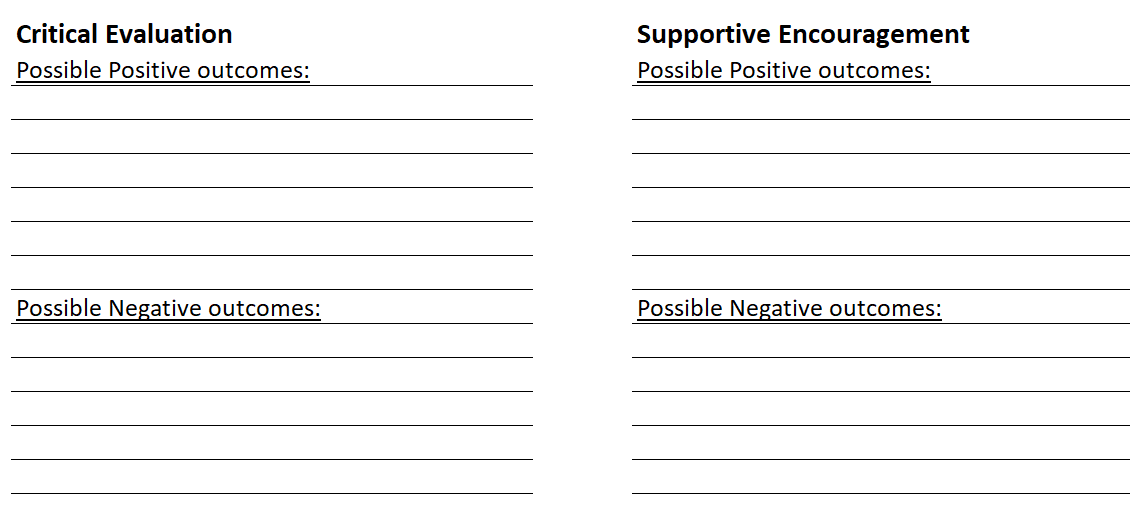
In many diagnostic tools for leaders and teams there is a scale which indicates how far the leader or the team is on a ladder between two opposite behaviors or style preferences. This could be for example critical evaluation on the one end of the scale and compassionate encouragement on the other side of the scale. (see example below).

These kinds of results are often used to coach and develop leaders and teams towards a desired behavior or culture.  In many cases the distinction between the “right” behavior and the “wrong” behavior is more linked to the situation at hand, associated risks and/or the person you have in front of you than a simplistic view of correct behavior. For example it may be less desirable behavior to be overly critical in an evaluation of someone who is new to the role and the company or team.  In another instance where the risks are high and the people on the team very experienced it may be more appropriate to perform a critical evaluation in the event of a major failure to achieve desired outcomes than to offer supportive encouragement.

blog scale graphic

This leads to the concept of managing or working with both of the ends of a linear scale. Choosing both sides in terms of developing leaders and teams can help them to have a bigger capacity to choose the right response depending on the situation.  The key is to develop awareness in them. Encourage leaders and teams to embrace more than one behavior or style to respond to specific situations or a tasks.

If we go back to the example above. You may be coaching someone or guiding a class of developing leaders through an exercise and this approach may be useful. Ask them to first of all identify the extreme ends of a scale of possibilities. Then identify for both extremes – the possible positive outcomes from that approach and also the possible negative outcomes.

blog polarity awareness

In a class situation you can also assign it as an exercise between two or more people to brainstorm together.

Once the exercise is complete you can lead a discussion with examples from the class or the leader you are coaching. When may it be appropriate to use one or the other behavior for the best outcome?  You can also choose to ask groups that had completed the exercise to prepare a demonstration (role-playing) to show the appropriate way to respond to a situation based on an example they discussed in the group. Or you may choose to provide some case-studies where the leader or class have to identify which may be the best approaches. These practical exercises will further help your participants understand the choices that they have as leaders when facing different situations and how to at least evaluate the best path forward before they go into action.

As a followup action you can ask participants or your coachee to capture examples they come across in the next few weeks/months where they had to make a choice between two opposite approaches and used the exercise above to identify the potential positive and negative outcomes. When using this approach one will will not necessarily avoid mistake or guarantee the most effective approach. The process of pausing and considering options will make the leader or team more effective over time and will improve decision-making.

Some examples you could consider for the exercise above:
  • Working independently vs working in groups/teams
  • People focused vs Task focused
  • Having a structured (fixed) approach vs a creative/open approach
  • Formal vs Informal approach to others
  • Monitoring others closely vs holding them accountable for outcomes created

This approach does not invalidate the tests which offer leaders and teams valuable insights into their own typical approaches and style preferences. This is merely another way to approach the outcomes from those tests to help develop more adaptable leaders and teams, which is highly needed in the current environment where change has become a constant and successfully working across borders, cultures and generations have become essential.