The Problem with Feedback


It’s not them – it’s the approach.

You said it clearly. You kept your tone calm. You even picked the right moment. And yet nothing changed. The behaviour continued, the dynamic stayed the same, and you were left wondering whether the conversation happened at all. If feedback is supposed to be a gift, why does it so often feel like something people quietly never received?

In an earlier post I shared a planning template for preparing a feedback conversation – the what, the how, and the when. You can find it here. But preparation alone doesn’t guarantee feedback lands. This post is about what gets in the way – and what to do about it.

There’s a reason this happens, and it has nothing to do with stubbornness. Before a single word lands rationally, the brain has already decided whether it’s safe. The amygdala – the part responsible for threat detection – fires in response to criticism much the same way it responds to physical danger. This triggers defensiveness, withdrawal, or counter-attack, none of which help change to take root. The deadlines are still being missed, the same mistake keeps happening, and the tension between team members never goes away.

This isn’t a character flaw. It’s biology. And it means you’re working against a default response no matter how well-intentioned your feedback is. Understanding this shifts the goal from delivering a message to creating the conditions where a message can actually be heard.

There is also a pattern problem. If the only time you sit down with someone is when something has gone wrong, the brain learns that quickly. A meeting request from you becomes a threat signal before a single word is spoken – which is one of the strongest arguments for regular, informal contact with your people, not just when there’s a problem.

You’ve probably been taught this one: start with praise, deliver the criticism, then end with praise again. It sounds considerate. It usually isn’t.

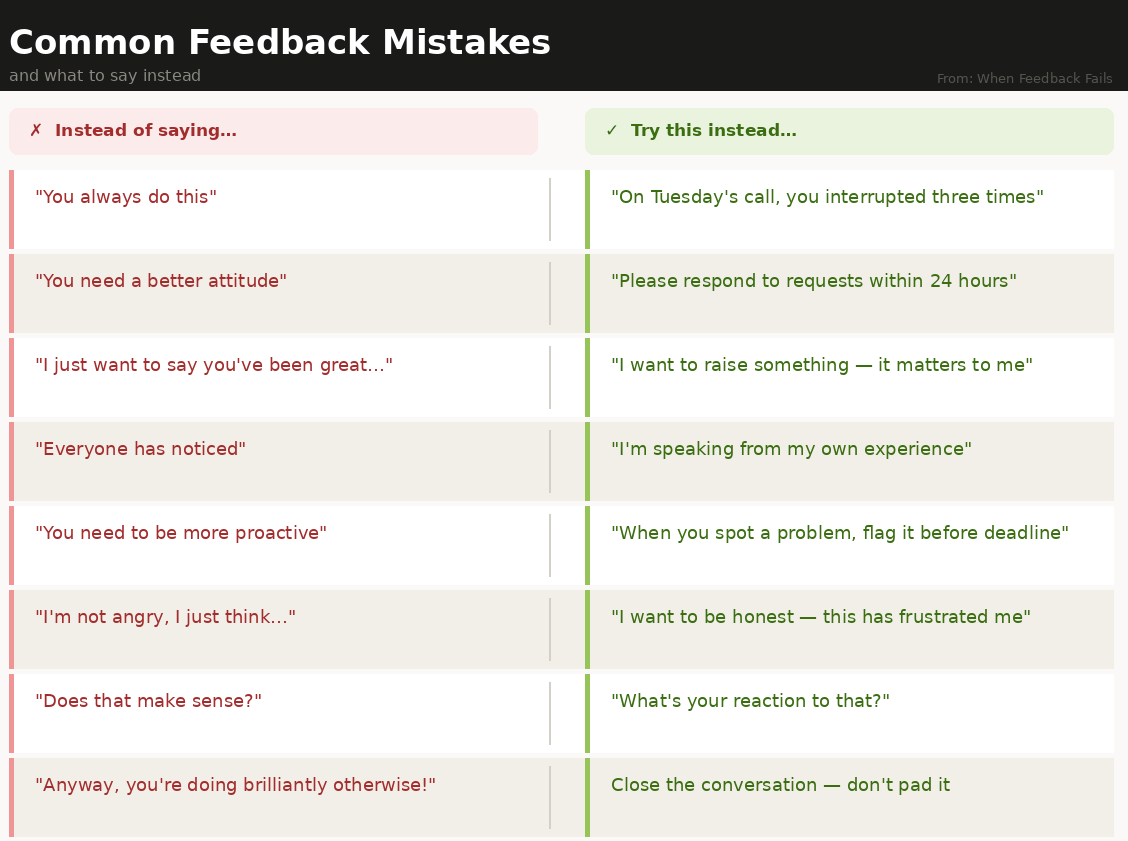
When someone opens with unexpected praise – “I just want to say you’ve been doing a really great job lately” – most people’s threat radar switches on straight away. The compliment doesn’t feel genuine; it feels like a warning. By the time the criticism arrives, the person is already braced.

There’s also a memory problem. Emotionally charged feedback sticks far more strongly than surrounding positives. The opening praise fades quickly. The closing positive barely lands. The sandwich was meant to soften the blow – it often does the opposite, and over time trains people to distrust your compliments.

What works instead: say the thing clearly and specifically, with a brief, honest opener. “I want to raise something with you because I think it matters” lands better than engineered praise – because it’s real.

Vague observations, emotionally loaded language, and bad timing all guarantee a defensive response before you’ve finished your first sentence. The most common mistake is being clear in your head but vague when you say it out loud – telling someone they have a “bad attitude” is an interpretation, not an observation.. Feedback that can’t be described in concrete, observable terms isn’t ready to be given yet.

Regular contact matters here too. If you only speak to someone when there’s an issue, you won’t know whether something outside work – a house move, a family difficulty, a health concern – is affecting them. Feedback delivered without that awareness can land badly not because it’s wrong, but because the timing is terrible.
To help with preparation, I’ve put together a free one-page planner (Feedback that Sticks) you can fill in before any feedback conversation.

👉 [Download the “Feedback That Sticks” planner below – free]

People often think that because they mean well, their words will be taken well. But that’s not usually how it works. We tend to believe our relationship is strong enough to handle tough words, forget how much our mood or frustration can sneak into our tone, and assume saying it once should fix the problem. Good feedback takes patience. It means staying calm, asking questions instead of jumping to conclusions, and being willing to admit that we might not have the full story.

And one of the biggest blind spots is thinking one conversation is enough. One talk is rarely enough to change someone’s behaviour – it’s the follow-up that makes the difference.

This is where most people drop the ball. The conversation ends, everyone feels relieved it’s over, and then… nothing more happens. No clear plan. No agreement on what should change. No time set to check back in and see how things are going.

Real change usually doesn’t happen after one serious talk. It happens when the conversation continues – when you come back to it, encourage progress, and remind each other what you’re working toward. People who keep in touch regularly find that feedback stops feeling like a big, scary event and becomes a normal conversation. And that’s when people are far more likely to listen – and actually change.

Feedback doesn’t fail because people refuse to grow. Most people do want to do better. It fails because we rush in without thinking it through, forget how strongly people react when they feel judged, use methods that make things worse instead of better, and then drop the subject before any real change has time to happen. The answer isn’t finding the perfect words to say. It’s building a strong relationship – staying in touch, being honestly interested in the other person, and sticking with the process until things actually improve.

Will you love it?


Your dream job – will it be all that you are hoping for?

When you consider a job change or a pivot, you may need to go and talk to people who are doing that job or role right now to answer some of your questions. Before you make a change you probably would need to understand the qualifications or certifications that are important and maybe understand what a typical day is like in that role? If you don’t have the certifications that would be a great way to make sure you prioritize getting the most essential certifications first. If you don’t like the way the typical day goes in that other role you are thinking about, perhaps it is not for you? Perhaps it is good to know more before you jump?

Desktop research first

A lot of this information is available online if you, for example, search for those job vacancies online – you can find out which qualifications or certifications are most required for the role you are considering changing towards. The job vacancies can also show what kinds of competencies and skills recruiters are looking for. Just bear in mind, sometimes they just ask for the moon and the stars in job vacancies to try and ensure they get a really good person who can satisfy a long wishlist (hard to do in most cases!) So, desktop research only goes so far…

Who can you talk to?

Knowing how the typical day goes in a role like the one you want, is not usually so easy to find out by doing online internet searches. This is where you would need to look to your own network of contacts – family members, friends, colleagues or ex-colleagues, and others in sports teams or clubs with you. When you have gone through all the people you know, and perhaps you did not find any or enough people who can help you, you may have to start looking online. Use social media platforms to find people who are in the role you would like to have. If you use LinkedIn, you might be able to see if you know someone or through your network may be able to contact someone who does what you would like to do in the future. If you have no direct links to a person you can often still reach out to them via a message. Your objective would be: Find someone who now has or someone who did have your dream role in the past so you can ask him/her some questions about it. That way you can have more clarity regarding how much might you love this role you are dreaming about?

Plan your next steps

Before you approach anyone for a meeting or a discussion around the questions you have, what targets and specific objectives do you want to set for yourself?

How many people you should approach with your questions? (Is 3 enough, or is a minimum of 5 your target? How many experts in this role do you need to talk to?) In some cases, it may be hard to answer the question because you don’t know if the first two people will give you quality answers or not? Set yourself a guideline target if you are not sure. (Tip: 15 may be too many! If you have not identified the right people to talk to, you may end up with too many discussions. If you find the right 3 and they are willing to spend 20 minutes with you on your key questions, it may be enough!)

Make a list of the people you know who may be able to answer the questions- we will talk about them in a moment. And think specifically about how they may be able to help. If you just ask just anyone you know or post it on your social media page, you may not get quality answers so think carefully about how each of the names you write down can help you. Is he/she currently in the role you are thinking of changing to? Is he/she a mentor or guide who can help me work out the steps to take? Is he/she working for a company or department that hires people for the role I am interested in? Was he/she in such a role in the past?

Start listing the specific questions which you would like to have answered. Here are some question options to consider:

The questions are about:

  • Find out what knowledge you might need. Once you know that, you can look for courses or certificates or volunteer options to help you gain the knowledge you need.
  • Which experiences would be important to have demonstrated in the past to get a role/job like this one? If you do not yet have that, how can you get those experiences? (ask for special assignments in your current role or consider a volunteer role)
  • Which key competencies or skills does it take to succeed in this role? How do your competencies and skills compare to that? If you have to fill in some learning gaps, how can you do that?
  • Are you possibly idealizing this role? Are there downsides you have not considered like a lot of travel and being away from your family and friends? Maybe there are some standby or nightshift requirements? Are you aware of that and does that fit in with your decision-making criteria?
  • In the greater scheme of things – how does this role or job contribute to success in a company? Is there something great about this role that you have not yet realized or understood? Does that motivate you to make time to fill in the knowledge and skills gaps that you discovered?

Keep your momentum

Set yourself small tasks to achieve every week to move forward in understanding more about the role/job you are interested to have in the future:.

  1. What will you do and complete this week?
  2. What will you do the week after?
  3. Which day and at what time of the day each week will you check to see how you are doing against your planning (Did you complete the tasks you set yourself to achieve in the last week?)

To succeed at moving forward you need forward planning, checking back at least once per week to see how far you have come on your plan once you have started. And you need to set yourself targets to achieve in the next few days (be specific) to keep your momentum. That is how you keep your plan alive for moving towards your career move or change!

A closer look at STARR answers


In interviews, you are sometimes asked to give an example of how you have demonstrated that you are good at a specific competency. Other times you may be asked to explain how your skills have been useful to teams or organizations in the past. The principle is that the experience you have in specific competencies would have been demonstrated by situations you faced in the past.

It is these examples that the interviewer would be looking for when they ask you to provide your answer in the STARR methodology. Using this approach is your best way to give an example that clearly outlines for the interviewer how you faced a situation, recognized what you needed to do, took action, and achieved good results or outcomes.

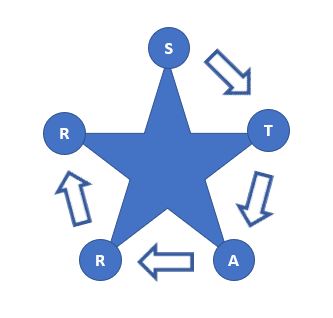
The acronym represents 5 specific topics you need to cover in your answer and if you imagine that 5-star picture in your mind, you may be able to more easily formulate your answers and examples during an interview. It is always a good idea to prepare some examples you can think of before the interview, but you may sometimes need to come up with an answer you did not prepare. Hopefully, this picture and explanation help you succeed with that!

The Acronym

The STARR method works on these headings (in sequence) [it is an acronym for these words]

Situation (when, where, what setting)

Task (what you needed to do, which responsibility you took on)

Action (what you did, which way you used a personal strength or competency)

Result (what was the outcome of your action?)

Reflection (looking back at how it went, what did you learn from it – what went well and what would you do differently if you faced the same situation again?)

Approach

Starting at the top of the star with the letter S, which represents the Situation you were in. This relates to the time when you were able to demonstrate through your actions that you have good proficiency in a specific competency. Once you have completed describing the Situation, you move clockwise to the next letter T. Once you have covered the questions under the letter T, you move clockwise to the next letter, A for action. And so you continue until you finish by including answers to the questions shown under Reflection.

Each of the topics under the STARR letters in the graphic above shows some bulleted questions which will help you ensure you cover the key aspects of that particular term when it comes to your example. from the past.

Example

Here is an example showing how using the questions under each of the topics in the STARR model can be useful in preparing your answers for interviews.

If you need a template to use in formulating your STARR – style examples, click on the link below.

Note:

When you are giving examples, you have to be specific instead of staying with general examples, which is often not convincing to those listening to your answers. . Make a story out of your example and base it on some real event that happened in your past to highlight how you were able to demonstrate a specific skill. Using the STARR methodology makes your story more credible and easier for those listening to you to get a full understanding of the capabilities that you have successfully demonstrated in the past.

Mentoring Agreement


Mentoring usually takes place between someone with experience and someone who needs advice and training in specific areas. Starting the process of mentoring duos sometimes skip the step where they talk about how we agree to go through this process together. What is important to you? What is important to me? What can each of us commit to in order for this to work well for both of us?

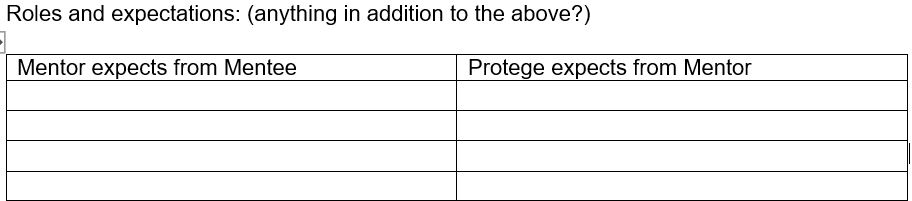
This free template below helps you to structure a conversation around what the mentor and mentee specifically agree to commit to. How many hours per month/quarter would we like to spend talking through specific topics?

Feel free to add additional items which would be important to discuss during the first meeting when you (mentor and mentee) agree on how to proceed. This kind of discussion may seem unnecessary, but covering these items upfront can save a lot of disappointment and misunderstandings later when items you might have imagined would be obviously included in your mentoring agreement vary from what the other person may have thought. It is not a contractual agreement as much as it is a summary of what you do or don’t want to commit to for the duration of the mentoring relationship.

When it comes to time commitments, it is also advisable to agree for the mentoring process to have a set time period – 12 months or 18 months. And when that time comes, review what has been achieved and learned and whether it makes sense to continue the mentoring relationship or to agree to end it at that time.

Clearly defining the development objectives to be addressed helps to steer the direction of mentoring discussions. What is it that the mentee needs to know, needs to be able to do, and would like to be able to understand? The more detailed this section is, the easier it might be for either the mentor or the mentee to recognize when the mentoring relationship has helped to achieve those outcomes and it may be time to evaluate whether it makes sense to end the mentoring relationship or continue it with new development objectives.
Considering the agreements discussed during the first section, are there any other expectations that each has of the other and which are useful to mention specifically? For example, the mentor may have the expectation that the mentee would devote time to read specific books or articles every week. Are those expectations realistic for the mentee? If he or she has other obligations which may make it difficult to meet that expectation, it is best to discuss them early on to avoid a misalignment later on in the mentoring relationship.

The full template can be downloaded below – it is a *.pdf file and it can be imported into MSWord for edits.

This file can be very useful to ensure that mentors and mentees are aligned early on in their association which gives their mentoring relationship the best chance to be successful!

Rotational Development Assignments – an Example


This post assumes a few starting points. For one, it assumes that you have a few leaders whom you would like to develop using a few specific developmental areas. When you review this example, you will notice that the areas shown here are typically associated with development of first-time or mid-level leaders. This example can help you take your own leadership development ideas a step further by defining specific steps, and processes which would make it easier to communicate your vision to stakeholders at your company – offering a well-considered program that includes all the elements that are important to developing leaders, their managers, executives considering succession planning, and also new recruits with dreams of building a great career at your company.

Defining outcomes

Which observable outcomes – behaviors – are important for successful leaders to display at your company? Can you define this per competency? Understanding what exact outcomes that your program strives to achieve makes it easier to select the right people for the program (those with development needs in these areas), evaluate the progress of developing leaders in your program (learning to lead with desirable behaviors), and also to understand where specific leaders may need more support with their own personal development plans.

Here is an example of defined outcomes and you will notice the columns to the right have spaces to insert names of possible program candidates. This would be a way to consider nominations when they are discussed by the program committee to decide on the next intake of leaders for the rotational assignment program.

Governance & Structure

Before you start to implement your ideas, take a moment to consider who are the key participants and stakeholders in this program? And have you thought of how you need to support each stakeholder’s needs and prepare them for their expected participation?

Basic processes would include:

  • Selection (nominations could be an additional process if you would not pre-select possible candidates using seniority or other criteria) – on what basis will multiple raters who know candidates propose and support nominated candidates?
  • Performance evaluation process – before the program starts and also at key stages during and at the end of each assignment.
  • Promotions and salary increase eview processes for program participants – checking thatyou are at least paying them at or above local market rates to ensure you are not endangering their retention.
  • Mentoring process for the benefit of participants – supporting developmental goals.
  • Performance feedback process to participants and the oversight committee in general.
  • Orientation process for managers whom program participants would report to during their rotational assignments.

Executive Sponsor for the program

It is important to understand who would be the sponsor at the executive level – involved in ensuring that the program meets strategic objectives and delivers on the agreed benefits. These would be the reasons why the program would be approved for funding and resource allocation like for example a program coordinator etc. Build a relationship with this stakeholder and ensure that he/she has all the information needed to feel comfortable with the progress you are making with the implementation or maintenance of the program on an ongoing basis.

Oversight committee

This may be a group of operational leaders, some group support (functional) leaders, and perhaps a mentor or two. The oversight committee may also be involved in the nomination and/or selection of participants and may also be a part of the audience when program participants are asked to conduct presentations about their projects as part of the program, The oversight committee might also at least annually evaluate possible risks to success and may suggest mitigating actions or improvements to avoid or manage risks to successful outcomes of the program.

Mentors

If you have dedicated internal and/or external mentors meeting with program participants on a regular basis it would be important to involve them by giving them an understanding of the strategic and operational expectations of the program. They would also need to be familiar with the measures of success and how they are defined and evaluated. The success of developing leaders would be very reliant on this group of people offering key support to them. For this reason, mentors should also be asked for (at least) annual feedback on their experiences as mentors and be able to share improvement suggestions and possible risks that need further consideration and action. Mentors should also be able to informally meet with the program manager to monitor program outcomes – understanding how the program is progressing in terms of outcomes achieved, number of development goals closed, number of participants being mentored, number of successful placements in higher roles for those coming out of the program, etc.

Managers of participants

There are aspects of a rotational program that differ from someone having a new team member to support departmental or divisional performance objectives. While the expectation is that these managers would invest their time and resources to accelerate the learning of participating leaders, these program participants will be expected to leave the managers’ groups at the end of the assignment. This concept may be challenged on a regular basis and common arguments include program particianpts being instrumental to maintaining successful client relationships (the client asked for him/her to be on the next project) and how their departures may pose risks to current projects (without his/her key knowledge on this project we cannot guarantee successful outcomes). Such issues would need to be resolved and escalated as needed to avoid participants getting stuck on one rotation.

Program participants

Not everyone considered to have the ability to function at higher leadership levels aspires to those outcomes. It is important to understand the drivers, ambition, and engagement of each participant being considered for participation in the rotational development assignment program. This, on top of his/her performance and development needs being identified and documented in a development plan. . Once a program participant has been confirmed the communication process starts including the next steps, the program contents and objectives, the processes, and what would be required from him/her while on the rotational assignment program. Being introduced to those who are involved in the process would also be important – the new manager for the duration of an assignment and the assigned mentor would be two important links to make. Ensure a feedback loop to understand the success and risks of the program seen from the eyes and experience of program participants.

Annual process(es)

In this example, the annual processes are relatively simple and include an annual intake of new participants, formal communications, obtaining feedback from key stakeholders, presentation by participants about projects they worked on, and talent review discussions on the development of each leader in relation to succession planning objectives and strategies.

Developmental Roles

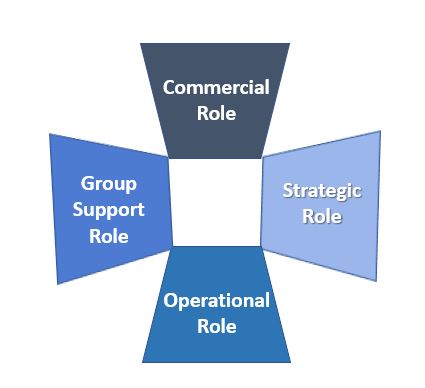
In general, rotational roles fall into these four categories (see graphic below).

Commercial roles could include sales support, marketing, external communications and sometimes includes roles that have direct interfacing with key customers – account roles. A key objective of commercial roles would be to ensure participants understand how money is made, reported, and the levers which could improve profitability, and the processes that are involved in converting operational success to money in the bank. This rotational assignment also provides an understanding of the level of customer satisfaction and where clients would like to see improvements or innovations. For more senior roles in a commercial function, the development objective could include understanding risks and opportunities and establishing a high-level plan to address both with internal initiatives and even external solutions like a merger or acquisition to address challenges and risks to customer satisfaction and the ability to deliver on customer expectations – given observed and expected changes in the marketplace, competitor offerings, etc.

Operational roles usually offer the ability to understand the daily activities and decisions which could lead to meeting or missing operational outcomes. This usually relates to impacts to the Profit and Loss Statements of a company. In these kinds of rotational assignment roles, participants learn to understand the challenges that project teams experience in delivering products or services that are attractive in the marketplace. They also learn how operational delivery can lead to optimal profitability. Concepts like LEAN, Circular economy, and agile are often concepts that are learned during assignments in operational roles.

Strategic roles are often assigned at one of the larger offices or to shadow a senior or executive leader involved in strategic projects and initiatives. During this assignment participants usually learn more about risk management, organizational strategies, and projects. Sometimes they could be involved in supporting due diligence activities for a possible merger or acquisition and may be exposed to considerations regarding organizational structure changes or changes to the legal structure of a company. During these assignments, participants understand how the company evaluates its internal and external strengths and opportunities along with possible organizational weaknesses and risks. In that landscape, the company will set strategies in motion to improve its competitiveness, its financial outcomes (P&L, Cashflow and/or balance sheet), and its ability to outmaneuver the competition in key areas. This could be as a result of acquiring and/or launching new innovative solutions or getting closer to the customers and how customers’ wishes are being met.

Group Support roles are often either in Human Resources or possibly in Procurement or any other group support (functional leadership) role where that specific participant can learn to more fully understand the challenges of balancing the needs of its shareholders, customers, employees, and supply chain partners.

How to start

Putting together a Rotational Assignment Program can take some time during the early stages and it would be very important to understand the strategic needs and objectives of the company when it comes to succession planning and key skills needed by the leaders of tomorrow. Talk to as many possible stakeholders as you can to build a successful business case and change plan addressing all concerns and needs of key stakeholders in the success of the rotational assignment plan. Talk to experts who have developed a program like this to garner any tips regarding pitfalls that they needed to navigate. Finally, commit to continue learning as you go. Get feedback and act on it and use the data gathered to drive continuous improvement activities. Use the feedback to ensure the program continues to deliver outstanding benefits in a fast-changing world which impacts your ability to attract and retain key talent on a continuous basis.

Useful posts to help with the preparation and communication of stretch/developmental assignments:

Onboarding Plan Template


Onboarding Plan Template

One of the key reasons that companies lose new hires with some experience is that they fail to support these new hires adequately during their first few months. In some companies, it can be quite hard to understand how things work there, how to fit in and be successful, feel valued and included. Having a written onboarding plan from the start is a great way to bring more clarity to the person and also help them understand expectations during the crucial early months in their new roles in the new company.

The onboarding plan can be written as early as during the recruitment process. In one best-case scenario, it was shared with a senior executive right after his interview with the CEO. It was such an unexpected and appreciated action that the executive commented how refreshing he found the transparency and it made him see the hiring company as head-and-shoulders above the competition which led to him accepting the offer and joining the company a few months later.

The Process

While the plan can help clarify the set-up and structure for a new hire, it is important to set up review meetings with the newly hired managers or key hires. In some cases, reviews with an HRBP could be useful to understand for example how performance management is organized and how the process works. Such review moments could also clarify talent development programs and processes, which is useful to know for the new hire regarding his/her own career but also for helping the new hire manage the development actions for those who report to him/her.

Review meetings with the manager that the new hire reports to could help identify priorities and understand where to connect with more people or build additional internal or external relationships. The manager can also answer questions about activities planned to ensure desired outcomes are achieved after 30-days, 60-days, and 90-days as captured in the onboarding plan.

The people side of success

The template captures not only the tasks and activities needed to succeed in a new role but also identifies people with whom to build relationships. These are important relationships and contacts that the new hire would need to establish and maintain to ensure his/her success in the long run. They could be key client contact personnel or contacts from key suppliers or subcontractors. They could also be internal – people who know how things work and who can advise on the best course of action to get something done at that company.

And it is also important to identify people who can be trusted to keep things to themselves and who could advise on who to talk to before moving in specific directions for changes the new hire would like to implement. Either the HR Director/HRBP or the new hire’s manager may be helpful to identify who those contacts may be.

Note that confidants or advisors may also be external people such as professional coaches or consultants.

Accountability

While it is important from a company’s perspective to ensure key new hires are provided with onboarding plans, completing the details and setting priorities to accomplish the outcomes defined in the plan lie with the new hire. The success of the new hire is only partially dependent on helping him/her get up to speed faster by having review meetings and an onboarding plan and giving him or her access to professional helpers and advisors. The new hire remains accountable for his or her own performance and following through on the items recorded in the onboarding plan.

When both the process of onboarding works well and the new hire holds himself/herself accountable for the outcomes produced, the risks of failure due to onboarding gaps are lowered and retention success is more likely in the medium to long term!

Useful posts for new employee/ new manager onboarding and orientations :

https://jo-anngarbutt.org/2015/09/15/new-employee-on-boarding-checklist-template/

https://jo-anngarbutt.org/2016/03/01/starting-right-new-managerleader-and-team/

Manage Risks of Early Promotion


Staged Promotions – Accelerate role-readiness using focused development with check-ins

Leaders are not always ready the moment you need them to step into a new role. An inexperienced leader can increase risks in continued customer satisfaction, operational / execution risks, and employee satisfaction and retention. Using a a staged promotion could be a way to mitigate risks, while ensuring that leadership development is accelerated and monitored with defined targets on knowledge gained and skills and competencies gained during each period within a specified timeline.

Process and Timeline

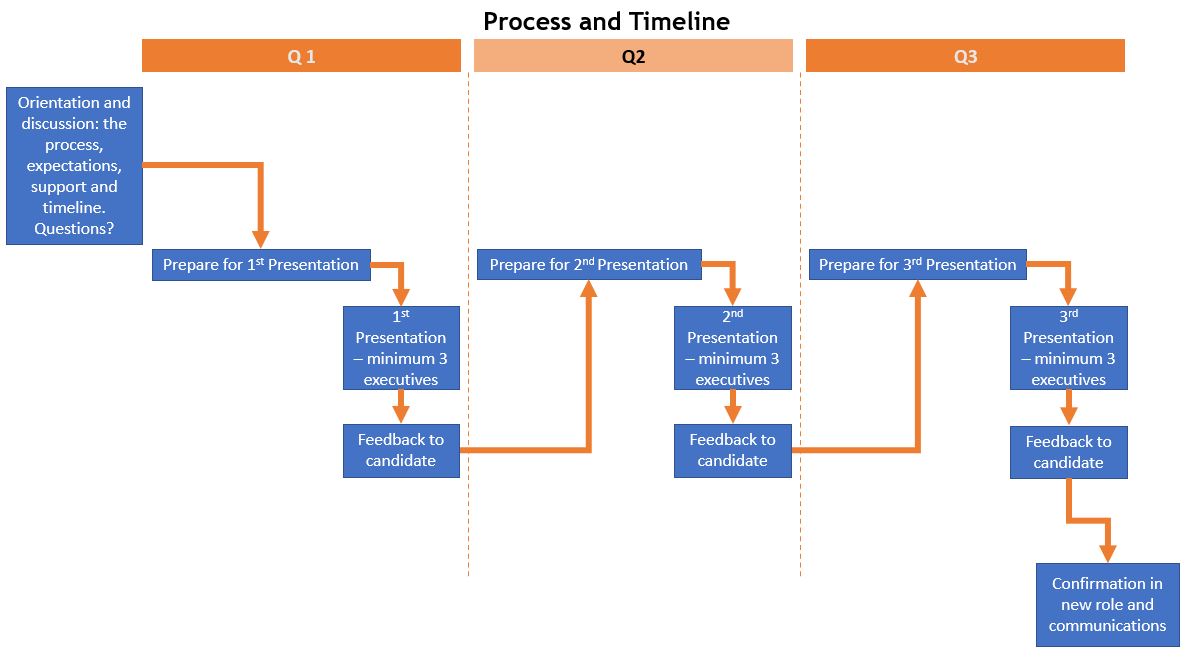
The graphic below outlines the process and shows an example of running the process over a 9-month period. The duration of such a process can vary but watch out for making the period too long – longer than 12 months. It can lead to process fatigue and demotivation of the leader. It is important that the process starts with an orientation to ensure the leader understands how the process will work and what is on the other side of the development period. The leader should be clear on what he/she is signing up for.

Defined learning path

During the development period, there needs to be a few concrete check-in points whereby the leader is demonstrating knowledge, skills and insights gathered and learned over the period. Instead of making the check-in points being general discussions, it is useful to select a few key focus areas for a presentation to be delivered at the end of each of the development periods.

Each check-in event needs to result in specific feedback being captured and shared with the developing leader. The feedback helps him/her to further focus and improve on their learning approach for the remaining learning periods.

The final check-in is usually the final decision-point where the executives present are willing to confirm the promotion of the leader – ending the interim nature of the assignment.

The example below shows how a project or facility leader can be assigned specific areas to learn about over the 9-month period. Each of the areas are important for the normal day-to-day activities of the developing leader and the focus simply means nothing is missed in helping the leader perform well in the role in future. It helps to include the strategic and the “why” part of a role since a new role is often mostly or mainly about the “what” to get done.

Notes

  • The orientation step which helps the leader understand the design of the development path, the role he or she has and also how to ensure his/her own success making use of available internal and external development resources. Before the orientation session, a leader has typically already understood from his/her manager that they are offered the development opportunity on an interim basis and the leader has agreed to proceed. The leader also needs to know what happens if he/she does not succeed at the end? Will they get a different assignment and what might that be?
  • Preparing the executives before the check-in events (when check-in events are set up to be a presentation followed by questions and answers). Executives need to understand the design of the development path, the purpose of the focus areas, the development needs of the leader and how they are to capture their feedback to be presented back to the leader after the event.
  • Feedback to the leader should be specific and be a balance of activities that are good to maintain, which ones to develop further and which ones to start or stop going forward. Specific examples of desirable behaviors or results should be highlighted. A discussion on risk identification and management may also be useful to help the developing leader understand how to adjust own focus to best mitigate and manage risks associated with own development as a leader as well as risks associated with the role..
  • This process is very useful to help a leader understand what the new role would include when they are meeting all expectations of stakeholders. A leader who feels uncomfortable meeting all those expectations will typically ask to be taken off the development path before the end having realize it is not for him or her. And this allows for re-assignment and solving the leadership vacancy in a different way.

Listening to a presentation by the leader on the assigned topics goes a long way towards providing executives with a sense of comfort (or alarm!) in terms of what can be expected from this leader in this role going forward. While these check-in points should not be the only determinant of how the leader is performing in the new role or estimating future behavior, it is a great way to understand the reasoning a leader applies in making business determinations and decisions and how the leader approach problem-solving when faced with adverse situations.

How to get your next job through your network!


Knowing what kind of opportunity you would like to pursue next, you can wait for the perfect role to show up online or… you could actively work through your network to get further!

Think about this:

  • The high level of competition for the role if you apply for a role online! Your experience and education and the design of your CV/Resume would have to be better than all other applicants to get through to the end of the recruitment process!
  • They estimate that 70% of roles are not advertised, but instead are sourced through networks! This means you could be invited for a discussion or interview just based on the fact that someone recommended you or introduced you to a decision-maker!
  • Every person you know from past roles, from school or college days, people you met and talked to at conferences, family, friends – could possibly know someone who is connected to a role that would be great for you!

Getting more contacts and making a positive impression on those you meet is important. It is not about pretending or lying, it is more about showing respect and genuine interest in those you meet. When people like the encounters they have with you, they want good things to happen for you and they might be keen to ask people they know to meet you or have a discussion with you. And this is all you need in many cases to get to the next step – a consulting project or a new job!

What does your network look like?

If you take a blank sheet of paper and you try to draw out this graphic below, perhaps you will be able to jot down people’s names for each of the circles and be able to create your starter list. This means the list of people whom you will start with – making contact with them.

The groups of people you know the best are most likely:

Friends, Family members, Classmates (now or from years before), ex-colleagues or trusted current colleagues, neighbors (now or from an earlier address where you lived at one point).

The next level of people you may want to contact include:

People you have met or interacted with on a sports team, or a social organization you joined, or a hobby class you took at some point, people you met and spoke to at a conference.

Priorities:

Looking through the names of people you listed in the worksheet (download available below), who might know people at the companies you are hoping to work for? Who knows about the kind of work you are good at and want to do? Who has the knowledge or experience to help you in your search? Who am I most comfortable talking to? (start there!)

How can your network help you?

What do you tell them ?

  1. When you talk to someone who already knows you, you do not need to introduce yourself. When talking to a contact of someone you know, introduce yourself.
  2. Make sure your message is complete: why are you talking to him/her? What exactly do you hope to get out of the conversation?
  3. Be specific about what you are looking for – i.e. role in sales, working on electric installation projects, etc.
  4. What are your training, certifications, experience, and skills to explain how you plan to successfully deliver in the role mentioned above? (the short version – only mention the most important ones!)
  5. Have your questions ready and be ready to rephrase any questions that are not easily understood by the person you are talking to.
  6. Give the other person time to think about their answers by being quiet after you asked.
  7. Show genuine interest in their advice or suggestions.

Questions to ask

The questions below can be used as a guide as you create your own list of questions to ask your contacts. Do consider how strong your history and relationship is with each person you talk to before you ask any of the questions. Rephrase any questions to allow for cultural differences and preferences and also to match the formality required for your conversation.

Depending on the role of the person or his or her expertise/experience, you may choose different questions for each conversation. Note the specific questions you want to ask each person before you contact him/her. Limit yourself to a reasonable number of questions – something you can fit into a 30-minute call would be best when you talk to someone whom you have not met yet and who is giving you some of his/her precious time for this conversation.

  • Are you aware of any job vacancies which would fit my skills/experience?
  • Would you help me by looking out for opportunities you might become aware of and which might be useful to me?
  • Do you know anyone who might be planning to change jobs where I might be a possible role replacement candidate?
  • Do you know any companies where my skills and experience may be sought-after?
  • Are you aware of any new companies moving into the area and/or whom I might be able to contact about a role there?
  • Would you be willing to help me get an appointment for a discussion with a recruiter at your company?
  • May I ask for your help in preparing for an interview (given your contacts/knowledge etc)?
  • Would you be able to help me with more information about a company I would like to target for an unsolicited application?
  • How would you advise me to proceed with my interest in THIS role or getting a role at Company X?
  • Would you be willing to be a reference for me?
  • Would you be willing to review my resume/CV and give me any tips or improvement suggestions?

How do you plan your approach?

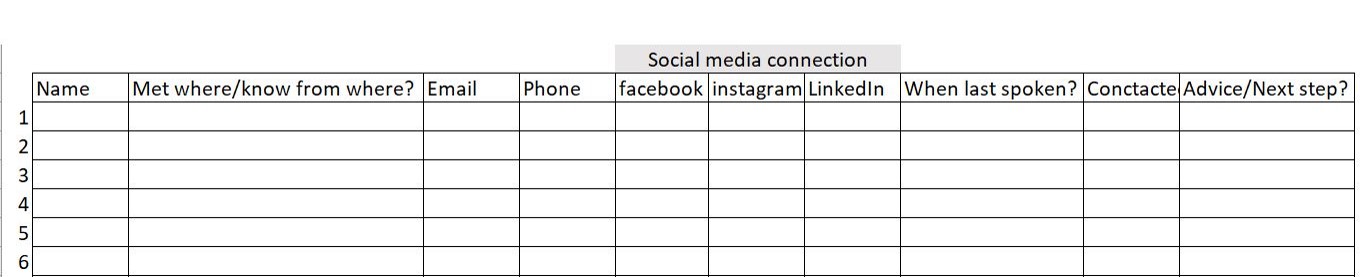
Using the attached workbook below, start filling in the names on a sheet

Note contact details you might have or if you are connected with any of them through social media

Start with the people you know the best and explain what kind of opportunity you are looking for and listen to their advice or ideas of who they might know and would connect you with.

After the discussion, capture their suggestions in the worksheet in the “Advice/Next step?” column.

Follow-up on these, contact the person they suggested or introduced you to and ask for a meeting to discuss your interest in the company, work they do, etc.

DOWNLOAD file for this exercise:

Each of the tabs in this worksheet (see file above) contains a table for you to capture the names of people you thought of while looking at the groups of people you are connected to. Complete the table for each of the groups you have considered as far as you can. (see example below for someone who identified 3 friends, but has not yet contacted them).

Follow-up

To keep your momentum, monitor your follow-up actions which could range from contacting a suggested person or calling someone another time as agreed during the previous conversation you had with him or her. Set targets for yourself per day and per week to avoid procrastination or letting a contact “go cold”. This could happen if you call too long after the initial call and the person you are contacting may have forgotten that your mutual contact had introduced you to each other.!

Tips:

Networks of contacts and human connections can be a fragile environment and it is important that though your need for them to act on your behalf is high, you need to also maintain a good relationship throughout and continue to be someone whom they would like to help. Very few people HAVE to help you, they will because they want to. Your attitude and way of talking to them will determine how much they will be willing to help you.

  • Be firm and confident, but not pushy. Sometimes there is a very thin line between those two. And the difference is often the strength of the history of your relationship with that person. If you know him or her for a long time and you have spent a lot of time together, you may be able to be a little pushier to get him or her to introduce you to someone else. When you have had only one or two conversations with someone at a conference, you would not likely have a strong enough relationship to be overly familiar or strong in your approach.
  • Always be thankful. Even if you have known someone for a long time, if they introduce you to someone or give you a handy tip that leads to a conversation, do let them know how thankful you are for their help.. Also thank people for taking the time to talk to you regardless of the outcome.
  • Only contact people from a conference or a class you took in the past if you actually spoke to them. It would be quite unusual to simply use a conference or class attendance list and email or contact each person on it regardless of whether you actually spoke to them at the time. Most people might disregard requests for calls or discussions in such cases.
  • Do not expect your contacts to call you back when they have more information for you. Ask if it would be alright for you to call back within a week or two.
  • When you had a great conversation with someone, why not add him or her to your list of future contacts? You never know when you may be able to introduce them to a new client or opportunity that fits into their business model!

Don’t hit send (yet)


Maybe the truth is that nobody is helping new employees focus their efforts in order to produce better reports or emails. And by better, I mean some of the items that are in this checklist (below). Perhaps, instead, it is the excitement and eagerness to hit the send button too soon.

Let’s walk through 5 things you can do to ensure that your email or your report or slide deck does not suffer from a few preventable ailments and risk being deemed as “not ready yet” for further distribution. Delivering work that is incomplete or incorrect will not lead to being considered for more responsibilities any time soon. Want to move up? Focus on the quality of your work first.

All names spelled correctly

Most people find it annoying to read minutes of meetings or a report which names them but misspells their first or last names. This is completely avoidable these days. With the internet and most people having Linkedin accounts, or in the same company you can look people up on the email system. There is no reason why we should be misspelling people’s names these days. When you do not take the time to double-check, it comes across as callous, lazy, or just not committed to producing quality work.

All dates are correct

Not all countries use the same format for dates. This would be the first point to consider – who will read your email/report? Check (online if needed): how do they write dates in that country? If you have a distribution list including people from multiple countries, consider writing the date out more: 3 Mar 2019 (for example)

The second point is more often a bugbear of mine – dates in the same document contradicting one another. For example: on page 2 of the slide deck it states that the project is completed on 2 Dec of that year, on page 5 it states that the project will run well into the new year and completion is projected to be the end of March of the next year. Which one is correct? If they are both correct – explain the term completion used on slides 2 and 5. Always check the latest version of your reference material or project schedule before you finalize your section on dates. It reflects badly on the creator of a document or slide deck where dates are misaligned and confusing. Check first!

Spelling or grammar errors

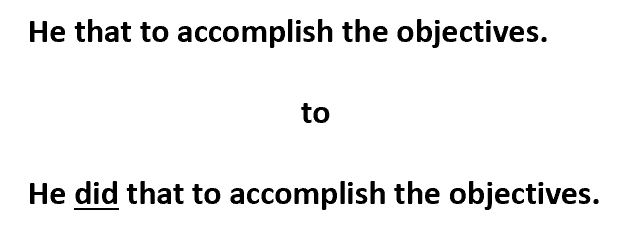
It is very avoidable these days to produce and send documents or slides to others without spelling errors. Use the built-in spell-check in Microsoft suite or a similar feature in other packages used. Some packages will also pick up grammar errors and flag it for you – if you have that feature turned on! Sometimes a missing word is not picked up by built-in checks. Read your own text back to yourself – aloud. Say each word. And make sure the words are not correctly spelled but actually the wrong word for the context. Examples would include: they’re/their/there or hear/here/hair

Use sane fonts

Some companies have branded templates to use for creating reports or slides. If your company does not have rules around branding which include the font colors, types, and sizes to use in company documents and slides, I would go with common sense. This would include – not using all the colors of the rainbow and multiple types of font in a project progress report and not varying the size of the font in every bullet-point you use. [Of course, if you are in the creative world and these variations are a design part of your project (as would be normal in advertising or other creative endeavors) this message is not for you].

Make it easier

Is there a clear structure to your work? Think about the message you want to communicate. What are the main points, what are the next level of detailed points to support each of the main points? Structuring your reports or emails greatly enhances the readers’ abilities to quickly understand what it is about, what the options are, and what you are proposing.

Use headings for distinct paragraphs and consider a bulleted list to align points that are grouped together under a heading. If the sequence or number of points are relevant, why not use a numbered list instead?

Speed in sending out reports is often not the biggest priority. Sending out something fast while the items listed above are incorrect or incoherent can truly harm your reputation. You would not come across as someone who has self-discipline, pride in the quality of your work, or who is seen as thorough – someone your boss can trust to give more responsibilities to! Pause, check, then hit send!

3 Templates to start your employee development program


Upgrading skills in specific employee groups could be achieved by introducing a new development program. Goals for the program could range from cross-training in key functional knowledge areas to accelerating development of specific groups. Development programs often run over several weeks or months and are attached to pre-defined outcomes to address specific identified learning needs.

Structuring your employee development plan, you will need to pay attention to at least 3 important aspects:

  1. Setting up the curriculum
  2. Preparing managers to be supportive
  3. Preparing attendees to succeed

The overall program

Setting up the curriculum over the development period means you decide how the various learning solutions are scheduled and planned to strengthen and support key messages throughout the time period that your program runs. Each aspect strengthens what had already been covered while adding additional knowledge. Including various learning methodologies (blended learning) enhances the learning experience and keeps it interesting.

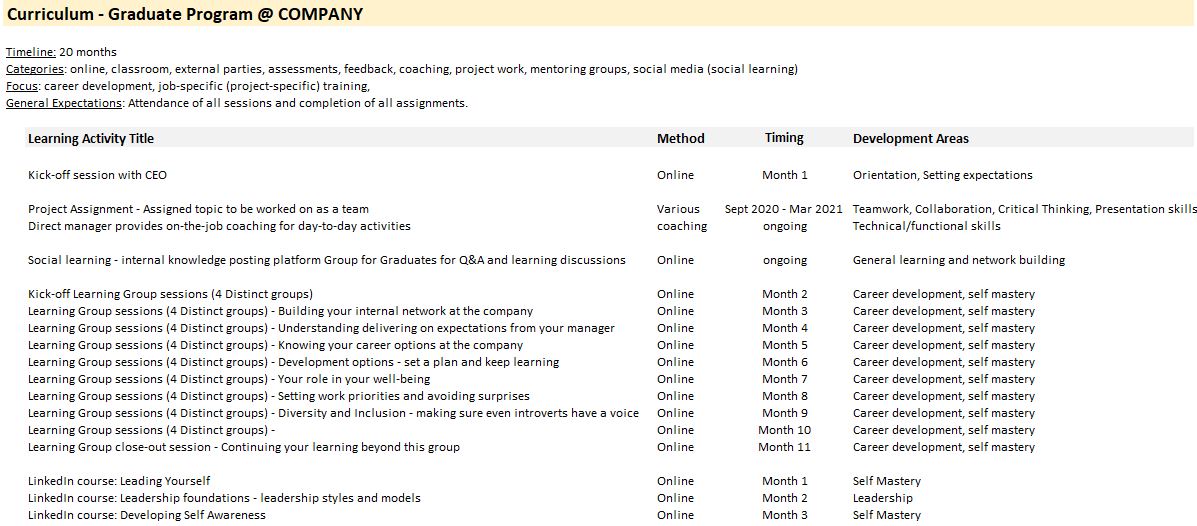
Snapshot of a learning program for graduates

Note:

  1. Always start by understanding what you are trying to address before you start designing your development program. What is the learning need? What is the business value of employees having this knowledge and experience?
  2. When does the business need employees with these new skills, understanding and experiences? Is it short-term (within the next year), medium-term (between 1 and 2 years) or is it longer term (more than 2 years)? Knowing the timeframe also helps you decide what to develop internally vs outsourcing the entire program or parts of it.
  3. Who needs to learn these new skills/behaviors? Be very clear who is your target population for this development program (How many years of experience do they have right now? What kind of experience do they already have – functional, geographic etc.).

Preparing managers to support learners

Employees are more motivated and do better when their managers are onboard with their participation in the development program. Be sure to engage with managers before participants are told about the program. Managers need to understand the business context of the development program, why someone on his/her team is included in the program (if they were not nominated by the manager) and how to support the employee throughout the program. Some manages may need training or coaching in this regard.

Snapshot of a manager checklist

Employees participating in these kinds of development programs are often still working in their current roles. Supportive managers not only expect good results in their departments or projects, but also hold employees accountable for completing program assignments. This gives employees the best chance of completing the program successfully.

Preparing attendees to succeed

Development program attendees need to understand more than just the program contents and overview of dates. An orientation session for intended program attendees could help with that. The session gives them an opportunity to understand the business context and benefits to their own careers plus they can ask clarifying questions before committing to invest the time and effort needed to successfully complete the program.

Snapshot of Program Attendee checklist

And orientation session with development program attendees should include at least these topics:

  • A welcome message from an executive, usually the sponsoring executive, explaining the business value of the development program and also career benefits for attendees.
  • A message from Talent Development explaining program expectations, the blended learning approach, deadlines, the team assignment and any other relevant details of the program that attendees should know about at the start.
  • If the program existed before and there was a redesign or some changes were applied, explain how the current programs differs from previous versions some attendees may have heard about in the past.
  • Provide the opportunity for some Q&A

Keeping learners motivated when a development program runs over many months can be a challenge. Helping to keep attendees focused on assignments and deadlines can be easier when you build in challenges which generate leader boards (friendly competition) or where individuals can earn points or badges by completing specific tasks. Adding recognition by the manager/group/department can also be helpful. Recognition can include anything from a small token offered to attendees after completing a specific portion of the program to being mentioned in the company newsletter.

Hopefully these three templates (see download links above) are useful as you review your own planned development program. Do download the 3 files above if you need to see the templates in detail.