From Silos to Synergy: Ignite Team Collaboration with a Creative Art Exercise


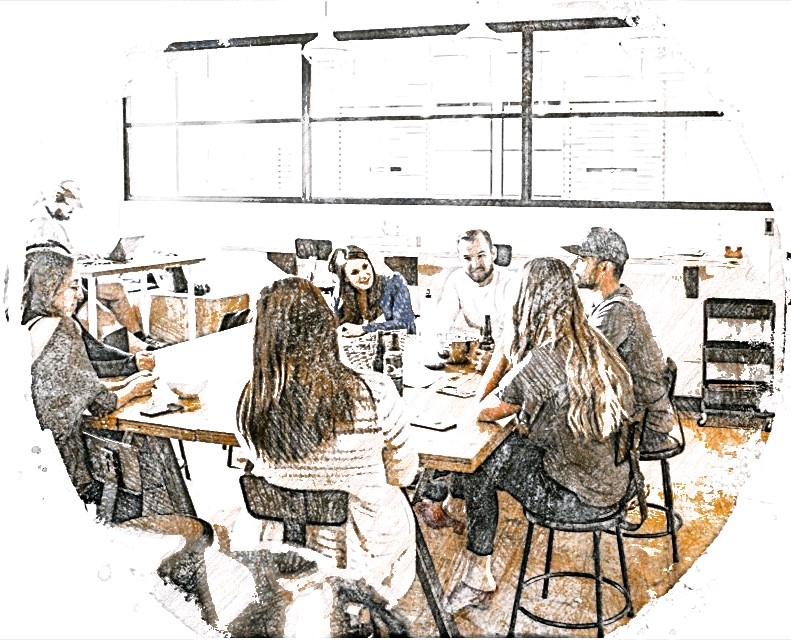
Collaboration is all about tearing down invisible walls between functions and geographies and bringing people together in a way that feels natural and fun. This collaborative canvas activity uses art to help everyone experience working toward a shared goal. Each person adding their own splash of creativity to a group masterpiece supports reflection on how each participant supports the big picture — all while getting a fresh take on teamwork, company values, and communication.

It’s a hands-on way to see how different ideas can blend into something unique, and why trust, adaptability, and shared ownership are key to breaking down silos and achieving success together.

This interactive activity is designed to break down silos between departments and regional leaders by improving collaboration, adaptability, and shared ownership. Using art as a medium, participants will explore teamwork, communication, and how individual contributions blend into a collective vision.

Canvas Arrangement – Multiple A4-sized canvases are set up in a circle, with each canvas facing outward to allow participants to engage without observing others’ immediate responses.

Materials – Brushes and paint, exclusively using the corporate color palette to reinforce company identity. Note that each participant receives one brush and one color, symbolizing their unique perspective and input.

  1. Music begins playing softly as participants settle in front of a blank canvas, encouraging focus and creativity.
  2. Once everyone is ready, the music is turned down, and clear instructions are shared. While participants work on their canvas for those 30 seconds music can be played – it is optional.

Engagement

  1. Participants start by standing in front of a blank canvas with their designated color and brush in hand.
  2. Each person responds to 4 prompts (statements or questions) that align with the company’s:
    • Vision
    • Mission
    • Values
    • Reflection on last year’s operational and financial results

Rules

  • Each round lasts 30 seconds from the moment that the sentence or question is read.
  • During this time, participants draw or write their responses on the canvas in front of them using the color and brush they have been given.
  • At the sound of a bell or signal, each participant is to move clockwise to the canvas on their left.
  • Each participant must continue to respond to the new prompt on the next canvas, building on the contributions of others.
  • No returning to anyone’s original canvas or modifying earlier work.

Rounds

Each round features a new statement or question to react to creatively on the canvas in front of each participant using only the brush and color each has been given.

Prompts should spark reflection on the company’s collective goals and inspire responses that challenge silos:

Once all 4 rounds are complete, participants step back to look at the canvases, including their original starting piece. This is a powerful moment to consider team topics like shared ownership, teamwork, collaboration, and adaptability.

Debrief questions

  1. How do you feel about how your original canvas turned out?
    • Did it match your vision, or was it transformed by others’ input? How did you feel about the contributions of others on your original canvas – did it turn out better or lesser than you hoped?
  2. What was it like contributing to a canvas where you disagreed with earlier markings?
    • How did you adapt or build upon previous ideas? Even if and especially if you disagreed with what you saw when you moved to that canvas?
  3. How does this experience relate to teamwork in our company?
    • How do we handle differences and align diverse contributions across departments or regions? Can we do better?
  4. What lessons can we apply to ensure better collaboration and a shared vision moving forward?

It’s not just about the finished artwork but about realizing how individual efforts combine to create something meaningful together. This activity highlights the importance of adaptability, communication, and trust when working across teams. The lessons learned can be applied directly to real-world collaboration — helping teams break down silos, align their contributions, and work more effectively toward shared goals. Plus, the visual reminder of the canvases can serve as a lasting prompt to keep these ideas top of mind in daily work.

This activity is more than just a creative exercise — it’s a powerful way to see teamwork in action. By adding your unique perspective to a shared piece of art, you experience firsthand how collaboration, communication, and trust can transform isolated efforts into a cohesive result. It’s a reminder that breaking down silos isn’t about losing individuality, but about combining strengths to achieve something greater. As each participant steps back and looks at the final creation, they will see the potential for better teamwork, adaptability, and shared success, ready to carry those insights into everyday work.

Streamline Your Workflow: Start, Stop, Change Strategy


Feeling overwhelmed by your to-do list? It’s time for a fresh approach. Whether you’re figuring out what new tasks to start, which processes to stop, or where to make improvements—including sustainability initiatives—this simple method will help you cut waste and boost efficiency. Think of it as a game-changer for your workflow, empowering your team to work smarter, not harder, while making real progress. Change doesn’t have to be overwhelming; it’s about making strategic, impactful adjustments that lead to better results, smoother workflows, and more sustainable outcomes.

A Fresh Approach to Tackling Chaos

Ever feel like your to-do list is out of control? This simple method helps bring clarity, meaning, and direction to your tasks. Whether you’re deciding what new actions to take, which processes need tweaking, or which habits to drop, this approach will streamline your workflow, boost productivity, and make your routine more manageable.

Even the best processes lose their effectiveness over time or fail to take advantage of the improved availability of better tools and templates, signaling the need to reassess. While big changes can be costly, small adjustments often get things back on track. The method I’ll share is perfect for team brainstorming, making it easier to identify areas for improvement together.

Think of it like tidying up a familiar room. Some things need to go, while others just need a small fix. This tool helps you do the same with your work, identifying what needs to change, what new actions to start, and what habits to stop.

Importantly, it’s also about working smarter with sustainability in mind. Rethinking processes to reduce waste, conserve resources, and adopt eco-friendly practices not only improves efficiency but also builds a more sustainable work environment for the future.

Think of yourself as a gardener, planning to refresh and revive your garden. To improve a process or outcome at work or in a volunteer setting, you need to plant new “seeds”—ideas and actions that hold the potential to bring positive change. These are the things you want to start doing to make a meaningful impact.

Ask yourself: What new tools, strategies, or approaches could help streamline work, solve problems, or improve how people experience your organization or team? It might be a fresh approach to a recurring issue or an idea that could make things more efficient. Like planting new flowers in a garden, these initiatives will need your time and attention to grow and flourish.

By starting these key actions, you create opportunities for improvement and success and build an environment that thrives on new ideas and growth.

When we talk about what needs to stop in the workplace, we’re focusing on behaviors and habits that hold everyone back. Think of gossip—it’s like a poison that erodes trust and divides teams. Then there’s micromanagement, which stifles creativity and leaves people feeling frustrated and demotivated. And multitasking? While it might seem productive, it often leads to mistakes and burnout. By eliminating these negative behaviors, we can create a more positive, collaborative, and efficient work environment.

Stopping isn’t just about behaviors, though; it’s also about simplifying how we work. This means cutting out unnecessary steps, avoiding redundant processes, and leveraging technology to make tasks easier and faster. It’s about working smarter, not harder.

The key to success is getting everyone involved. When the team collaborates and shares insights, it becomes easier to identify which tasks or processes don’t add value—and figure out the best ways to eliminate them. This not only streamlines workflow but also helps the entire team feel more aligned, motivated, and connected.

When identifying what needs to be changed, it’s about finding those processes or tasks that work to some extent but aren’t quite hitting the mark. These are not things you want to stop completely, but they could benefit from refinement or improvement. The goal is to enhance their efficiency or effectiveness rather than overhaul them entirely.

This step is about finding out with your team where bottlenecks occur, where confusion arises, or where inefficiencies creep in. Perhaps you uncover small tweaks that make a big difference. For example, a task might be taking longer than necessary because of an outdated step, or perhaps communication between teams could be improved to streamline a handoff.

Other possible candidates for change may lie in opportunities to improve: Are there tasks that could be automated? Is there a process that could be shortened or simplified without sacrificing quality? Sometimes it’s as simple as adjusting timelines or reallocating resources to better fit the demands of a project.

The key is not to throw out processes that have potential but to fine-tune them. By making small, thoughtful adjustments, you can improve the overall flow and outcomes. Involving the entire team in identifying these areas for change ensures that the solutions are practical, realistic, and beneficial for everyone.

Setting up time with the team

To kick off improvements, start by gathering input from everyone involved in the workflow. Set up a dedicated meeting where each person can share their unique insights. By involving the whole team, you’ll gain a diverse range of perspectives, helping you identify opportunities for improvement far more effectively than if you were working alone.

To make the session productive, team up with coworkers and dedicate about an hour to look for ways to enhance how you work, the environment you work in, or how your organization delivers value—whether it’s to customers, clients, or those benefiting from your volunteer efforts.

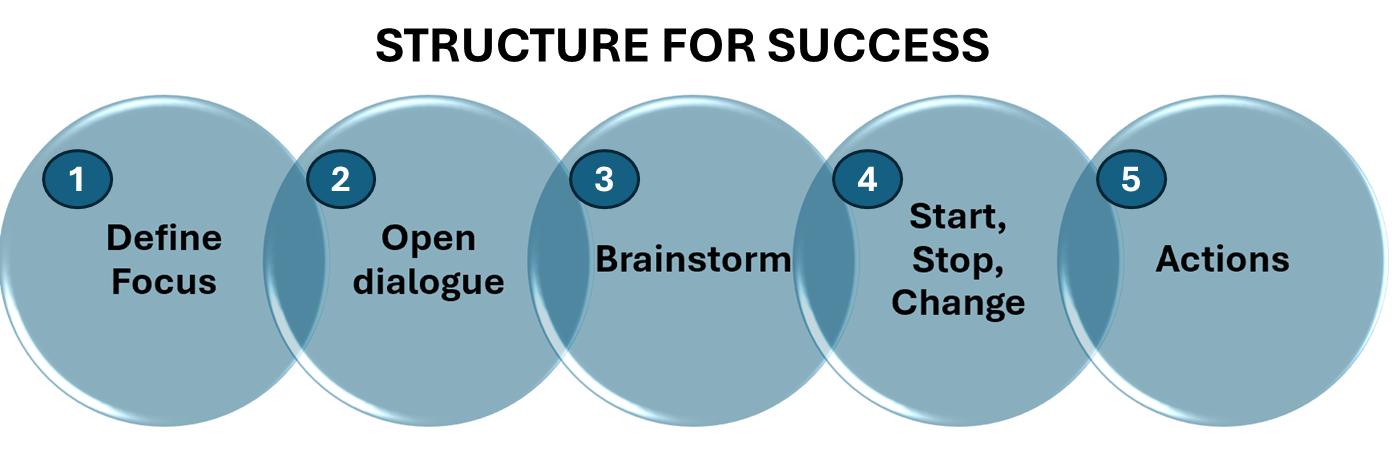
Here’s how to structure your session for success:

  1. Define the Focus: Clearly outline what the session is about. Are you looking to improve a specific process, boost safety, streamline workflows, or enhance customer/recipient satisfaction? Make sure everyone understands the goal before diving into discussions.
  2. Encourage Open Dialogue: Create a safe space for everyone to share their ideas, frustrations, and suggestions. Emphasize that all feedback is valuable and will contribute to positive change.
  3. Brainstorm Together: Work as a group to explore ways to make things better, smarter, and safer. This could involve improving the way tasks are done, optimizing the workspace, or enhancing the delivery of value to customers or the community.
  4. Capture Ideas: Use Stop, Start, and Change flipchart pages to organize ideas. After brainstorming, categorize the suggestions:
  • Stop: What isn’t working and needs to stop?
    • Start: What new actions, processes, or tools should be introduced?
      • Change: What existing processes could be improved with a few adjustments?

5. Assign Actions: Once ideas are gathered, assign ownership for each action. Ensure there’s follow-up so the insights gained from the session translate into real improvements. Also, set up a follow-up recurring meeting to review how things are going to discuss if you need to change or improve how you are implementing actions to be more successful and avoid obstacles to success.

By following this structure, you’ll ensure that your team collaborates effectively and walks away with actionable steps to make meaningful changes.

Keep Stakeholders in the Loop

After the meeting, it’s important to keep key stakeholders, such as your supervisor or others involved in the implementation, informed about the progress. Provide them with an update on the discussions, including the proposal for items to start, stop, or change. This transparency ensures they are aware of the team’s efforts and can offer support as needed. Additionally, ask for their feedback and suggestions. This will help ensure that no key opportunities for improvement are missed and that the plan is as comprehensive as possible. Engaging others in this way enhances collaboration and strengthens the overall success of the initiative.

Now It’s Your Turn to Change the Game

Taking a structured approach to what you start, stop, and change can really improve how your team works and help you reach your sustainability goals. I encourage you to take a fresh look at your team, your environment, and how you get things done. Find ways to not only make customers happier and save money, but also to reduce waste, save resources, and lessen your impact on the planet. Involving your team in this process will help everyone work smarter and feel more motivated as they see their ideas making a difference. Whether you’re working or volunteering, these changes can lead to a more rewarding and sustainable experience. Now is the time to act—start looking for where you can make a real difference for your team and the environment.

Sustainability Awareness Workshop


– Getting creative instead of trashing items –

Single-use packaging is intended to be used only once before being thrown away or recycled. Included in this kind of trash would be food packaging, bottles for laundry detergent and other household goods, straws and boxes for tea bags, etc  From a global perspective, over 90% of trash is estimated to come from single-use materials. The good news in some countries is that over 50% of packaging is recycled.

The upside-down pyramid for waste shows the more preferred ways to deal with it.

When it comes to waste, the best option is preventing the waste from coming into our homes or office buildings, the 2nd best option is to reuse items somehow, and then comes recycling. Increasing awareness in your team is important – of being more responsible with their purchasing choices and choices regarding trash that passes through their homes or at the office. This workshop can improve awareness of how to reuse items instead of discarding them.

Participating in this workshop will show participants how to look at packaging trash from the perspective of reusing it, and creating a new purpose for single-use packaging. You can open the workshop by reflecting on trash and recycling in your city/location and how they could all help to improve those statistics by being more mindful of the items they bring into their homes (avoiding single-use packaging as much as possible) and also to not be so fast to throw away items that had only been used once at the office.

If you are passionate about having a positive impact on the sustainability habits and thinking of others in your organization, in your family, or among friends, why not get 4-6 people to join you in being creative with packaging that would have otherwise been discarded.

Items you can use in the workshop:

Most households would be easily able to collect some items like small carton boxes and items, printed pages that are no longer needed like advertising leaflets thrown in through mailbox slots, and paper-based packaging used for supporting fruits purchased in supermarkets. In the office, there could be boxes that contained pens and pencils or paperclips.

Two ideas to consider for the activity:

Paper Mache (papier-mâché)

You can make the paste using flour and water (see https://kinderart.com/kitchen/papier-mache-recipes/) tear the collected sheets of paper into strips about 1 inch wide and dip them thoroughly into the paste mixture. Strip off the excess mixture from each strip before applying it. It works well if you pull the strip of paper through to the other side between two fingers. Build up the desired new object by applying only one layer at a time and waiting for that to dry before going to a new layer. Dried objects can be sanded to improve the smoothness of the finished project before you apply an environmentally friendly paint design on top. Ideas of items that might be useful include containers for jewelry, organizing loose containers into a neatly contained area, or creating a container for paperclips and other office items that could be cluttering up desk drawers.

Coffee Stirrers

Make sure the used stirring sticks are free of coffee remains that could interfere with the gluing process.  Design ideas could include coasters for cups, glasses, or mugs at the office or at home. You could also build containers for pens or other office supplies. Remember to wait until the glue had dried before putting items on your built items to avoid breakage! And again you might use environmentally friendly paints to finish your coffee stirrer design items.

To limit the space and supplies needed for your workshop team activity, it may be wise to pick one type of project to work on vs trying to cover several types of projects in one space.

Workshop Programme

Welcome, and introductions – if not all participants know each other, allow time for everyone to introduce themselves.

Overview – talk about the reason for the workshop and focus participant attention on sustainability and how sustainability principles relate to the way we think about and how we deal with the packaging associated with purchases. Give them some trash generation and recycling statistics for your local area to help them understand the scale of the issues faced environmentally with how things are going in your area. Introduce the workshop as a way to become more aware and get creative with packaging waste that comes from homes and offices. Creative activities in groups are also great ways to improve the mental health of individuals and feelings of belonging in a team or group.

Activity – introduce the chosen activity and explain the materials available to participants. Make sure people know how much time you have planned for the activity and if there will be follow-up opportunities to complete projects or whether they could take any half-finished projects home to finish them there. Walk around while participants work on their projects and support them with advice where needed. Always make sure that safety is a priority and be sure to explain any dangers such as using cutting devices or opening and closing drawers and cupboard doors in the workshop area.

Closing – when the workshop time is at the end. Thank everyone for participating and being willing to learn new ways of looking at single-use packaging as small steps to help improve the generation of trash in your area. Remind participants of how they could finish up their projects and encourage them to share pictures of completed items with the team/group.

Awareness

The first step to improving any situation is awareness. This kind of team or group activity is a great way to increase awareness of the issues at hand with local trash generation and how each person can make a difference in small ways. Using creative endeavors to address this issue is also enjoyable and can be a great way to improve feelings of mental well-being, which is something we all can use in today’s world.

4 Common Disconnects on Multi-Cultural Teams


Working on multicultural teams you may have had moments of wondering what he or she just meant by that comment? Or why will he or she not make a key decision so an activity can move forward? Cultural perspectives and ways of life may be one of the reasons that could explain those incidents.

It is fun to meet people from other cultures and learn about their lives and experiences. And at first it may be interesting to learn how their cultures vary from your own, but once you work on a project together and it is remote working, including long hours and tight deadlines those differences can start to cause friction on the team. This can slow down progress and impact team morale. Being aware of the most common inter-cultural disconnects can prevent team members from blaming it on a person and instead enter into a discussion to unpack the root cause of a lack of action, lack of decision-making or the exact opposite – too many fast actions without thinking or making decisions without considering consequences.

4 Areas of misunderstanding that can impact inter-cultural teams

Some things are smart to do in order to ensure the team understands required project outcomes and approaches to use. Aspects would include clarifying the definition of done, outlining project phases and deadlines, assigning roles and responsibilities and having regular meetings to monitor and understand progress and resolve issues that are hindering progress or pose a risk.

Some aspects may need additional attention if your team consists of a few members from very different cultures.

1. Managing to deadlines

This relates to how important team members believe deadlines are. Some may see them as a guideline while others will suffer anxiety and will work longer hours to make sure the are met. In some cultures, there is a strong emphasis on being for example exactly on time for an appointment while in other cultures it may be okay to be a few minutes late for business meetings and perhaps even a few hours late for a social engagement.

Cross-cultural impact:

  • Make sure all team members understand the consequences, knock-on effects and penalties which may be triggered if the team missed deadlines. Monitor progress and have follow-up conversations if team members are falling behind to ensure they understand the importance of their activities being completed on-time.
  • Ensure team members understand the priorities they should place on various aspects of the work that needs to be done by the deadline. Ensure it is also clear exactly what “done” means. Do you expect quality checks to be done too or just a first draft of the outcome to be available? Should it be print-ready or just ready for an internal review or further discussions?

2. Clear Role Expectations

There are differences in cultures around the meaning of “in charge” or the Subject Matter Expert (SME). In some cultures, it is customary to take the word of such a person as a mandate to perform a specific task or action exactly according to what he/she said. In other cultures, SMEs and leaders are considered more “accessible”, and dialogue is welcomed when one does not agree with a requirement or task assigned by the one “in charge.” This difference can cause confusion on teams including many different cultures. To what degree can and should instructions be discussed and challenged vs accepted? Are those in expert roles or roles with authority prepared to deal with challenging discussions and comments – if the project team will operate in a culture of open discussions?

Cross-cultural impact:

  • Have a role discussion at the start of the project and include what would be great questions to ask each role and how interaction is expected to take place on the project to maximize positive team outcomes.
  • Be sure to have further discussions highlighting best-practices during the project and as new team members join, who may have missed the original discussions around the different project roles and how to best interact with them.

3. Conflict resolution

Conflict shows up differently in each person – some people speak up and go to the “max ” to be heard and understood while others take their thoughts, feelings and especially resentment underground and do not speak out. This means that conflict can be hard to resolve and to feel comfortable that all thoughts and concerns are on the table and discussed before decisions are made. Some cultures are more likely to speak up and make sure their opinions are voiced while others might patiently and politely wait to be asked for an opinion and speaking out of turn (from their perspective) may be seen as impolite or disrespectful. In some cultures open disagreements are best avoided to maintain a cordial/good relationship with others on the project.

Cross-cultural impact:

  • Use more than one channel to check in with team members and get feedback – ask in meetings, but also check in with individual team members between meetings to understand if there is any part of the path forward chosen which concerns them.
  • If any team members are especially aggressive in voicing opinions, perhaps a quiet word might help that person to still voice opinions, but possibly in a less forceful way to avoid antagonizing anyone from a culture where a forceful (overly enthusiastic ) communication style might cause discomfort.
  • Provide training in non-violent communication and voicing messages with a healthy balance between listening and advocating. Help team members to constantly improve in understanding each other’s styles to help communication and collaboration efforts on the project.
  • When a conflict does occur, address it in a culturally-sensitive way if the disconnect could be related to a cultural difference in perspective. The objective should be to solve and address project issues in a helpful way without causing negative impacts to collaboration on the project.

4. Navigating with many languages

We all know of situations where people from the same country with the same language find it hard to communicate successfully with understanding and openness. When a team consists of many different cultures, this can be so much more confusing and frustrating.

Cross-cultural impact:

  • Agree from the start of the project to follow a few guidelines such as: For the chosen project language, native speakers are to slow down and use simple ways to bring their points across. And native speakers of the main project language will be patient with non-native speakers trying to get their thoughts across. If there is a large language ability gap between the native-speakers and other team members consider some language classes to bridge the gap.
  • Consider asking presenters/speakers at planned meetings to send out specific agenda items and a summary paragraph of the issues to be raised and discussed at least a day before the meeting. That would help non-native speakers to prepare ensuring they understand the issues and are able to fully participate in the conversation at the meeting.
  • When there are significant differences in levels of language abilities on the team, meetings may take longer, and collaboration may also be a little harder especially in a virtual/remote environment. Be sure to take this into account when planning project timelines and deadlines.

Plan ahead to succeed

Knowing you may be starting up a project with a multi-cultural team, schedule team-building activities for team members early on. This will help them get to know each other as humans/people. Establishing trust early on, can avoid frustration turning into conflict and delays in reaching project team deadlines.

Create team opportunities to get to know more about each other’s cultures. This could bridge the gap in understanding each other’s perspectives and avoid labeling, misunderstandings, and internal team misalignments..

Set continuous learning as one of the core values of the team and live it, encourage it and keep bringing the team back to what can be learned from successes and failure as the project progresses. Having a curious and learning mindset is a great way to avoid major disconnects between team members as they will engage in inquiry and advocacy vs judgment and labelling as a default behavior.

Top 10 Reasons Why Communication Fails


We all had times when we were misunderstood or simply did not feel we truly understood what someone else was trying to say. When you have communicators from different national backgrounds, the chances of misunderstandings increase. If you also throw in the fact that only a handful of people in the room have English as a first language, the chances of misunderstandings are magnified even further.

Here are the top 10 reasons why messages may be understood by your intended audience:

What can you do about it?

Wisdom is realizing there is only so much you can impact or control, other factors you may be able to influence, but not change or control. Focus on what you are able to do.

Cultural impact: Whereas you may not be able to impact where someone grew up, you can learn more about the cultures of others on your team to correctly anticipate any possible impediments to your messages being understood or interpreted correctly.

Not my Language: Knowing how many of your team members do not have English as a first language can help you prepare your messages using simple sentence structures and more common words to avoid confusion.

Distractions (obvious): Ensure that there are no distractions to people being able to pay attention to and maximize their ability to understand you correctly during meetings. In remote settings, having participants on mute where ambient noise causes a distraction on the video call. You can also ask everyone to turn on their cameras to improve engagement during a remote call.

Fake news – Source reliability: Ensure that any data you plan to use is sourced from reliable sources – reputable research companies or institutions. Making the resource material or reports available to team members may further positively impact your ability to avoid your message not being accepted due to doubts about the source of key facts presented during your meeting.

What they know: Ensuring that intended meeting participants have enough pre-reading to help them fully engage with the topics you wish to discuss may avoid spending time filling in knowledge gaps that some may have on the topic. Where your topic may be controversial, do not shy away from mentioning opposing views and why you do not support those perspectives.

What they prefer: If you have a high number of team members who prefer to have material available earlier to study it and form their opinions, consider sending key reports out before the meeting. This will improve chances of having an engaging discussion about the topics you plan to cover in your meeting.  Some intended meeting participants may focus more on the financial data, or operational data etc. Be sure to have relevant information available to address predictable questions in these areas.

Judgement before you said a word: If there is something unusual about your appearance of name, consider mentioning it up front or tell a story about it to neutralize the observation and get their attention. Make sure you dress for the occasion to avoid interfering with your own messages.

The last four categories are not easy to impact since they are closely linked to everyone’s psychological make-up or habits. Based on past experiences, personal beliefs and values, people will naturally be drawn towards or away from agreeing with your perspective on a range of topics. Knowing your team or those who would attend your presentations, might help you avoid the pitfalls. Other than that, you may need to use pre-engagement and post-engagement activities to give your messages a higher chance of being correctly interpreted and understood.

The Checklist

Click below to download an excel checklist to help you do a quick check – where can you be more effective when you communicate? Perhaps the checklist shows areas impacting your communication with a key team member. Talking about specific areas impacting your communication success, you may be able to improve your ability to correctly interpret and understand each other’s messages.

7 ways to fix your team


If you shine a light on any team you will notice some areas where processes, communication or collaboration can be better. In many cases a team can function well enough even with a few improvement opportunities. Want to do a snapshot checkup on your team? The downloadable tool below can help you identify any specific areas to focus on if you feel your team performance can use a nudge in the right direction.

When teams fail it is usually recognized as a combination of the team not reaching desired outcomes, team members feeling a high level of dissatisfaction and frustration with team processes and other team members and team leaders failing to accomplish their own goals for the team and for their own career growth.

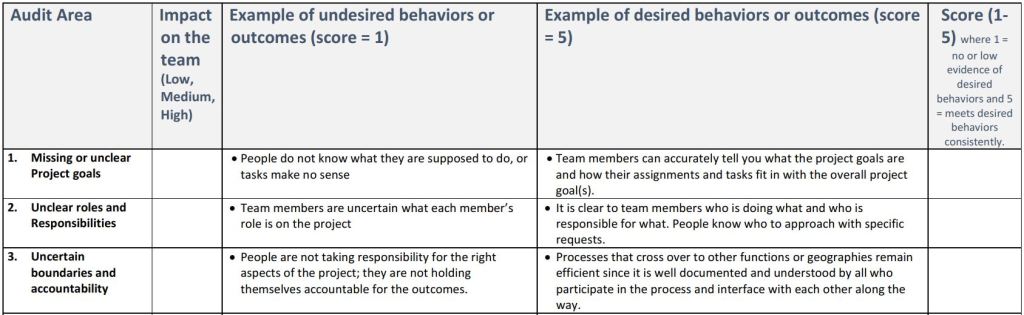
The 7 aspects of teams shown below are classic areas where low performance could lead to team failures.

7 troubles with teams

Taking a closer look

Step 1

The first column to complete is the scoring column. The question would be – how do I know that my team may be experiencing this trouble? The audit list gives you a possible symptom of observable behavior on either side of the scale: desirable (give this a score of 5 if your team shows this behavior) and undesirable (give this a score of 1 if your team shows this behavior). Should your team display behavior that is somewhere between those two opposites select a score between 1 and 5 that you feel is most accurate to describe how far they may be from either end. Perhaps a score of 3 would be appropriate if you see desirable behavior only 50% of the time.

Step 2

Look at the column called impact. When you look at the behaviors defined as undesired and also the other column containing desired behaviors, how much does it impact the outcomes produced by your team when those behaviors are present or not present? Maybe the impact is “high” if you consider how many hours are wasted when that behavior is present? Maybe it is only “medium” which means some time or effort is wasted, but not too much. And it could also be a “low” impact if that particular behavior does not contribute highly to the inefficiencies you experience as a team experiencing a particular aspect from the audit list.

Step 3

Evaluate your results by looking at both the scores column and the impact column. The graphic below shows the way to identify which of the aspects to focus on when it comes to prioritizing an area to address:

The download file above gives you an audit sheet to use in order to capture results for step 1 and 2.

How to fix any of those?

Once you have the priorities from step 3, it is time to take action.

For each of the area that can be addressed, there are some ideas of how to address that area for the team.

The download file above has suggestions for each of the 7 areas that can be addressed.

Remember

Every team has good times and bad times. Just because your team just did very well, it does not mean it will necessarily continue to go well. And just because your team failed last week, it does not mean there is no way to make it a high-performing team!

Use the tool above to take a closer look at your team and I wish you success in mapping out your next steps; helping your team be even better than it was before!

Spotting Employee Flight Risks: A Retention Checklist


20200524 risk ass

It has been said that your most valuable asset walks out of the doors every single day and you can but hope they come back the next day – your employees!

Keeping employees from leaving a company could be as simple as engaging with them, including them, helping them develop new skills and listening to their ideas. While that sounds deceptively simple, not every leader finds it easy to act when they hear that advice.

Get the facts

Understanding Your Team’s Pulse

Before diving into solutions, it’s essential to pinpoint the problem areas. Are employees considering leaving? If so, who’s most likely to exit and why? By asking the right questions and gathering data, you can identify potential risks and take proactive steps to boost employee retention.

The self-audit list below may be a good place to start assessing how much anyone on your team may be tempted to leave your team or the company.

Self Audit template

Completing the checklist requires you to answer yes or no to a series of statements as they would apply to each employee on your team. Once you have completed the assessment, add up the number of “no” answers you have for each employee and use the Score guide at the top of the page to determine whether each employee would be in the low, medium, or high risk from an employee retention perspective.

The next risk to assess is the impact it would have on your project or team if that particular employee decided to leave. Look at each employee (each column) and consider the unique skills and talents that he or she brings to the project and rate the impact that his/her (unplanned) voluntary departure could have – low, medium, or high.

Map it

Where to start? Map the answers from the self-audit sheet onto the graphic below. The risk that each employee could decide to leave on the horizontal access and the impact on the project, in case that employee did leave, on the vertical axis.

Then write down the names of employees that would be in the “green zone” vs the “yellow zone” vs the “orange zone”.

The orange area requires immediate and high focus, and the yellow zone does require focus, but less so. The green zone requires maintenance. Do not assume that because a retention risk is low today it would stay that way for years. Many talented employees get calls and offers from other companies and recruiters all the time! This means you should never stop reminding them why you are happy that they are on your team! And don’t only tell them, show them! Celebrate milestones and successes, recognize them in meaningful ways, and show them how working with your team or company is the right long-term strategy for them. Make sure you offer them advantages towards their overall life goals, their career goals, their work-life balance goals, etc.

Take action

Once you know where to focus, use the last worksheet as a checklist for areas where you can lower the risk that someone may consider leaving the team.

Use one checklist per employee and make sure that you have conversations with each employee about the areas where you either did not know the answers (looking at the self-audit worksheet) or you have not said anything to an employee about a particular area.

When it doesn’t work

Unexpected departures can disrupt teams and projects. That’s why it’s crucial to have a strong bench of talent ready to step up. By investing in employee development and creating clear career paths, you can mitigate the impact of turnover and ensure business continuity.

Taking proactive steps to assess employee retention risk is essential for organizational success. While it doesn’t guarantee zero turnover, it empowers you to identify potential departures early and take steps to improve employee satisfaction and engagement. By investing in your team’s growth and well-being, you’ll create a more stable and productive work environment.

Transform Your Meetings with Role-Based Engagement


Picture1

Tired of unproductive meetings? It’s time to shake things up. By assigning specific roles to participants, you can harness the collective intelligence of your team and achieve more in less time. Discover how to structure your meetings for maximum impact and engagement.

Are your meetings draining your energy without delivering results? Was there insufficient time to consider all the options available or make the best decisions following an open discussion? Perhaps it is time to consider assigning roles to those who attend your meetings.

Productive Meetings

Unleashing the Power of Effective Meetings

Meetings often suffer from a lack of focus and engagement. By assigning specific roles to participants, we can transform these gatherings into productive and collaborative sessions. When everyone has a clear purpose, discussions are more focused, decisions are made faster, and everyone feels valued.

By designating individuals as questioners, devil’s advocates, or summarizers, you encourage diverse perspectives and ensure all voices are heard. This approach fosters a more dynamic and productive meeting environment where everyone contributes meaningfully to the discussion and decision-making process.

The roles are specific and defined and it would require specific individuals to act accordingly for the duration of the meeting. Roles can vary from being the one to bring up a lot of questions about the issues on the agenda to being someone who plays devil’s advocate or being the critical one when it comes to suggestions tabled for consideration. Of course, all meeting participants continue to bring their own skills, opinions, and knowledge to the meeting and are expected to contribute those to the discussions too.

How to assign roles

Roles can be assigned before a meeting, the chairperson can ask meeting participants to volunteer for the various roles before the meeting starts or the chairperson can randomly assign roles at the start of the meeting (often done by means of handout out cards which explain the task of each role on a 2×4 inch card).

Task roles to assign

Initiator/Contributor

Contributes ideas and suggestions or proposes solutions and decisions. Proposes new ideas or reframes existing ideas in a different way.

Information Seeker

Asks for clarification related to comments – are they based on verified data? Asks for information or facts relevant to the problem. Suggests when more information may be needed before making decisions.

Opinion Seeker

Asks for clarification related to comments made by meeting participants.  Find out how people feel about ideas on the table.  Include those who have not yet been able to contribute an opinion during the discussion.

Critic

In a constructive manner, verbalize ways in which a suggestion or idea could have unforeseen negative consequences for other (internal or external) stakeholders in the implementation of such a suggestion/idea.

Process guard

Indicates decision-making errors and biases which may be skewing support towards a particular outcome. Points out departures from agreed-on agenda and discussion goals. Tries to bring the group back to the central issues and raises questions about the direction in which the group is heading

Summarizer

Summarizes what has taken place and what decisions have been made to date. Reminds the group of assumptions made along the way during discussions.

Note-taker and timekeeper

Keeps notes of decisions made, and actions agreed to. Reminds the group of an approaching break/end of the meeting.

Dysfunctional roles at meetings

Sometimes meetings are unproductive because one or more meeting participants are engaging in playing a dysfunctional role during the meeting which stifles discussion, shuts down conversations, and focuses the attention in unhelpful ways. Discussing these before the meeting starts could be another way to create awareness of unproductive meeting behaviors in order to avoid them. Sometimes it can be interesting to review a meeting in hindsight to identify if anyone engaged in any of these dysfunctional roles. This would be useful to help meeting participants develop self-awareness related to their meeting participant behaviors.

dysfunctional roles

By implementing role-based meeting structures, you can transform your gatherings from time-consuming obligations into dynamic problem-solving sessions. Not only will you achieve more in less time, but you’ll also foster a collaborative environment where everyone feels valued and engaged. Remember, it’s not just about the meeting itself; it’s about the outcomes and the impact it has on your team’s overall productivity.

Preparing to facilitate a Team Session


201905

The success of team events or sessions can be more predictable when facilitators gather information from invited participants and stakeholders before planning the agenda, activities, and presentations.  Knowing more about the current issues and expectations can greatly enhance your chances of ensuring the team faces what they need to focus on and deal with that in a constructive way.

The source I am sharing, is a list of pre-session interview questions which could help you get a good foundation about the team: what is working, what could be better and how each of the interviewees sees the situations faced by the team.

Some important notes about pre-session interviews:

Starting right
  • If the team members do not know you (the facilitator) yet, be sure to introduce yourself to each interviewee and mention your role in the upcoming planned session. They may have additional questions about your background and experience in this area and why you are working on the planned session. Be prepared to summarize these points before you get into the interview.
  • Make sure you can explain to what degree the responses will be confidential. You would typically want to share a summary of responses with the session attendees to help set the scene on the day and perhaps use that to initiate a discussion or lead into an activity to address something that was mentioned by several participants during the interview. Will you be word-smithing the responses to protect the identity of interviewees? Or will you share the raw data? You need to be transparent about that.
  • Why are you asking? Be sure to explain how the answers and responses will be used to plan the session and help the team move forward and past any obstacles that may be holding them back.
  • Let them know upfront that their questions about the session will be answered during their time with you (the interview).
Planning your approach
  • Will you interview individuals or groups of individuals that work in a specific department or functional group? Think this through carefully with regards to the advantages and disadvantages of this choice before you make that decision.  I usually recommend that the number of session participants is no more than about 20 – 25 people and I prefer to know each individual’s responses before I finalize my planning for the session. This means I interview each person separately. But I can also imagine that the team/project culture and approach could make it useful to interview small sub-groups within the team.
  • In person or online? I prefer to do the interviews in person to allow me the opportunity to ask follow-up questions on the spot. Sitting with someone and talking through the questions gives you the opportunity to also watch their reactions or pauses after each question. This can indicate whether some topics may be sensitive to the interviewee and again you could choose to ask more questions to better understand the issues at hand.
  • The right number of questions. It is important that the interviews do not become exhausting. Accept that you will not be able to ask every single question that you may have for the planned participants before the session. Some questions are best worked out by the group at the session. Be very selective and critical – ask only questions which will help you prepare for the session. The interviews are not intended to replace the planned group/team session.

The questions in the (download available above) resource range from understanding expectations to identifying possible issues that the team needs to address. It includes some questions which may help with understanding possible issues that could pose an obstacle to team success.  Some of the questions are also specifically there to help team session participants envisage themselves being a positive contributor to the success of the session.

I do not suggest that all of the questions would be relevant to every session that you would plan, as the facilitator. Instead, I suggest that you use the ones that make the most sense for the session you are working on and feel free to add additional questions as needed in order to improve your understanding in the relevant areas that the session needs to cover.

Finally, it is important to realize that just the fact that you are asking questions and providing interviewees an opportunity to discuss their thoughts and impressions is in itself already a change management intervention. You are setting the scene for the session and helping to shape participation before the session. This could greatly enhance group dynamics and ensure the success of the planned session.

Choosing between opposites


man on beam final

In many diagnostic tools for leaders and teams there is a scale which indicates how far the leader or the team is on a ladder between two opposite behaviors or style preferences. This could be for example critical evaluation on the one end of the scale and compassionate encouragement on the other side of the scale. (see example below).

These kinds of results are often used to coach and develop leaders and teams towards a desired behavior or culture.  In many cases the distinction between the “right” behavior and the “wrong” behavior is more linked to the situation at hand, associated risks and/or the person you have in front of you than a simplistic view of correct behavior. For example it may be less desirable behavior to be overly critical in an evaluation of someone who is new to the role and the company or team.  In another instance where the risks are high and the people on the team very experienced it may be more appropriate to perform a critical evaluation in the event of a major failure to achieve desired outcomes than to offer supportive encouragement.

blog scale graphic

This leads to the concept of managing or working with both of the ends of a linear scale. Choosing both sides in terms of developing leaders and teams can help them to have a bigger capacity to choose the right response depending on the situation.  The key is to develop awareness in them. Encourage leaders and teams to embrace more than one behavior or style to respond to specific situations or a tasks.

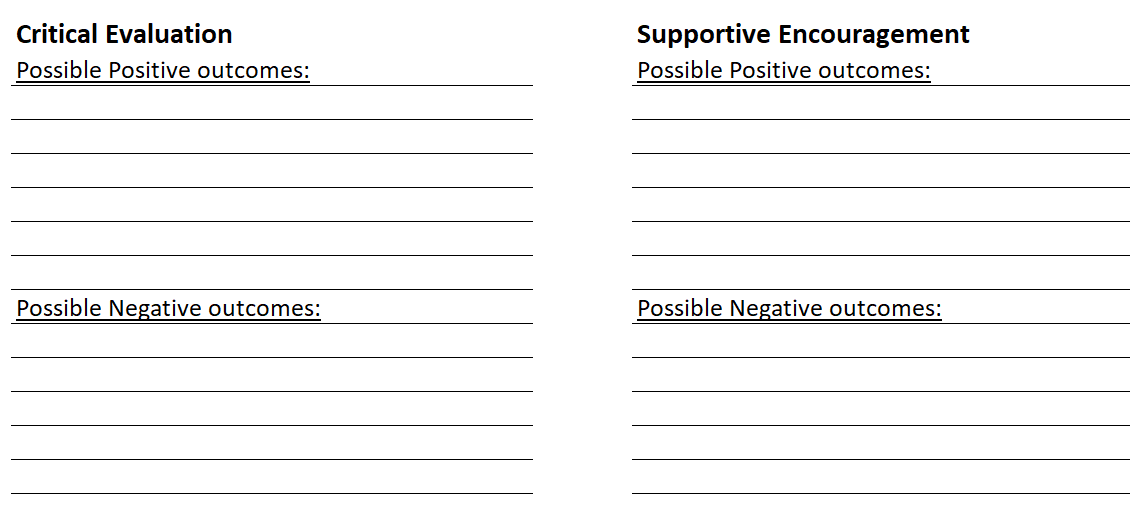
If we go back to the example above. You may be coaching someone or guiding a class of developing leaders through an exercise and this approach may be useful. Ask them to first of all identify the extreme ends of a scale of possibilities. Then identify for both extremes – the possible positive outcomes from that approach and also the possible negative outcomes.

blog polarity awareness

In a class situation you can also assign it as an exercise between two or more people to brainstorm together.

Once the exercise is complete you can lead a discussion with examples from the class or the leader you are coaching. When may it be appropriate to use one or the other behavior for the best outcome?  You can also choose to ask groups that had completed the exercise to prepare a demonstration (role-playing) to show the appropriate way to respond to a situation based on an example they discussed in the group. Or you may choose to provide some case-studies where the leader or class have to identify which may be the best approaches. These practical exercises will further help your participants understand the choices that they have as leaders when facing different situations and how to at least evaluate the best path forward before they go into action.

As a followup action you can ask participants or your coachee to capture examples they come across in the next few weeks/months where they had to make a choice between two opposite approaches and used the exercise above to identify the potential positive and negative outcomes. When using this approach one will will not necessarily avoid mistake or guarantee the most effective approach. The process of pausing and considering options will make the leader or team more effective over time and will improve decision-making.

Some examples you could consider for the exercise above:
  • Working independently vs working in groups/teams
  • People focused vs Task focused
  • Having a structured (fixed) approach vs a creative/open approach
  • Formal vs Informal approach to others
  • Monitoring others closely vs holding them accountable for outcomes created

This approach does not invalidate the tests which offer leaders and teams valuable insights into their own typical approaches and style preferences. This is merely another way to approach the outcomes from those tests to help develop more adaptable leaders and teams, which is highly needed in the current environment where change has become a constant and successfully working across borders, cultures and generations have become essential.