
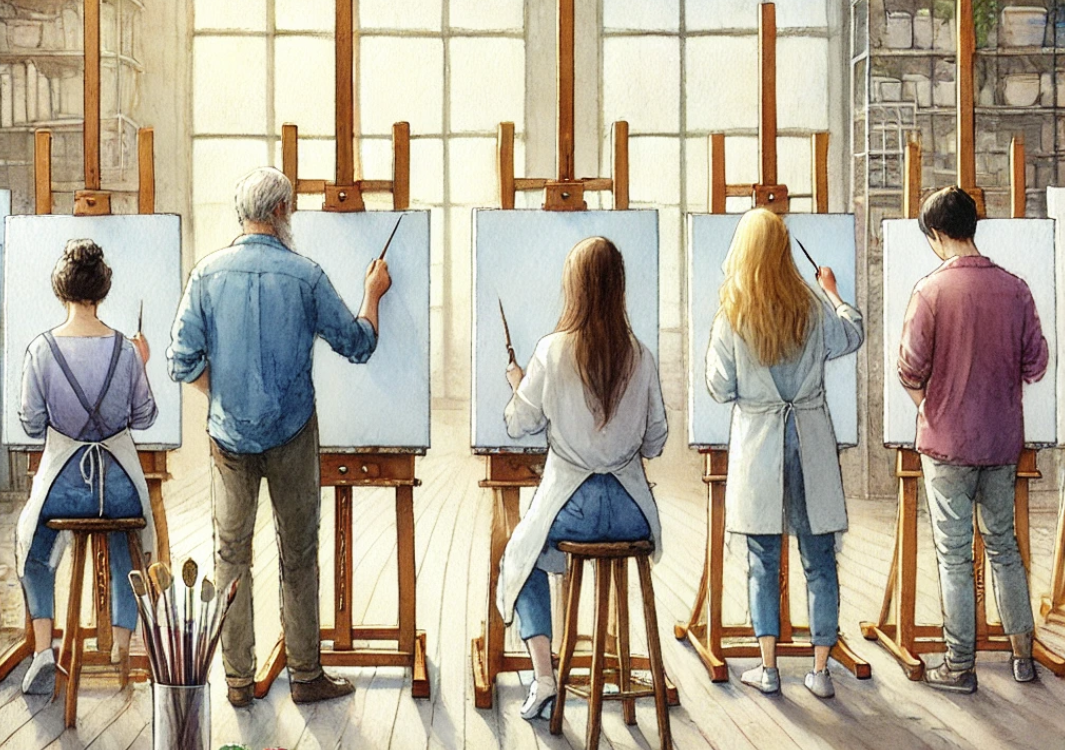
Collaboration is all about tearing down invisible walls between functions and geographies and bringing people together in a way that feels natural and fun. This collaborative canvas activity uses art to help everyone experience working toward a shared goal. Each person adding their own splash of creativity to a group masterpiece supports reflection on how each participant supports the big picture — all while getting a fresh take on teamwork, company values, and communication.
It’s a hands-on way to see how different ideas can blend into something unique, and why trust, adaptability, and shared ownership are key to breaking down silos and achieving success together.
Purpose
This interactive activity is designed to break down silos between departments and regional leaders by improving collaboration, adaptability, and shared ownership. Using art as a medium, participants will explore teamwork, communication, and how individual contributions blend into a collective vision.
Setup
Canvas Arrangement – Multiple A4-sized canvases are set up in a circle, with each canvas facing outward to allow participants to engage without observing others’ immediate responses.
Materials – Brushes and paint, exclusively using the corporate color palette to reinforce company identity. Note that each participant receives one brush and one color, symbolizing their unique perspective and input.

Atmosphere
- Music begins playing softly as participants settle in front of a blank canvas, encouraging focus and creativity.
- Once everyone is ready, the music is turned down, and clear instructions are shared. While participants work on their canvas for those 30 seconds music can be played – it is optional.
Instructions for Participants
Engagement
- Participants start by standing in front of a blank canvas with their designated color and brush in hand.
- Each person responds to 4 prompts (statements or questions) that align with the company’s:
- Vision
- Mission
- Values
- Reflection on last year’s operational and financial results
Rules
- Each round lasts 30 seconds from the moment that the sentence or question is read.
- During this time, participants draw or write their responses on the canvas in front of them using the color and brush they have been given.
- At the sound of a bell or signal, each participant is to move clockwise to the canvas on their left.
- Each participant must continue to respond to the new prompt on the next canvas, building on the contributions of others.
- No returning to anyone’s original canvas or modifying earlier work.
Rounds
Each round features a new statement or question to react to creatively on the canvas in front of each participant using only the brush and color each has been given.
Prompts should spark reflection on the company’s collective goals and inspire responses that challenge silos:
Round 1: Read the company’s vision then prompt: “What does our company’s vision mean to you? Reflect that on your canvas”
Round 2: Read the company’s mission statement, then prompt: “How do you contribute to our mission as part of a larger team? Write or draw something to indicate that.”
Round 3: Read the company’s values or value statements, then prompt: “Which company value resonates most with your role? Depict it in your own way”
Round 4: “Reflect on how collaboration led to achieving last year’s results. Think of a way to indicate that on the canvas in front of you.”
Debrief: Reflecting on the Experience
Once all 4 rounds are complete, participants step back to look at the canvases, including their original starting piece. This is a powerful moment to consider team topics like shared ownership, teamwork, collaboration, and adaptability.
Debrief questions
- How do you feel about how your original canvas turned out?
- Did it match your vision, or was it transformed by others’ input? How did you feel about the contributions of others on your original canvas – did it turn out better or lesser than you hoped?
- What was it like contributing to a canvas where you disagreed with earlier markings?
- How did you adapt or build upon previous ideas? Even if and especially if you disagreed with what you saw when you moved to that canvas?
- How does this experience relate to teamwork in our company?
- How do we handle differences and align diverse contributions across departments or regions? Can we do better?
- What lessons can we apply to ensure better collaboration and a shared vision moving forward?
Outcome
It’s not just about the finished artwork but about realizing how individual efforts combine to create something meaningful together. This activity highlights the importance of adaptability, communication, and trust when working across teams. The lessons learned can be applied directly to real-world collaboration — helping teams break down silos, align their contributions, and work more effectively toward shared goals. Plus, the visual reminder of the canvases can serve as a lasting prompt to keep these ideas top of mind in daily work.
This activity is more than just a creative exercise — it’s a powerful way to see teamwork in action. By adding your unique perspective to a shared piece of art, you experience firsthand how collaboration, communication, and trust can transform isolated efforts into a cohesive result. It’s a reminder that breaking down silos isn’t about losing individuality, but about combining strengths to achieve something greater. As each participant steps back and looks at the final creation, they will see the potential for better teamwork, adaptability, and shared success, ready to carry those insights into everyday work.

 The Rethink Shelf