Clear your RAM


Defines the switch from cluttered mind to peaceful mind

We’ve all been there. It’s 11:00 PM. The day was a success – mostly – but your head is still spinning. You’re dictating reminders into your phone. You’re replaying meeting snippets in your mind, trying to unpack what was actually said. To top it off, you just found the dog destroyed your favorite sweatshirt, and the evidence is all over the floor.

You’re exhausted, but you’re too wired to sleep. Your mental RAM is at 100%, and your “processor” is overheating.

Mental clutter – tasks, worries, and that nagging sense you’ve forgotten something – slows your thinking and drains your motivation. High performance and a peaceful mind both require a clean slate.

In a world where leaders are currently facing high levels of burnout and cognitive load, a structured “Worry-to-Action Pipeline” is exactly the kind of pragmatic, tested tool you have come to expect from this blog!

Here is a no-nonsense, 4-step process to move your worries from your head onto paper, and turn that noise into a concrete to-do list.

Dump every thought, fear, and reminder spinning in your head on paper. Write them down. Don’t filter, don’t judge, and definitely don’t try to solve them yet. Just write or type until the “RAM” is empty and no more thoughts come.

If your head is spinning too fast to type, use your phone to dictate a voice note. Once it’s out of your system, move those notes to a larger screen – like your laptop or tablet – where you can actually see the “mess” you’ve collected in your mind.

Don’t just look at the mess -sort it. Grab three highlighters (or use the highlight tool on your screen) and assign every item to one of these three buckets:

  • Actionable Now (Green): Things you can act on in the next 24 hours. No excuses—just tasks you can do today or tomorrow (e.g., “Email the client”).
  • Influence (Yellow): Things you can’t fix alone but can nudge. This requires a conversation with a colleague, a friend, or an expert. (e.g., Improving team morale when a manager is difficult to approach).
  • The Noise (Red): Things you cannot change. This includes the past, yesterday’s mistakes, or other people’s opinions. (e.g., The dog eating your clothes while you were out).

Examples:
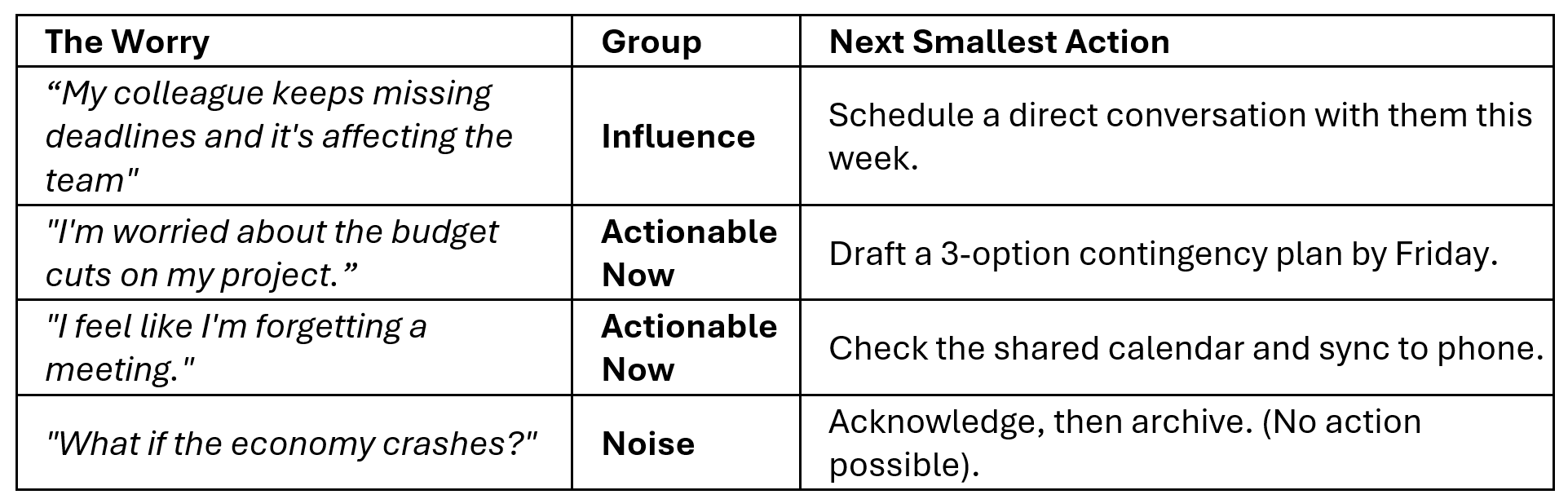
The “Actionable Now” items are the easiest to solve, yet they often cause the most background noise.

  • The 48-Hour Rule: If it’s Green, give it a specific time slot in your calendar within the next two days. If you don’t schedule it, it stays in your head.
  • The “Parking Lot”: If it truly isn’t urgent and can wait longer than two weeks, move it out of your daily view. Put a reminder in your calendar for a future date and delete it from your current list.

For the items left on your list – the Yellow and the Red – you only need one simple decision each.

For your Yellow items (things you can influence but not fix alone): identify the one person you need to involve and write their name next to the item. That’s your action. You’re not solving it tonight – you’re simply deciding who carries it forward with you. One name. Done.

For your red items – choose a small ritual of release. Red items are RAM-drainers – things you cannot change, control, or solve tonight. But simply crossing them out rarely works. Your brain needs a small, deliberate act to believe it has actually let go.

Choose a ritual that suits you:

Tear it up. Transfer all your red items onto a separate page. Then tear that page – slowly and deliberately – into small pieces. The physical act of destruction signals to your brain that processing time on these is officially closed.

Box it. Not ready to destroy them? Fold the page and place it in a dedicated box – a shoebox, a tin, anything with a lid. This isn’t surrender; it’s containment. Tell yourself: if this still matters in two weeks, it will still be in the box. Most of the time, when you check, it won’t.

Either way, once the red items are off your main list and out of your hands – torn up or lidded away – your brain has its permission to stop processing them tonight.

Close the list. You’re done for tonight.

Tonight, you don’t need to solve everything. You just need to stop carrying it all at once. A pen, a page, and twenty minutes is enough to move from spinning to settled – and to wake up tomorrow with a clearer head and a shorter list. Your brain will thank you for it.

Steps to creating a life you love


sketchguru_20200521195945

When someone wants to change something about his or her life or create new outcomes in key areas, they often need more than just someone telling them to create goals and then implement it. Most people seem to need the steps more clearly spelled out and a workbook or playbook is something they really appreciate.

The steps can be broken down in the steps shown below. The downloadable worksheets link is right here:

Step 1:

Understand the process:

Step 2:

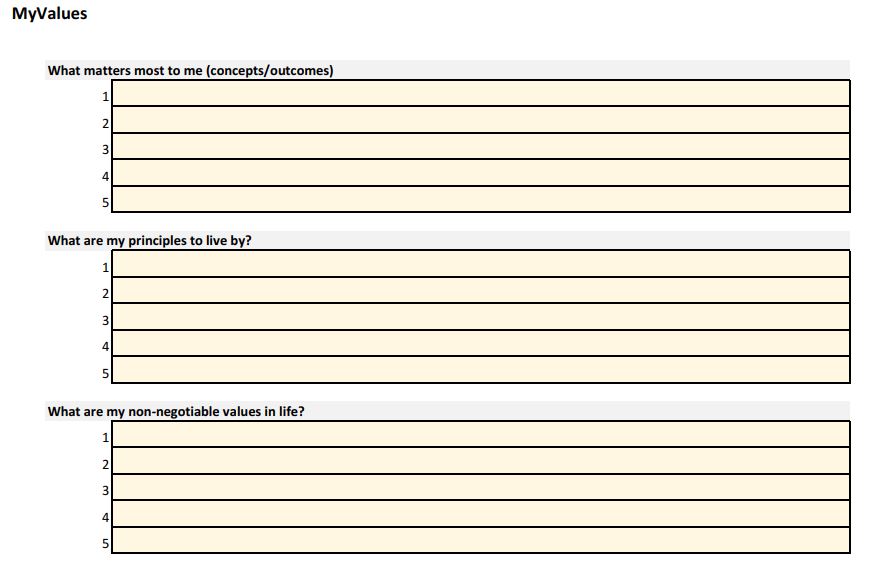
What matters to you?

Being clear on what matters to you makes it easier to understand WHY you would want more of some things in your life and less of others things in your life. While most people think they know the answers to these questions, you will notice how much clearer it gets when you have to write it down and then read it back to yourself.

Step 3:

Do I have time for this?

Most of us would have more time to work on projects that matter to us if we simply started eliminating activities that do not add value to our lives – based on what is important to us. The next two sheets first of all help to highlight how you spend your weeks (typically) and then help you identify how much time you could potentially free up for working on meaningful activities to get you closer to the life that you want for yourself.

Step 4:

What would I like to achieve?

This sheet starts with jotting down new outcomes that one would like to see in some key areas and then it moves to the right planning needed – which activities would do you plan to do in each month? The overall objective is to avoid having competing priorities within the same time of the year. Spacing activities out over a year period helps to ensure you keep focused while making progress in the most important areas over a 12-month period. Note that is is almost always a good idea to pick only maybe two or three projects to work on every month to avoid feeling overloaded and overwhelmed. Those two can lead to feeling demotivated and abandoning all of your plans to create a life you can love.

Step 5:

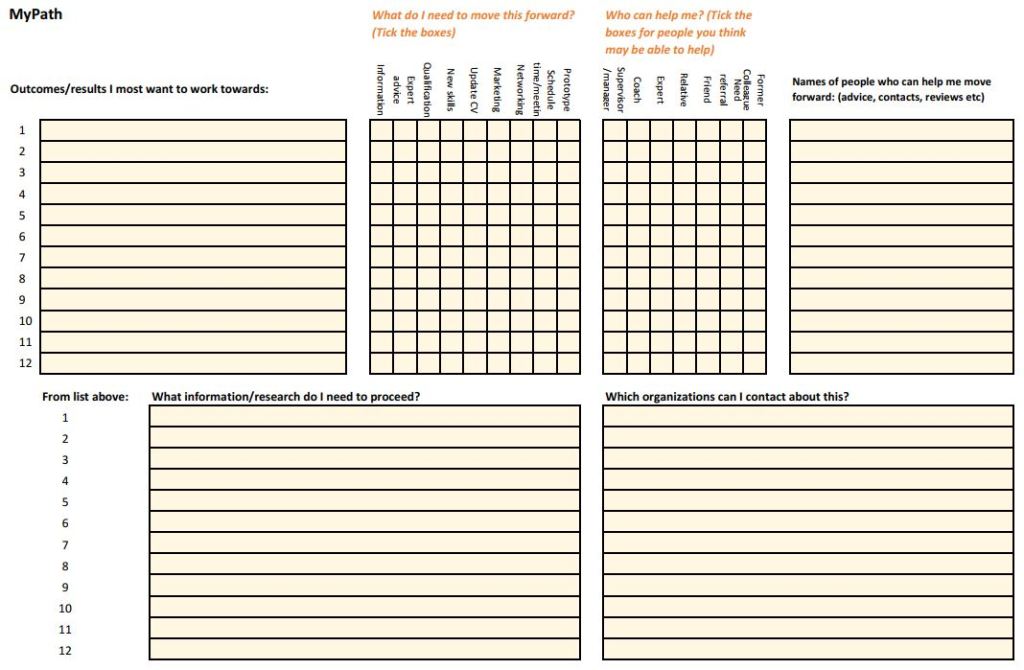
How will I move forward?

This step gets into more detail regarding your plan. There is an area to select what the next step may be for each of the projects you want to work on. It could be that you may need to gather more information or maybe you need to reach out to more people to learn from them or get advice from them- but who? Perhaps you need to build a prototype or get others to give you feedback on your idea? Maybe you need to try to see how it works for you – trying a new way of doing something? The page continues on with identifying whom you know who could help you with advice or maybe introduce you to someone who could help you. And then finally identifying where (place or area of interest) you need to do some research to find out more about what you could explore next and which organizations in your area may be able to help you move forward.

Step 6:

What is my plan for the next few months?

Looking at what needs to be investigated or one over the next few months, this sheet provides a space to keep rack of the top 2 or 3 things you would like to achieve this month to move forward on the projects you have picked for the next few months. There is also a handy check-box which helps you keep track of completed activities versus ones that are still open.

Step 7:

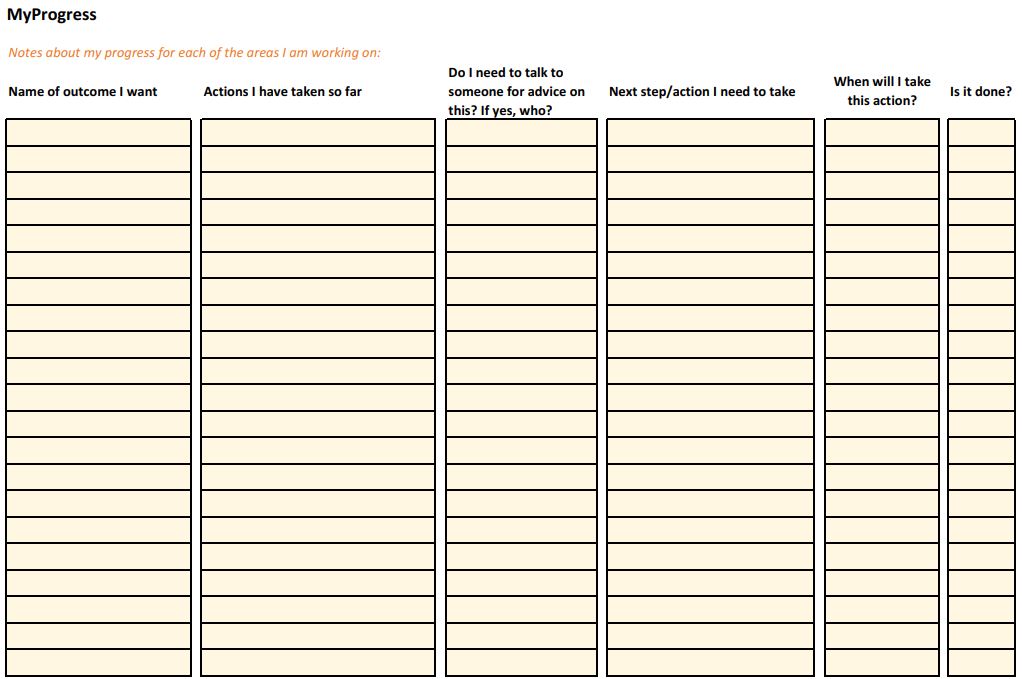
How am I doing?

Sometimes we start on the path of working on life improvement projects and then we get stuck or we get so distracted that we lose our focus. There are many reasons why we might get stuck but getting unstuck is not always easy. This sheet helps you do that.

Taking you from your original objectives, this sheet helps you acknowledge how far you got and what you have completed. Then it helps you think through what the next steps would be. You may need to continue making progress and maybe you need to stop and ask for advice or get more information in order to move forward.

Step 8:

Go back to Step 2 and renew your plans

When you have worked through the sheets and some months have passed it is a good idea to go back and review the reasons you are working on the projects – which are captured in Step 2. Then follow through each of your completed sheets to consider what you might like to change or add to your planning to renew your approach. Some projects end up unfinished because they seem less important once yo have taken more time to do research and talk to people with more knowledge in a specific area. It is okay to decide to abandon these project if they do not matter to you anymore.

Other new projects may be started while a few may continue from your earlier efforts and enter new phases – maybe you are ready to finalize a website or start selling something you have been meaning to put on the market.

I hope these workbook/playbook pages have given you new enthusiasm to plan out and move forward on creating more outcomes in your life that matter to you resulting in having a life that you love!