

In today’s world, unexpected things happen. That’s why it’s important to be prepared. This free template download below will help you identify potential problems and figure out how to fix them. You can keep your organization safe and strong by staying ahead of risks.
Remember, this isn’t a one-time thing. You need to keep reviewing and updating this checklist to make sure it’s always relevant. With a little effort, you can create a stronger organization that is able to withstand life’s little surprises.
Here are two examples of big problems that can hurt an organization:
- Hackers stealing information: Bad guys can steal important stuff like customer data or company secrets. This can ruin your reputation and cost you a lot of money.
- Mother Nature strikes back: Hurricanes, floods, or earthquakes can damage your business and disrupt operations.
A Risk Assessment: Your Roadmap to a Safer Future
Notes about the Downloadable Template above:
You will notice that the template comes prepopulated with some headings for your identified risks – feel free to add more if your organization has important categories that are not listed there and feel free to remove the ones that do not apply to your organization. Every organization could have categories of risks that are unique to the industry or the services or goods provided.
In today’s uncertain world, risks are everywhere. From financial losses to reputational damage, the potential consequences can be severe. That’s where a risk assessment comes in. By identifying potential threats and understanding their impact, you can take proactive steps to protect your organization.
So, what exactly is a risk assessment? It’s like a crystal ball, helping you see potential problems before they happen. Think of it as a map that guides you through the dangers ahead. By understanding the risks you face, you can develop strategies to avoid or reduce them.
But how do you do it? It’s actually simpler than you might think. Let’s break it down into two key steps:
- Identify the risks: Think about all the things that could go wrong. Financial losses? Safety issues? Reputation damage? Write them down.
- Assess the impact and probability: For each risk, figure out how bad it would be if it happened (the impact) and how likely it is to happen (the probability).
By combining these two factors, you can rank the risks that pose the biggest threat to your organization. Then, you can create a plan to tackle them.
Have a strategy for risk management
A strong risk management plan is like a safety net for your business. By spotting potential problems and having a plan to deal with them, you can protect your money, keep your good name, and build a stronger, more stable company.
- Find potential threats: By understanding the risks you face, you can take proactive steps to prevent or mitigate them.
- Protect your assets: Effective risk management helps safeguard your organization’s financial resources, reputation, and operations.
- Make informed decisions: Risk strategies give valuable insights that can inform smart decisions and resource allocation.
- Guarantee long-term sustainability: You can build a more resilient and sustainable organization by managing risks effectively.
What is risk?
A risk is simply a potential problem or danger. It’s something that might happen in the future that could cause harm or loss to your organization. Think of it as a threat that you need to be prepared for.

A risk assessment is a proactive tool that helps you discover potential threats to your organization and develop strategies to mitigate their impact. By understanding the risks you face, you can take steps to avoid or manage them effectively, protecting your assets and ensuring long-term success.
Unpacking the two ratings
What is the meaning of risk impact?
Impact refers to the potential consequences or severity of a risk event. It measures the harm or damage that could result if the risk occurs. For example, a high-impact risk might involve significant financial loss, reputational damage, or operational disruption.

How to look at probability or likelihood
Probability refers to the probability of a risk event occurring. It measures the chances that the risk will materialize. For example, a high-probability risk is more likely to happen than a low-probability risk.
By considering both the impact and probability of a risk, you can focus your efforts on mitigating the most significant threats to your organization.
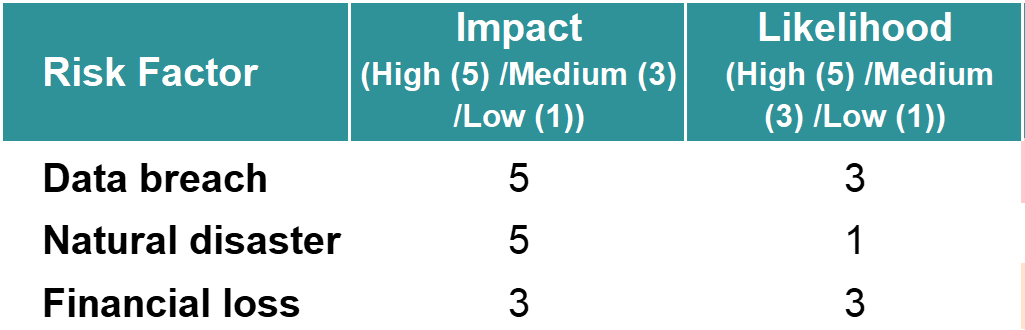
Assessing Risks: A Step-by-Step Guide
Identify Potential Risks:
- Brainstorm a list of potential risks that could affect your organization. Consider risks that could impact your financial situation, the way you are able to run your organizational processes, your reputational, and risks that relate to legal issues – think about compliance and adhering to legal requirements and regulations.
2. Evaluate Impact:
Assess the potential impact of each risk on a scale of 1-5 where you use either a 1 a 3 or a 5 to rate the impact of every risk you noted in case they happened:
- 1: Low impact (minor financial loss or inconvenience)
- 3: Medium impact (noticeable financial loss or disruption)
- 5: High impact (significant financial loss, reputational damage, or operational disruption)
3. Assess Probability:
- Estimate the probability of each risk occurring on a scale of 1-5. Use a number 1, 3, or 5 to rate the probability or likelihood that the risks you have would happen:
- 1: Very low probability
- 3: Medium Probability
- 5: High Probability
4. Calculate Overall Risk:

- The download template below will multiply the impact rating by the probability rating to determine the overall risk level.
- Rank risks based on the calculated overall risk score. The higher the score, the more important it is to have a plan to avoid it, lower its impact (mitigation), or manage it if there is no way you can avoid it.
5. Develop Risk Strategies
This is where you spot potential problems and make a plan to deal with them. It could be to protect your money, keep your good name, and build a stronger, more stable organization.
Here are some types of strategies that might be needed:
- Risk Avoidance: Remove or avoid the risk completely by putting some form of protection in place to ensure it can’t easily happen.
- Risk Reduction: Instead of just letting problems happen, take steps to make them less likely or less harmful. Or you could say it is about implementing measures to reduce the likelihood or impact of the risk.
- Risk Transfer: Instead of taking on the risk yourself, pass it on to someone else, like an insurance company.
- Risk Acceptance: Sometimes, risks are unavoidable. Instead of trying to stop them completely, be prepared for them. Have a backup plan in case things go wrong.

Taking Action: Protecting Your Organization
Once you’ve identified and assessed your risks, it’s time to act. Focus on the risks with the highest scores and implement your mitigation strategies. Remember, a risk assessment isn’t a one-time thing. Review it regularly to make sure it’s still relevant and up to date.
Share your risk assessment with key leaders in your organization. Their insights can help you refine your strategies and check to be sure they align with your overall business goals. By actively managing risks, you’re taking a proactive step toward protecting your organization and securing its long-term success.




 The Rethink Shelf