

This post assumes a few starting points. For one, it assumes that you have a few leaders whom you would like to develop using a few specific developmental areas. When you review this example, you will notice that the areas shown here are typically associated with development of first-time or mid-level leaders. This example can help you take your own leadership development ideas a step further by defining specific steps, and processes which would make it easier to communicate your vision to stakeholders at your company – offering a well-considered program that includes all the elements that are important to developing leaders, their managers, executives considering succession planning, and also new recruits with dreams of building a great career at your company.
Defining outcomes
Which observable outcomes – behaviors – are important for successful leaders to display at your company? Can you define this per competency? Understanding what exact outcomes that your program strives to achieve makes it easier to select the right people for the program (those with development needs in these areas), evaluate the progress of developing leaders in your program (learning to lead with desirable behaviors), and also to understand where specific leaders may need more support with their own personal development plans.

Here is an example of defined outcomes and you will notice the columns to the right have spaces to insert names of possible program candidates. This would be a way to consider nominations when they are discussed by the program committee to decide on the next intake of leaders for the rotational assignment program.
Governance & Structure
Before you start to implement your ideas, take a moment to consider who are the key participants and stakeholders in this program? And have you thought of how you need to support each stakeholder’s needs and prepare them for their expected participation?
Basic processes would include:
- Selection (nominations could be an additional process if you would not pre-select possible candidates using seniority or other criteria) – on what basis will multiple raters who know candidates propose and support nominated candidates?
- Performance evaluation process – before the program starts and also at key stages during and at the end of each assignment.
- Promotions and salary increase eview processes for program participants – checking thatyou are at least paying them at or above local market rates to ensure you are not endangering their retention.
- Mentoring process for the benefit of participants – supporting developmental goals.
- Performance feedback process to participants and the oversight committee in general.
- Orientation process for managers whom program participants would report to during their rotational assignments.
Executive Sponsor for the program
It is important to understand who would be the sponsor at the executive level – involved in ensuring that the program meets strategic objectives and delivers on the agreed benefits. These would be the reasons why the program would be approved for funding and resource allocation like for example a program coordinator etc. Build a relationship with this stakeholder and ensure that he/she has all the information needed to feel comfortable with the progress you are making with the implementation or maintenance of the program on an ongoing basis.
Oversight committee
This may be a group of operational leaders, some group support (functional) leaders, and perhaps a mentor or two. The oversight committee may also be involved in the nomination and/or selection of participants and may also be a part of the audience when program participants are asked to conduct presentations about their projects as part of the program, The oversight committee might also at least annually evaluate possible risks to success and may suggest mitigating actions or improvements to avoid or manage risks to successful outcomes of the program.
Mentors
If you have dedicated internal and/or external mentors meeting with program participants on a regular basis it would be important to involve them by giving them an understanding of the strategic and operational expectations of the program. They would also need to be familiar with the measures of success and how they are defined and evaluated. The success of developing leaders would be very reliant on this group of people offering key support to them. For this reason, mentors should also be asked for (at least) annual feedback on their experiences as mentors and be able to share improvement suggestions and possible risks that need further consideration and action. Mentors should also be able to informally meet with the program manager to monitor program outcomes – understanding how the program is progressing in terms of outcomes achieved, number of development goals closed, number of participants being mentored, number of successful placements in higher roles for those coming out of the program, etc.
Managers of participants
There are aspects of a rotational program that differ from someone having a new team member to support departmental or divisional performance objectives. While the expectation is that these managers would invest their time and resources to accelerate the learning of participating leaders, these program participants will be expected to leave the managers’ groups at the end of the assignment. This concept may be challenged on a regular basis and common arguments include program particianpts being instrumental to maintaining successful client relationships (the client asked for him/her to be on the next project) and how their departures may pose risks to current projects (without his/her key knowledge on this project we cannot guarantee successful outcomes). Such issues would need to be resolved and escalated as needed to avoid participants getting stuck on one rotation.
Program participants
Not everyone considered to have the ability to function at higher leadership levels aspires to those outcomes. It is important to understand the drivers, ambition, and engagement of each participant being considered for participation in the rotational development assignment program. This, on top of his/her performance and development needs being identified and documented in a development plan. . Once a program participant has been confirmed the communication process starts including the next steps, the program contents and objectives, the processes, and what would be required from him/her while on the rotational assignment program. Being introduced to those who are involved in the process would also be important – the new manager for the duration of an assignment and the assigned mentor would be two important links to make. Ensure a feedback loop to understand the success and risks of the program seen from the eyes and experience of program participants.
Annual process(es)
In this example, the annual processes are relatively simple and include an annual intake of new participants, formal communications, obtaining feedback from key stakeholders, presentation by participants about projects they worked on, and talent review discussions on the development of each leader in relation to succession planning objectives and strategies.

Developmental Roles
In general, rotational roles fall into these four categories (see graphic below).
Commercial roles could include sales support, marketing, external communications and sometimes includes roles that have direct interfacing with key customers – account roles. A key objective of commercial roles would be to ensure participants understand how money is made, reported, and the levers which could improve profitability, and the processes that are involved in converting operational success to money in the bank. This rotational assignment also provides an understanding of the level of customer satisfaction and where clients would like to see improvements or innovations. For more senior roles in a commercial function, the development objective could include understanding risks and opportunities and establishing a high-level plan to address both with internal initiatives and even external solutions like a merger or acquisition to address challenges and risks to customer satisfaction and the ability to deliver on customer expectations – given observed and expected changes in the marketplace, competitor offerings, etc.
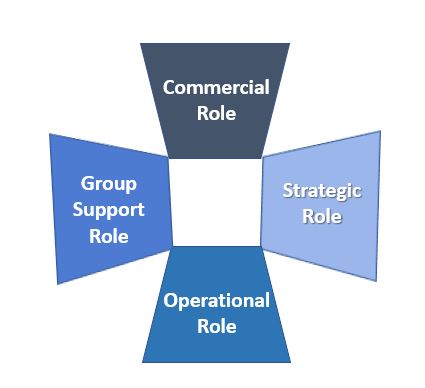
Operational roles usually offer the ability to understand the daily activities and decisions which could lead to meeting or missing operational outcomes. This usually relates to impacts to the Profit and Loss Statements of a company. In these kinds of rotational assignment roles, participants learn to understand the challenges that project teams experience in delivering products or services that are attractive in the marketplace. They also learn how operational delivery can lead to optimal profitability. Concepts like LEAN, Circular economy, and agile are often concepts that are learned during assignments in operational roles.
Strategic roles are often assigned at one of the larger offices or to shadow a senior or executive leader involved in strategic projects and initiatives. During this assignment participants usually learn more about risk management, organizational strategies, and projects. Sometimes they could be involved in supporting due diligence activities for a possible merger or acquisition and may be exposed to considerations regarding organizational structure changes or changes to the legal structure of a company. During these assignments, participants understand how the company evaluates its internal and external strengths and opportunities along with possible organizational weaknesses and risks. In that landscape, the company will set strategies in motion to improve its competitiveness, its financial outcomes (P&L, Cashflow and/or balance sheet), and its ability to outmaneuver the competition in key areas. This could be as a result of acquiring and/or launching new innovative solutions or getting closer to the customers and how customers’ wishes are being met.
Group Support roles are often either in Human Resources or possibly in Procurement or any other group support (functional leadership) role where that specific participant can learn to more fully understand the challenges of balancing the needs of its shareholders, customers, employees, and supply chain partners.
How to start
Putting together a Rotational Assignment Program can take some time during the early stages and it would be very important to understand the strategic needs and objectives of the company when it comes to succession planning and key skills needed by the leaders of tomorrow. Talk to as many possible stakeholders as you can to build a successful business case and change plan addressing all concerns and needs of key stakeholders in the success of the rotational assignment plan. Talk to experts who have developed a program like this to garner any tips regarding pitfalls that they needed to navigate. Finally, commit to continue learning as you go. Get feedback and act on it and use the data gathered to drive continuous improvement activities. Use the feedback to ensure the program continues to deliver outstanding benefits in a fast-changing world which impacts your ability to attract and retain key talent on a continuous basis.
Useful posts to help with the preparation and communication of stretch/developmental assignments:



 The Rethink Shelf