9 Tips for Compelling Competition Entries in Sustainability


Entering the project you are most proud of into an excellence competition is an exciting opportunity to showcase your hard work and achievements. But let’s face it, the competition can be stiff—especially when sustainability is a key judging criterion. Don’t worry, though; this post will guide you through how to focus on the right elements and tell a compelling story that highlights your project’s success without making things up. The secret? It’s all about having the right data, understanding what it means, and explaining why it matters.

Here are nine ways to make your project stand out and be memorable and remarkable:

1. Start With the Basics: Read the Rules

Before drafting your entry, carefully review the competition guidelines, especially sections on sustainability or innovation. These often hint at what judges value most—energy efficiency, water conservation, carbon reduction, waste avoidance, community impact, or even all of these. Align your entry with these priorities. And don’t stress over word limits—stay within 10% of the specified count, as they’re there to keep entries focused, not to demand a full thesis.

2. Tell a Story, Not Just the Facts

Before you start writing your entry, read the competition guidelines carefully. Pay special attention to any sections about sustainability or innovation. Competitions often provide clues about what the judges are looking for—energy efficiency, water conservation, carbon reduction, waste avoidance, community impact, or maybe all of the above. Tailor your entry to match these expectations.

3 Focus on Measurable Outcomes

Judges love numbers, so don’t shy away from sharing your data. If your project saved energy, reduced emissions, or cut costs, include the specifics. Here are some examples:

  • Energy Efficiency: “We installed energy-efficient lighting and reduced electricity usage by 30%, saving EUR 10,000 annually.”
  • Waste Reduction: “By reusing materials on-site, we diverted 95% of construction waste from landfills.”
  • Sustainability Impact: “The project’s solar panels now produce 20,000 kWh annually, enough to power 10 homes.”

Don’t have all the data? That’s okay—start with what you do have. Just be sure to explain how you measured these outcomes and why they’re meaningful.

4. Highlight What Makes Your Project Unique

Competitions are about standing out. Did you try something new that hadn’t been done before? Did you find a way to make the project faster, cheaper, or more sustainable? Maybe you combined existing methods or approaches in creative ways. For example:

  • “We used prefabricated components to speed up construction, reducing on-site waste and emissions.”
  • “Our landscaping included native plants, which cut water usage by 40% and boosted local biodiversity.”

Be clear about how your approach sets your project apart.

5. Talk About What You Learned

No project is perfect, and judges appreciate honesty. Talk about what went well but also acknowledge what didn’t. Maybe a new method didn’t work as planned, or you realized late in the process that a different approach would have been better. What’s important is that you show you learned from the experience.

For example:
“We underestimated the time required to train staff on the new energy management system, which delayed implementation. In the future, we would schedule training earlier to avoid this issue.”

6. Sustainability: More Than Just Energy

When we think of sustainability, energy efficiency often comes to mind first. But there’s more to it. Judges might also look for:

  • Circular Economy: Did you reuse, upcycle or recycle materials?
  • Water Conservation: Did your project reduce water usage?
  • Community Impact: Did the project benefit local communities or create jobs?
  • Biodiversity: Did your landscaping include native plants to support local ecosystems, or did you create green spaces that attract pollinators like bees and butterflies?
  • Positive Local Community Impact: Did you partner with local schools for educational programs or support community groups through funding or volunteer initiatives during the project?

By broadening your perspective, you can show how your project goes beyond energy savings to create lasting, meaningful impacts. Be sure to cover these aspects if they apply to your project.

7. Be Honest—Don’t Fake It

It’s tempting to stretch the truth to make your project look better but resist the urge. Judges have likely seen it all, and they’ll spot exaggerations a mile away. Instead, focus on presenting your project’s real achievements as clearly and confidently as possible.

8. Make It Easy to Follow 

A clear, well-organized entry can make all the difference. Judges don’t have time to untangle cluttered submissions, so present your work in a way that flows logically and is easy to digest. Use clear headings, concise bullet points, and short paragraphs to guide the reader. 

Think about your structure: 

  • Timeline Approach: Are you walking judges through processes, events, or project phases step by step? 
    • Top-Down Method: Are you starting with a big-picture overview and then zooming in on specific achievements or highlights? 
    • Comparative Lens: Are you showcasing measurable improvements by comparing past performance to present outcomes and projecting future benefits? 

If you’re including technical data, don’t let it overwhelm the narrative. Break it down into simple, relatable terms that anyone—even those without technical expertise—can understand. For example, instead of saying “airtightness of 0.6 ACH at 50 pascals,” explain how that translates into better energy savings or indoor comfort. 

A polished, intuitive format not only keeps the competition judges engaged but also ensures they don’t miss the full scope of your project’s excellence.

9. Think About the Future

Judges often like to see how your project has inspired or informed future efforts. Did it set a standard for your company or industry? Has it led to new ideas or processes? For example:

  • “The success of this project has prompted us to roll out similar solar energy systems at three other sites.”
  • “We are now working to integrate lessons learned into our next project to achieve even greater sustainability.”

Entering a competition isn’t just about winning—it’s about showcasing what makes your work exceptional. By focusing on measurable outcomes, sustainability, and what you’ve learned, you can create a compelling entry that stands out.

Remember: the judges aren’t looking for perfection—they’re looking for impact, innovation, and integrity. Follow this approach, and you’ll not only improve your chances of winning but also demonstrate why your project truly matters.

Now go tell your story—sustainably, of course!

Streamline Your Workflow: Start, Stop, Change Strategy


Feeling overwhelmed by your to-do list? It’s time for a fresh approach. Whether you’re figuring out what new tasks to start, which processes to stop, or where to make improvements—including sustainability initiatives—this simple method will help you cut waste and boost efficiency. Think of it as a game-changer for your workflow, empowering your team to work smarter, not harder, while making real progress. Change doesn’t have to be overwhelming; it’s about making strategic, impactful adjustments that lead to better results, smoother workflows, and more sustainable outcomes.

A Fresh Approach to Tackling Chaos

Ever feel like your to-do list is out of control? This simple method helps bring clarity, meaning, and direction to your tasks. Whether you’re deciding what new actions to take, which processes need tweaking, or which habits to drop, this approach will streamline your workflow, boost productivity, and make your routine more manageable.

Even the best processes lose their effectiveness over time or fail to take advantage of the improved availability of better tools and templates, signaling the need to reassess. While big changes can be costly, small adjustments often get things back on track. The method I’ll share is perfect for team brainstorming, making it easier to identify areas for improvement together.

Think of it like tidying up a familiar room. Some things need to go, while others just need a small fix. This tool helps you do the same with your work, identifying what needs to change, what new actions to start, and what habits to stop.

Importantly, it’s also about working smarter with sustainability in mind. Rethinking processes to reduce waste, conserve resources, and adopt eco-friendly practices not only improves efficiency but also builds a more sustainable work environment for the future.

Think of yourself as a gardener, planning to refresh and revive your garden. To improve a process or outcome at work or in a volunteer setting, you need to plant new “seeds”—ideas and actions that hold the potential to bring positive change. These are the things you want to start doing to make a meaningful impact.

Ask yourself: What new tools, strategies, or approaches could help streamline work, solve problems, or improve how people experience your organization or team? It might be a fresh approach to a recurring issue or an idea that could make things more efficient. Like planting new flowers in a garden, these initiatives will need your time and attention to grow and flourish.

By starting these key actions, you create opportunities for improvement and success and build an environment that thrives on new ideas and growth.

When we talk about what needs to stop in the workplace, we’re focusing on behaviors and habits that hold everyone back. Think of gossip—it’s like a poison that erodes trust and divides teams. Then there’s micromanagement, which stifles creativity and leaves people feeling frustrated and demotivated. And multitasking? While it might seem productive, it often leads to mistakes and burnout. By eliminating these negative behaviors, we can create a more positive, collaborative, and efficient work environment.

Stopping isn’t just about behaviors, though; it’s also about simplifying how we work. This means cutting out unnecessary steps, avoiding redundant processes, and leveraging technology to make tasks easier and faster. It’s about working smarter, not harder.

The key to success is getting everyone involved. When the team collaborates and shares insights, it becomes easier to identify which tasks or processes don’t add value—and figure out the best ways to eliminate them. This not only streamlines workflow but also helps the entire team feel more aligned, motivated, and connected.

When identifying what needs to be changed, it’s about finding those processes or tasks that work to some extent but aren’t quite hitting the mark. These are not things you want to stop completely, but they could benefit from refinement or improvement. The goal is to enhance their efficiency or effectiveness rather than overhaul them entirely.

This step is about finding out with your team where bottlenecks occur, where confusion arises, or where inefficiencies creep in. Perhaps you uncover small tweaks that make a big difference. For example, a task might be taking longer than necessary because of an outdated step, or perhaps communication between teams could be improved to streamline a handoff.

Other possible candidates for change may lie in opportunities to improve: Are there tasks that could be automated? Is there a process that could be shortened or simplified without sacrificing quality? Sometimes it’s as simple as adjusting timelines or reallocating resources to better fit the demands of a project.

The key is not to throw out processes that have potential but to fine-tune them. By making small, thoughtful adjustments, you can improve the overall flow and outcomes. Involving the entire team in identifying these areas for change ensures that the solutions are practical, realistic, and beneficial for everyone.

Setting up time with the team

To kick off improvements, start by gathering input from everyone involved in the workflow. Set up a dedicated meeting where each person can share their unique insights. By involving the whole team, you’ll gain a diverse range of perspectives, helping you identify opportunities for improvement far more effectively than if you were working alone.

To make the session productive, team up with coworkers and dedicate about an hour to look for ways to enhance how you work, the environment you work in, or how your organization delivers value—whether it’s to customers, clients, or those benefiting from your volunteer efforts.

Here’s how to structure your session for success:

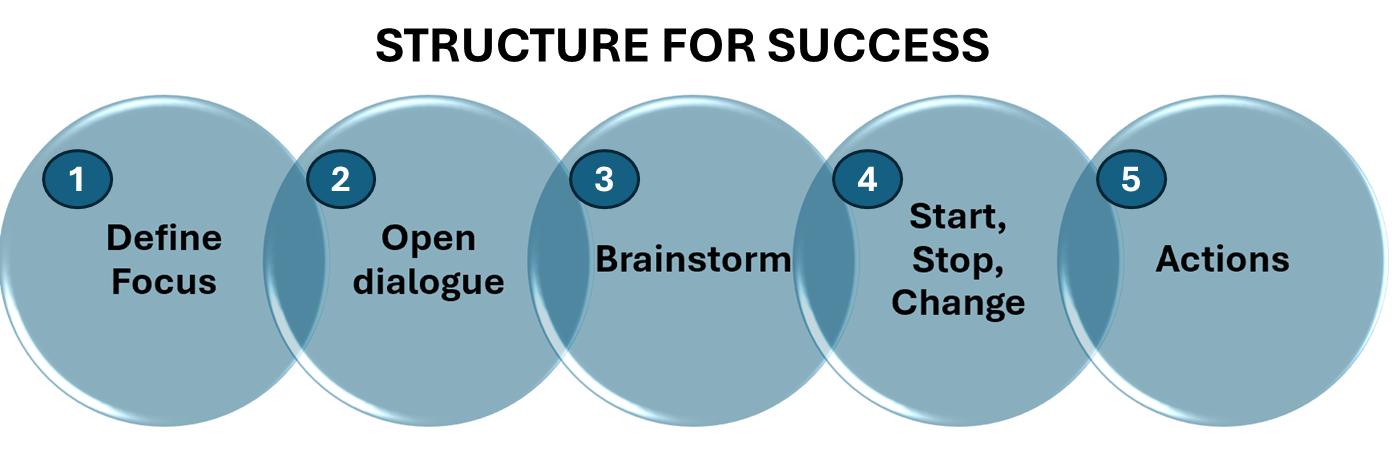
  1. Define the Focus: Clearly outline what the session is about. Are you looking to improve a specific process, boost safety, streamline workflows, or enhance customer/recipient satisfaction? Make sure everyone understands the goal before diving into discussions.
  2. Encourage Open Dialogue: Create a safe space for everyone to share their ideas, frustrations, and suggestions. Emphasize that all feedback is valuable and will contribute to positive change.
  3. Brainstorm Together: Work as a group to explore ways to make things better, smarter, and safer. This could involve improving the way tasks are done, optimizing the workspace, or enhancing the delivery of value to customers or the community.
  4. Capture Ideas: Use Stop, Start, and Change flipchart pages to organize ideas. After brainstorming, categorize the suggestions:
  • Stop: What isn’t working and needs to stop?
    • Start: What new actions, processes, or tools should be introduced?
      • Change: What existing processes could be improved with a few adjustments?

5. Assign Actions: Once ideas are gathered, assign ownership for each action. Ensure there’s follow-up so the insights gained from the session translate into real improvements. Also, set up a follow-up recurring meeting to review how things are going to discuss if you need to change or improve how you are implementing actions to be more successful and avoid obstacles to success.

By following this structure, you’ll ensure that your team collaborates effectively and walks away with actionable steps to make meaningful changes.

Keep Stakeholders in the Loop

After the meeting, it’s important to keep key stakeholders, such as your supervisor or others involved in the implementation, informed about the progress. Provide them with an update on the discussions, including the proposal for items to start, stop, or change. This transparency ensures they are aware of the team’s efforts and can offer support as needed. Additionally, ask for their feedback and suggestions. This will help ensure that no key opportunities for improvement are missed and that the plan is as comprehensive as possible. Engaging others in this way enhances collaboration and strengthens the overall success of the initiative.

Now It’s Your Turn to Change the Game

Taking a structured approach to what you start, stop, and change can really improve how your team works and help you reach your sustainability goals. I encourage you to take a fresh look at your team, your environment, and how you get things done. Find ways to not only make customers happier and save money, but also to reduce waste, save resources, and lessen your impact on the planet. Involving your team in this process will help everyone work smarter and feel more motivated as they see their ideas making a difference. Whether you’re working or volunteering, these changes can lead to a more rewarding and sustainable experience. Now is the time to act—start looking for where you can make a real difference for your team and the environment.

Mentoring Agreement


Mentoring usually takes place between someone with experience and someone who needs advice and training in specific areas. Starting the process of mentoring duos sometimes skip the step where they talk about how we agree to go through this process together. What is important to you? What is important to me? What can each of us commit to in order for this to work well for both of us?

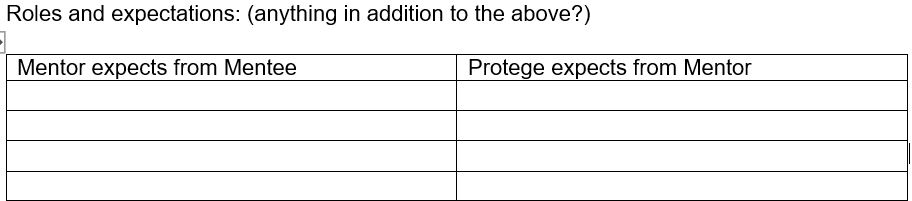
This free template below helps you to structure a conversation around what the mentor and mentee specifically agree to commit to. How many hours per month/quarter would we like to spend talking through specific topics?

Feel free to add additional items which would be important to discuss during the first meeting when you (mentor and mentee) agree on how to proceed. This kind of discussion may seem unnecessary, but covering these items upfront can save a lot of disappointment and misunderstandings later when items you might have imagined would be obviously included in your mentoring agreement vary from what the other person may have thought. It is not a contractual agreement as much as it is a summary of what you do or don’t want to commit to for the duration of the mentoring relationship.

When it comes to time commitments, it is also advisable to agree for the mentoring process to have a set time period – 12 months or 18 months. And when that time comes, review what has been achieved and learned and whether it makes sense to continue the mentoring relationship or to agree to end it at that time.

Clearly defining the development objectives to be addressed helps to steer the direction of mentoring discussions. What is it that the mentee needs to know, needs to be able to do, and would like to be able to understand? The more detailed this section is, the easier it might be for either the mentor or the mentee to recognize when the mentoring relationship has helped to achieve those outcomes and it may be time to evaluate whether it makes sense to end the mentoring relationship or continue it with new development objectives.
Considering the agreements discussed during the first section, are there any other expectations that each has of the other and which are useful to mention specifically? For example, the mentor may have the expectation that the mentee would devote time to read specific books or articles every week. Are those expectations realistic for the mentee? If he or she has other obligations which may make it difficult to meet that expectation, it is best to discuss them early on to avoid a misalignment later on in the mentoring relationship.

The full template can be downloaded below – it is a *.pdf file and it can be imported into MSWord for edits.

This file can be very useful to ensure that mentors and mentees are aligned early on in their association which gives their mentoring relationship the best chance to be successful!

Organize your message


speech

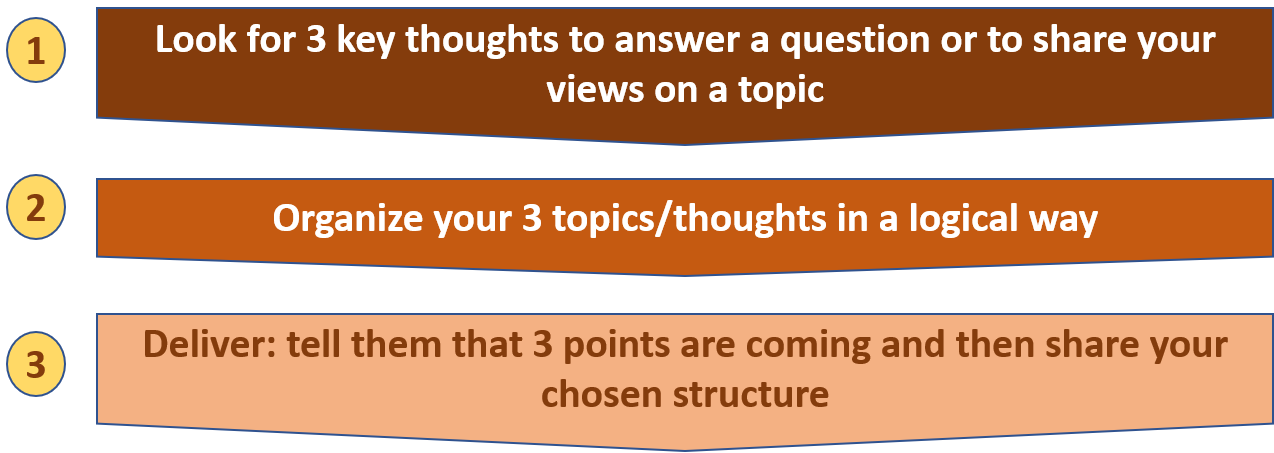
Many of us have heard about the power of three items or 3 key messages, but most people have not been shown how to use this in practice. While it is easy enough to make a list and restrict it to 3 items, picking 3 items that make sense from a logical perspective takes a little more thought. Our minds are highly responsive to patterns. Knowing that we will hear 3 key points and then having somebody deliver the 3 points in a logical fashion is something we are more likely to remember afterward. It comes across as more credible when we are able to recognize a pattern in the delivery of the key points.

Maybe you are coaching someone on how to deliver more impactful messages. Or perhaps you are preparing your own answers to questions in a group setting or you are planning a short speech on an important change initiative or project update? This resource can help you. It aids in formulating your thoughts in a logical way, which enables you to deliver a message that is easy for your audience to interpret and remember.

3 Step process to deliver powerful messages

model org message

The three key ideas you wish to communicate or the three top reasons why you suggest a certain course of action cannot be random or they may still fail to be memorable. The 3 key concepts should be structured in a way that would make sense to others so that they can easily be recalled after people hear them.

Grouping the 3 points in a logical way:

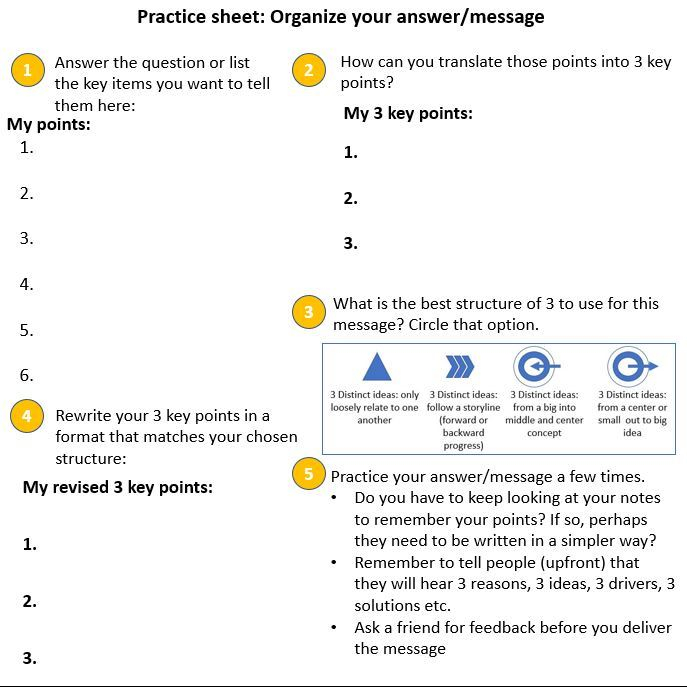
  • Three linked ideas like quality, time, money/costs; good, bad and ugly (see the specific example in the downloaded document )
  • Forward or backward motion – tell the story sequentially either from the present into the past in 3 steps or from the past into the future in 3 steps. For example: in the past, we used one process which worked, but since then many things changed to where we are today (with challenges and in need for things to change) and in the future, we will have additional challenges which simply requires us to make changes now. (You can fill in the details of your own message to explain the situation when you choose a structure that moves forward or backward in time).
  • Perspective – the 3 concepts move from a big idea to a small idea or from small ideas to big ideas/reasons. For example (out of) from this small team which will be impacted by the change to the bigger team and then to an even bigger group of people who may be impacted. (see the specific example in the downloaded pages)
org message structures

Use the practice sheet or template (included in the download file above) to learn this approach. It helps you to become more familiar with using this way of organizing your message or your answer to a group of people. Once you get used to how it works you will no longer need the template and you should be able to organize your thoughts while you are in the meeting or in transit to the meeting.

organize your message template

Some ideas of where to use this approach:

  • You are in a meeting and they are going around the table collecting everyone’s thoughts on a proposal (You take a moment to quickly organize your own response using this method.)
  • You have been asked to provide an update at a meeting, which starts in a few minutes. (Remembering this approach you are able to jot down your initial thoughts, choose a structure and then revise your points to fit your chosen structure of 3 points to make.)
  • You are attending a conference and have to introduce yourself or someone else (Using the structured way of choosing 3 key aspects to mention, your answer is memorable to the conference attendees.)
  • During lunch, some colleagues ask you why you support a particular proposal. (You easily recall the structured options and formulate a response consisting of 3 key thoughts to share after you have swallowed the food.)

Listening to long unstructured answers in meetings or trying to make sense out of facts presented in a complicated way in a meeting can be a confusing experience. Using a simple structure with only (no more and no less than) 3 key points, makes it much easier for you to avoid the same mistake. Instead, you can use this approach to deliver a message that they will easily understand and remember.

Let me know how this approach works for you or the person that you are coaching!