Learning Book


A learning book is a great tool to use for learners who are keen to capture the key points of learning moments. It is also useful for coaches or trainers who may want to make them available to coachees or class participants to help them along on their learning journey. A pdf version of a learning book is available for free download below – letter size, A4 size an A5 size.

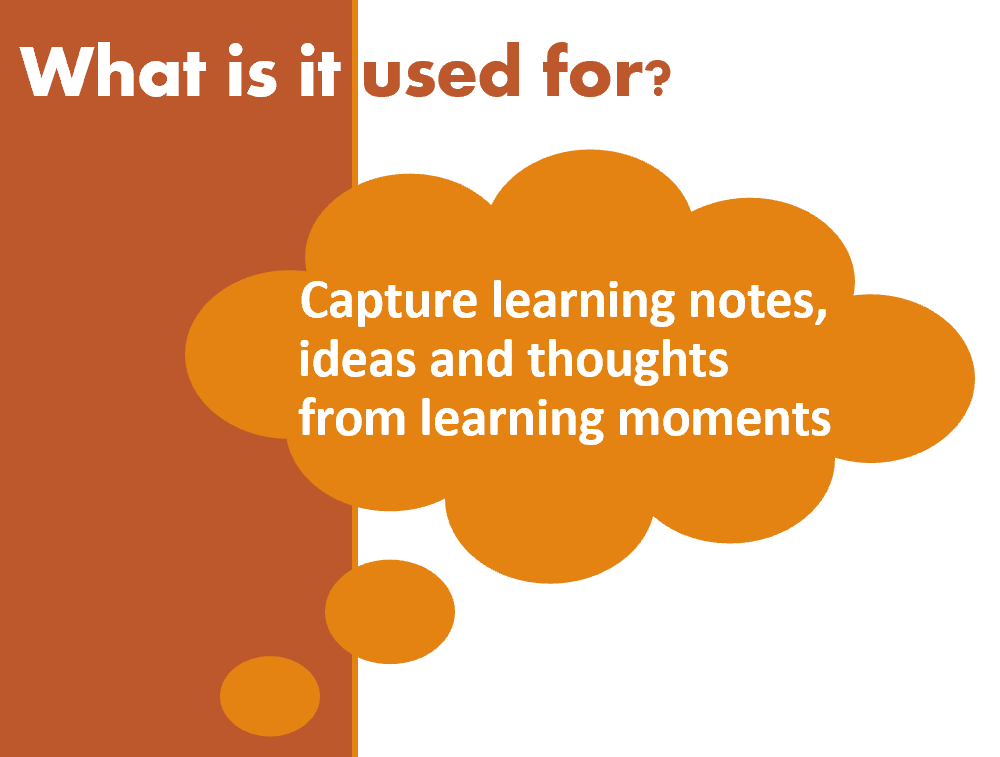
To really learn something new, one must chew on it – write it down, read what you wrote and then consider how it changes your perspective or increases your awareness or understanding. The learning book helps learners to capture ideas and thoughts. It gives them a chance to go back and review what they had written before to remind learners of what they had thought at the time and planned to do about their own continued learning.
“Whoever ceases to be a student has never been a student.”

– George Iles –

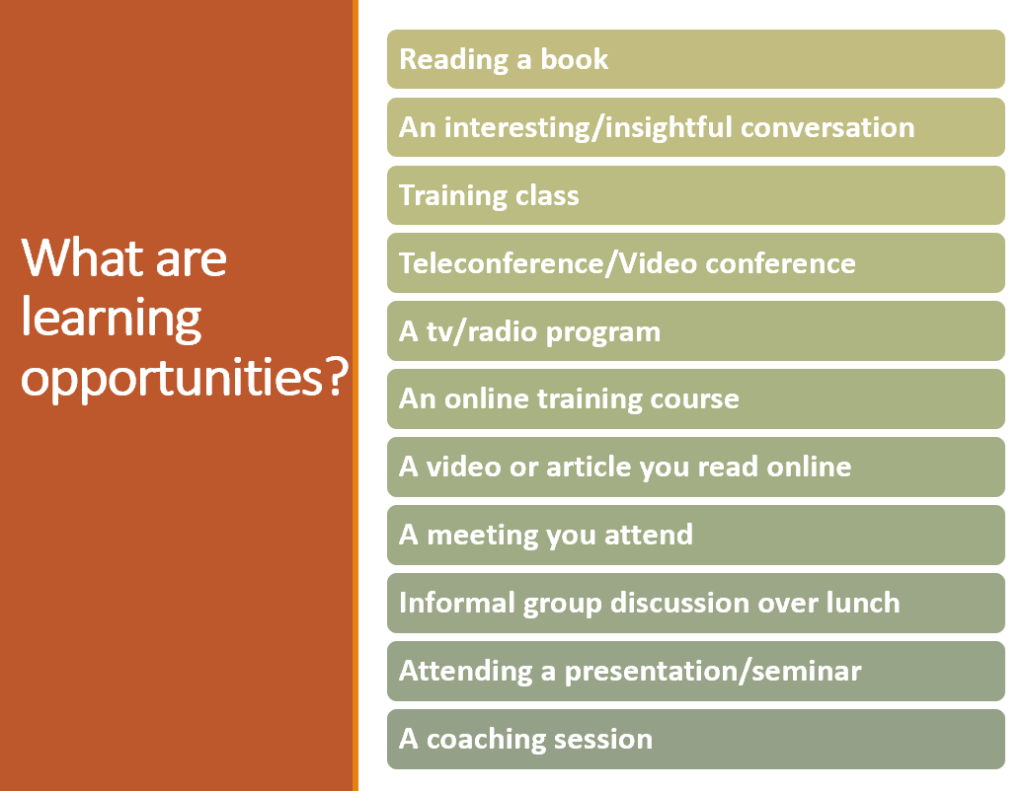
There are many ways that someone can learn something. Classroom sessions are not the only option. See the list of opportunities to learn below: (and this list is not exhaustive)
The learning book is a place to capture all new thoughts, ideas, and areas that a learner wants to learn more about in one place.
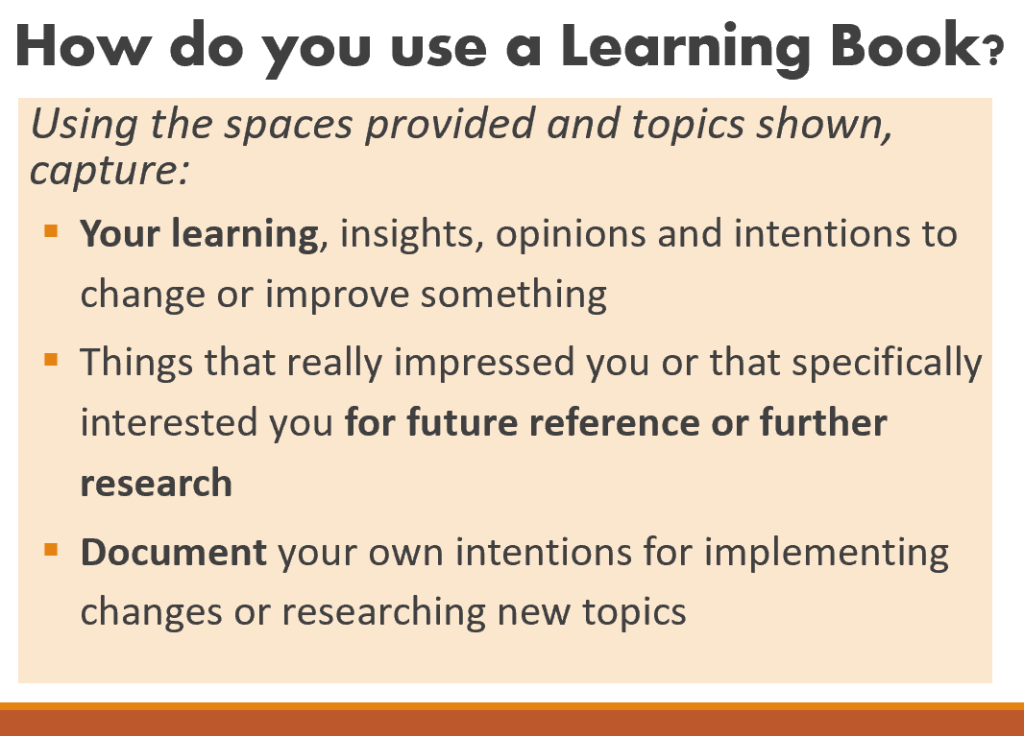
Feel free to add additional pages that would help guide the learner along a developmental path.

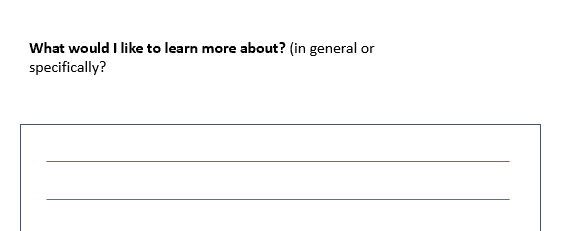
The book is broken down into 3 parts: Prepare to learn, Learning, and Follow-up. In the preparation to learn section, there is space to capture the topics that the learner would like to know more about.

Prepare to learn
Learning

The learning section has a few pages to prompt learners about aspects that may be important for them to remember later. It covers aspects such as areas to research further after the learning event. Or maybe they want to capture the highlights of their learning journey a particular week. Maybe there were a few statements of quotes that they really want to remember – the learning book has a page for that. There is also a page to capture any favorite speakers or writers that they came across and want to know more about.

Follow up

After a learning event or conference, we often have great plans for new initiatives to implement or people to contact – topics to research. And unfortunately, many of those great ideas dissipate when our normal lives resume. The Follow-up section is about capturing the actions you plan to take and it gives you a section to capture dates or months when you plan to work on it.

It’s a great way to help you check back on how you are doing with follow-up activities.
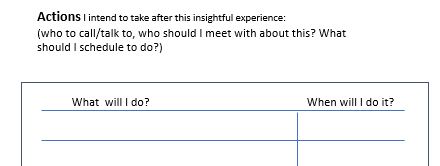
Reviewing your own learning notes from the last few months can help you pick-up again on an interesting point you still wanted to follow up on. Perhaps you had planned to call someone or to do an internet search, but somehow you forgot about it. Having it written down in your learning book and being able to review it, you can pick up on those points and ensure that you do complete the task that you had planned to do.

The download file links below contain *.pdf versions of a learning book for 3 different printed sizes: letter size, A4 size and A5 size (which is half the size of an A4).


Closing the Skills Gap Using Global Assignments


Accelerate Talent Development Through Strategic Assignments

Strategic assignments are powerful tools for cultivating high-potential employees. By aligning specific development goals with real-world challenges, organizations can foster growth and prepare individuals for future leadership roles. This structured approach ensures that employees gain the necessary skills and experience to advance their careers while contributing to the organization’s success.

The template (download link below) ensures transparency regarding developmental focus and management expectations of the outcomes of an assignment.

An assignment may require a change in location, but not always. An assignment could also be a temporarily changed reporting relationship or being part of a different group or business unit. A different group of colleagues and managers to work with provides an assignee with the opportunity to broaden his or her internal network and learn to build relationships fast. International assignments can add additional learning objectives such as developing more cultural awareness and skills involving collaboration and communicating across cultures.

The example shown helps to illustrate how one would go about using the developmental assignment template I am sharing above (see download link).

What should he/she learn?

The areas to develop (called Leadership Aspects in the example) would depend on the competencies that have been selected for leadership development and the latest ratings from the performance management process can be used to provide you with the ratings for each leader. This helps you to focus on the development needs with the highest priorities at that time. A conversation with the leader’s direct manager could be very useful in selecting the highest priorities. If the employee had been included in a recent talent review, there may be additional information available to complete the template and select the focus areas for his or her leadership development.

How will he/she learn?

When selecting the development activities, it is important to first understand specifically which aspect of that development priority the employee needs to learn more about.

  • Theoretical (mainly improving awareness)? Then an online self-paced course could be the answer. Or even sending the employee to attend an external class or read a book (or selection of books).
  • Learning new behaviors? Coaching and feedback based on actual examples encountered could be a good approach. You could also do a pre-test and post-test with some experiential workshop or learning intervention taking place between the tests. Workshops that include options to practice new behaviors can be great solutions.

A combination of learning interventions is the best way to address development needs. Look at each high-priority learning need and look for ways to combine classroom training, self-paced learning, short On The Job (OTJ) assignments or tasks, and perhaps coaching too. Each of the interventions would then strengthen learning and reinforce the principles introduced.

Be sure to document who will mentor or coach the employee. He or she needs to understand the support you are making available to him/her on the journey of learning new skills.

What is the definition of Done?

Spend some time considering how you will close out the assignment with the specific learning needs. Will you want a written report detailing the learning that took place over the assignment period? Or will you want a report and also a presentation? Or perhaps just assign a presentation to be developed whereby the assignee is asked to share his or her key learning achievements with a panel of senior-level stakeholders? Assign the completion activity early so the assignee can prepare for it from the moment he or she starts the new assignment.

Include stakeholders early

Share rating templates with the intended evaluation panel and the assignee before the final event or evaluation of a written report. The transparency helps all concerned to anticipate the level of detail required and where the focus areas will be. This helps the employee prepare from early on in the assignment to provide the required final product or presentation.

Documenting the learning objectives of an assignment helps to orient and align all stakeholders on how to positively impact the development of that leader – the leader himself/herself, his/her direct manager or supervisor, his/her coach and HR or L&D staff supporting the assignment.

Use your “like” scores to make a decision


Most of us have had a situation where we are really not sure which way to go – which choice is best for us in a given moment? Some people ask all their friends and family for advice and then go with the most popular idea that came up. Others do a lot of research and still find themselves unable to make that final decision – option A, B, or C?

I learned this way of making decisions from a manager some years back. He called it a chicken-chart. I really do not know why, but the method has really helped me get clarity about decisions that were hard to make because none of the options were obviously better than another option from my perspective.

Simple steps to help you make decisions

Step 1
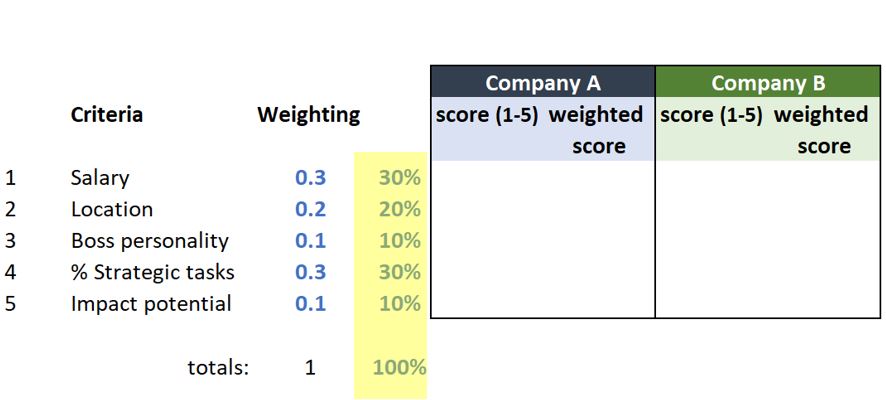
  • What is the decision you have to make? Define it clearly. [In the example below the decision would be “Which company does Jack want to work for?”]
  • Then write down the options you are considering. [In the example here: Jack is considering only Company A and Company B – you can put in any names that may be right for your decision]
Step 2
  • Write down a list of the 5 to 7 most important things you want the solution to have. [In the example below Jack cares about a good salary, a good location for the office, the personality of his boss, the % of strategic tasks that he would be able to work on and the Potential impact that his work could have on team success]
  • (see the example being used – a person called Jack is trying to decide whether he wants to work for company A or company B)
Step 3

Decide how much you like each of the criteria you wrote down. If you like it more, put a higher percentage on it (either in a 50% format or a 0.5 format). In the example below, you can see Jack decided that a good salary counts at least 30% towards his decision to work for company A or B.

Step 4

Start recording how much you like all of those aspects for company A. Then do the same for company B. Give each aspect a score between 1 and 5, where 1 is a really bad score and 5 is an excellent score for that company and for that aspect that is important to you.

Step 5

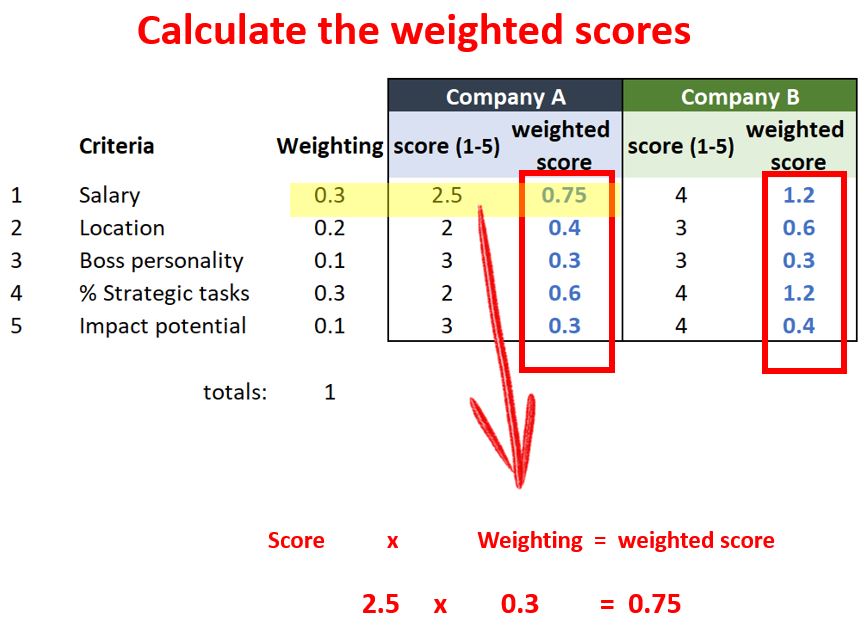
Let’s calculate the weighted score for each line item. It is really simple. It is simply: the weighting x score = weighted score.

Step 6

Now it is time to add up the totals. Get the total for the scores alone and then get the totals for the weighted scores.

Conclusion

If you look at the result from this example you can see that the difference between the total score for Company A (12.5) and the total score for Company B (18) in simple likes or scores is relatively small and if you used those scores to make the decision, you may have doubt about the choice ahead of you. The difference between your score for Company A and Company B is 44%.

If you look at the difference between the total weighted scores for Company A (2.35) and Company B (3.7), you see that the difference is much bigger because it now also includes how much Jack liked each of the criteria that he included in this exercise. In this case, the difference is 57%, which is bigger than the previous difference of 44% (for using only scores alone).

The final decision now seems more logical – to choose for company B because the difference between the two options is bigger – 57%. When you include the level of how much you liked one aspect of your criteria over another one – the difference (in this example) increased and it became much easier to know what to choose!

See it in a video

Spotting Employee Flight Risks: A Retention Checklist


20200524 risk ass

It has been said that your most valuable asset walks out of the doors every single day and you can but hope they come back the next day – your employees!

Keeping employees from leaving a company could be as simple as engaging with them, including them, helping them develop new skills and listening to their ideas. While that sounds deceptively simple, not every leader finds it easy to act when they hear that advice.

Get the facts

Understanding Your Team’s Pulse

Before diving into solutions, it’s essential to pinpoint the problem areas. Are employees considering leaving? If so, who’s most likely to exit and why? By asking the right questions and gathering data, you can identify potential risks and take proactive steps to boost employee retention.

The self-audit list below may be a good place to start assessing how much anyone on your team may be tempted to leave your team or the company.

Self Audit template

Completing the checklist requires you to answer yes or no to a series of statements as they would apply to each employee on your team. Once you have completed the assessment, add up the number of “no” answers you have for each employee and use the Score guide at the top of the page to determine whether each employee would be in the low, medium, or high risk from an employee retention perspective.

The next risk to assess is the impact it would have on your project or team if that particular employee decided to leave. Look at each employee (each column) and consider the unique skills and talents that he or she brings to the project and rate the impact that his/her (unplanned) voluntary departure could have – low, medium, or high.

Map it

Where to start? Map the answers from the self-audit sheet onto the graphic below. The risk that each employee could decide to leave on the horizontal access and the impact on the project, in case that employee did leave, on the vertical axis.

Then write down the names of employees that would be in the “green zone” vs the “yellow zone” vs the “orange zone”.

The orange area requires immediate and high focus, and the yellow zone does require focus, but less so. The green zone requires maintenance. Do not assume that because a retention risk is low today it would stay that way for years. Many talented employees get calls and offers from other companies and recruiters all the time! This means you should never stop reminding them why you are happy that they are on your team! And don’t only tell them, show them! Celebrate milestones and successes, recognize them in meaningful ways, and show them how working with your team or company is the right long-term strategy for them. Make sure you offer them advantages towards their overall life goals, their career goals, their work-life balance goals, etc.

Take action

Once you know where to focus, use the last worksheet as a checklist for areas where you can lower the risk that someone may consider leaving the team.

Use one checklist per employee and make sure that you have conversations with each employee about the areas where you either did not know the answers (looking at the self-audit worksheet) or you have not said anything to an employee about a particular area.

When it doesn’t work

Unexpected departures can disrupt teams and projects. That’s why it’s crucial to have a strong bench of talent ready to step up. By investing in employee development and creating clear career paths, you can mitigate the impact of turnover and ensure business continuity.

Taking proactive steps to assess employee retention risk is essential for organizational success. While it doesn’t guarantee zero turnover, it empowers you to identify potential departures early and take steps to improve employee satisfaction and engagement. By investing in your team’s growth and well-being, you’ll create a more stable and productive work environment.

Transform Your Meetings with Role-Based Engagement


Picture1

Tired of unproductive meetings? It’s time to shake things up. By assigning specific roles to participants, you can harness the collective intelligence of your team and achieve more in less time. Discover how to structure your meetings for maximum impact and engagement.

Are your meetings draining your energy without delivering results? Was there insufficient time to consider all the options available or make the best decisions following an open discussion? Perhaps it is time to consider assigning roles to those who attend your meetings.

Productive Meetings

Unleashing the Power of Effective Meetings

Meetings often suffer from a lack of focus and engagement. By assigning specific roles to participants, we can transform these gatherings into productive and collaborative sessions. When everyone has a clear purpose, discussions are more focused, decisions are made faster, and everyone feels valued.

By designating individuals as questioners, devil’s advocates, or summarizers, you encourage diverse perspectives and ensure all voices are heard. This approach fosters a more dynamic and productive meeting environment where everyone contributes meaningfully to the discussion and decision-making process.

The roles are specific and defined and it would require specific individuals to act accordingly for the duration of the meeting. Roles can vary from being the one to bring up a lot of questions about the issues on the agenda to being someone who plays devil’s advocate or being the critical one when it comes to suggestions tabled for consideration. Of course, all meeting participants continue to bring their own skills, opinions, and knowledge to the meeting and are expected to contribute those to the discussions too.

How to assign roles

Roles can be assigned before a meeting, the chairperson can ask meeting participants to volunteer for the various roles before the meeting starts or the chairperson can randomly assign roles at the start of the meeting (often done by means of handout out cards which explain the task of each role on a 2×4 inch card).

Task roles to assign

Initiator/Contributor

Contributes ideas and suggestions or proposes solutions and decisions. Proposes new ideas or reframes existing ideas in a different way.

Information Seeker

Asks for clarification related to comments – are they based on verified data? Asks for information or facts relevant to the problem. Suggests when more information may be needed before making decisions.

Opinion Seeker

Asks for clarification related to comments made by meeting participants.  Find out how people feel about ideas on the table.  Include those who have not yet been able to contribute an opinion during the discussion.

Critic

In a constructive manner, verbalize ways in which a suggestion or idea could have unforeseen negative consequences for other (internal or external) stakeholders in the implementation of such a suggestion/idea.

Process guard

Indicates decision-making errors and biases which may be skewing support towards a particular outcome. Points out departures from agreed-on agenda and discussion goals. Tries to bring the group back to the central issues and raises questions about the direction in which the group is heading

Summarizer

Summarizes what has taken place and what decisions have been made to date. Reminds the group of assumptions made along the way during discussions.

Note-taker and timekeeper

Keeps notes of decisions made, and actions agreed to. Reminds the group of an approaching break/end of the meeting.

Dysfunctional roles at meetings

Sometimes meetings are unproductive because one or more meeting participants are engaging in playing a dysfunctional role during the meeting which stifles discussion, shuts down conversations, and focuses the attention in unhelpful ways. Discussing these before the meeting starts could be another way to create awareness of unproductive meeting behaviors in order to avoid them. Sometimes it can be interesting to review a meeting in hindsight to identify if anyone engaged in any of these dysfunctional roles. This would be useful to help meeting participants develop self-awareness related to their meeting participant behaviors.

dysfunctional roles

By implementing role-based meeting structures, you can transform your gatherings from time-consuming obligations into dynamic problem-solving sessions. Not only will you achieve more in less time, but you’ll also foster a collaborative environment where everyone feels valued and engaged. Remember, it’s not just about the meeting itself; it’s about the outcomes and the impact it has on your team’s overall productivity.

Mastering Your Career: A Guide to Skill Building


Skill Building: Your Passport to Career Success

To ascend to higher levels within your organization, continuous skill development is essential. By strategically acquiring new competencies, you position yourself for greater challenges and opportunities. Let’s explore how to identify your skill gaps and build a roadmap for career advancement.

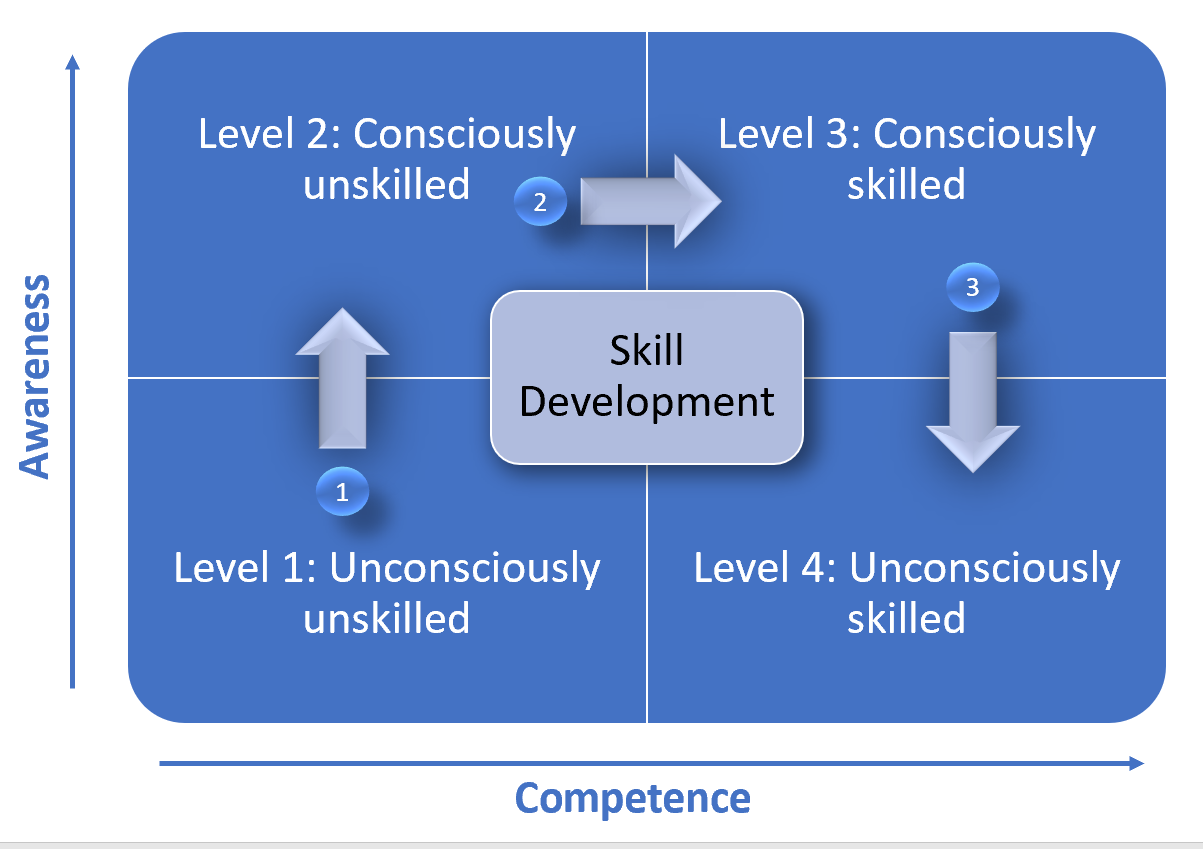
According to competence development, there are four levels that a learner goes through on their journey to being consciously competent at a skill they wish to be good at. Knowing which level you are at for the new skill or competency that you are trying to learn is important, but it is also true that until someone gains awareness almost nobody knows when they are at level 1.

image001-11733152243.png

Level 4 is the goal that any learner wants to achieve, and it is that state of skillfulness that does not require effort to execute. Think for example of how you tie your shoelaces or drive your car. If you have been doing it for a few years you can probably have many other thoughts in your head while you are doing it. This is possible because you have reached Level 4 in the skills required to tie your shoelaces or drive your car.

Going from Level 1 to Level 4

Level 1 means you are not skilled at something specific, but you do not know it. Until someone provides you with feedback in this area or until you are somehow confronted with the fact that you have no or limited skills in a specific area. We do not even think about that area as something we need to work on and we are often blissfully unaware of the potential development need in an area. The main way to move out of level 1 is to ask for feedback and to look for ways to understand how your behavior, actions, communications, and way of working impact others.

From Level 1 to Level 2 – Get input. When was the last time you asked a friend, a co-worker or a family member “Tell me one thing that I would have to get better at if I would be a better friend/co-worker/member of this family or better at my job?”

Going from Level 2 to Level 3 – Learn and practice using new ways of doing or thinking. This is where the heavy lifting comes into play. Making this transition of learning a new skill takes focus, and dedicating time in your busy schedule to actively acquire a new skill. This requires a lot of discipline and you will not only need to schedule the time for this, but you will need to practice what you are learning regularly and keep track of your own progress. It is important also in this stage to get input from others so that you can gauge the progress you are making toward acquiring and demonstrating skillfulness in new areas.

Going from Level 3 to Level 4 – It just happens. There comes a day when someone mentions that you have been demonstrating your skills in a new area without you being aware of making the effort. At that time, you will have acquired an unconsciously skilled state whereby you no longer need to focus or concentrate very hard in order to demonstrate your skill in a particular area.

What is the value of using this model?

If you are a trainer, it is important to know at which stage your training participants are because it would drive the kinds of information you make available, the kinds of practice sessions you build into your training class, and the kinds of tests you provide for them to measure their progress. A pre-test or exercise can often help determine the level of awareness and knowledge that training participants have in the skills area(s) that they will be focusing on during the class. For example, a trainer may use more assessments to increase awareness if the class is at level 1 or the trainer may use more practical exercises and instructional sessions if the person is at level 2 or 3.

As a mentor, it is important to understand not only the goals and development needs that a mentee would like to work on but also what his or her current level of competence is in that particular area. This knowledge helps you to provide helpful guidance to help him or her reach the next level of competence.

As a leader of a department or a function, you will likely have people within your group or team who are at different levels of competence. Situational Leadership will be required from you as you assign tasks, delegate, or provide feedback to each person focusing on the level of competence that he or she is at for that particular skill set that is needed.

Having a framework and process for moving from unconscious incompetence to being consciously competent helps mentors and learners. It is easier to select the right developmental tool or resource for development when it is clear which level of skill the learner is at. The starting point is most often the results from 360 reports for leaders or communication and collaboration style feedback tools and exercises.


Note 1:
In February 1969, management trainer Martin M. Broadwell called the model “the four levels of teaching”. Paul R. Curtiss and Phillip W. Warren mentioned this model in their 1973 book The Dynamics of Life Skills Coaching. In the late 1970s, this model was used at Gordon Training International by its employee Noel Burch. He called it the “four stages for learning any new skill”. Later the model was frequently (but incorrectly) attributed to Abraham Maslow, although the model does not appear in his major works.

Assessing Leadership Behaviors: A Scorecard Approach


A leader’s actions speak louder than words. How leaders behave sets the tone for an entire organization. Their focus areas, decision-making styles, and communication approaches significantly impact employee morale, productivity, and overall company culture. To ensure that leaders are aligned with organizational goals, it’s essential to measure their behavior against defined expectations.

The typical approach to measure how leaders are behaving is to obtain input from those around each leader – those who interact with the leader on a regular basis.  The groups of people asked to provide ratings for each leader could be:

  1. People who report to the leader
  2. People who are colleagues of the leader
  3. People who are more senior than the leader
  4. If appropriate – external parties who interact with the leader on a regular basis.

Process of assessing leaders

The process of assessing leadership behavior typically follows these basic steps: Collecting ratings, consolidating the ratings, providing feedback to leaders and using the results to plan further actions as needed.

201906 process

To accurately measure leadership behavior, you need a well-defined process. Begin by outlining the key leadership actions that align with the competencies you want to assess. Once established, develop a feedback mechanism that captures input from peers, subordinates, and superiors. Remember, open communication is essential. Clearly communicate the purpose of the assessment to all stakeholders involved. By being clear about the task, the purpose, and the methodology, you can ensure better responses during the evaluation process.

The resource above can be downloaded. It is a set of behavioral statements that can be shared with those who need to provide ratings and comments. The scores or ratings relate to actual behavior observed against desired behaviors for each leader that they interact with on a regular basis. Some people automate their chosen feedback gathering using a free tool like http://www.surveymonkey.com

Process notes:

  • Behaviors used for ratings have to be very well defined so that they can be observed and do not require someone to guess at the intentions or motivations of the leader. A behavior must be observable or produce visible results.
  • Ask raters to add comments to help you interpret the scores. This understanding enables the creation of realistic follow-up actions after the results are available.
  • Ratings should not be requested too often – raters get “survey fatigue” and your results become less meaningful.
  • The objective is for the tool to support the leaders by providing helpful and actionable feedback. The tool also helps to understand how the change initiative is progressing towards desired milestones.

You will notice in the shared resource (tool) example that leadership behaviors were defined in 4 categories: Commitment Behaviors, Communication Behaviors,  Teamwork/Collaboration Behaviors, and Safety Behaviors. Your categories will be determined by your own change initiative and you will need to also define the specific behaviors that are desirable for leaders given your project. Simply use the downloaded Excel sheet and type over the category names and behavior definitions to create your own Leadership Behavior Scorecard.

Important watch-outs:

  • Be careful when you consolidate the results from various raters. If you had agreed to keep rater identities confidential, summarize the results by subgroup. Provide an average per subgroup for each of the behavioral elements. Do not provide a subgroup score if there were less than 3 raters.
  • Follow-up actions should also include recognition/appreciation for those leaders who are role-modeling the desired behaviors in the organization.
  • Consider using some examples from the higher ratings to create case studies for the organization. It is easier for leaders and employees to understand how to apply desired behaviors when they receive actual examples that illustrate how decisions were made or implemented using the desired behaviors. An example makes it easier for others to follow.

The tool is relatively simple to use, but it is vital that it is designed well and introduced correctly into the organization. Assessment tools can be seen as a negative element if the objectives and the way results will be used are not communicated appropriately.

Preparing to facilitate a Team Session


201905

The success of team events or sessions can be more predictable when facilitators gather information from invited participants and stakeholders before planning the agenda, activities, and presentations.  Knowing more about the current issues and expectations can greatly enhance your chances of ensuring the team faces what they need to focus on and deal with that in a constructive way.

The source I am sharing, is a list of pre-session interview questions which could help you get a good foundation about the team: what is working, what could be better and how each of the interviewees sees the situations faced by the team.

Some important notes about pre-session interviews:

Starting right
  • If the team members do not know you (the facilitator) yet, be sure to introduce yourself to each interviewee and mention your role in the upcoming planned session. They may have additional questions about your background and experience in this area and why you are working on the planned session. Be prepared to summarize these points before you get into the interview.
  • Make sure you can explain to what degree the responses will be confidential. You would typically want to share a summary of responses with the session attendees to help set the scene on the day and perhaps use that to initiate a discussion or lead into an activity to address something that was mentioned by several participants during the interview. Will you be word-smithing the responses to protect the identity of interviewees? Or will you share the raw data? You need to be transparent about that.
  • Why are you asking? Be sure to explain how the answers and responses will be used to plan the session and help the team move forward and past any obstacles that may be holding them back.
  • Let them know upfront that their questions about the session will be answered during their time with you (the interview).
Planning your approach
  • Will you interview individuals or groups of individuals that work in a specific department or functional group? Think this through carefully with regards to the advantages and disadvantages of this choice before you make that decision.  I usually recommend that the number of session participants is no more than about 20 – 25 people and I prefer to know each individual’s responses before I finalize my planning for the session. This means I interview each person separately. But I can also imagine that the team/project culture and approach could make it useful to interview small sub-groups within the team.
  • In person or online? I prefer to do the interviews in person to allow me the opportunity to ask follow-up questions on the spot. Sitting with someone and talking through the questions gives you the opportunity to also watch their reactions or pauses after each question. This can indicate whether some topics may be sensitive to the interviewee and again you could choose to ask more questions to better understand the issues at hand.
  • The right number of questions. It is important that the interviews do not become exhausting. Accept that you will not be able to ask every single question that you may have for the planned participants before the session. Some questions are best worked out by the group at the session. Be very selective and critical – ask only questions which will help you prepare for the session. The interviews are not intended to replace the planned group/team session.

The questions in the (download available above) resource range from understanding expectations to identifying possible issues that the team needs to address. It includes some questions which may help with understanding possible issues that could pose an obstacle to team success.  Some of the questions are also specifically there to help team session participants envisage themselves being a positive contributor to the success of the session.

I do not suggest that all of the questions would be relevant to every session that you would plan, as the facilitator. Instead, I suggest that you use the ones that make the most sense for the session you are working on and feel free to add additional questions as needed in order to improve your understanding in the relevant areas that the session needs to cover.

Finally, it is important to realize that just the fact that you are asking questions and providing interviewees an opportunity to discuss their thoughts and impressions is in itself already a change management intervention. You are setting the scene for the session and helping to shape participation before the session. This could greatly enhance group dynamics and ensure the success of the planned session.

4 Questions to ask about HR metrics


Understand first, then act

empto6

Without the right level of scrutiny, it can be easy to misinterpret a metric (key measurement, KPI) and waste valuable time and resources debating and taking actions to “fix” things that may not be “broken.”

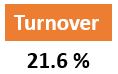
Let’s take an example to illustrate: Employee turnover. Let’s say I show you this number and tell you that this represents Employee turnover at a company:

empto1

I would imagine you would have some questions for me? Let’s go through some questions I expect you to ask me as we clarify what that number means. (Answers in blue from an HR representative at a fictitious company)

  1. How do you define turnover and how did you calculate that?

Answer: The company defined employee turnover as the number of employees who left the company. And they calculate that number this way:

empto2
empto3

If you think this number is high or low, hold your horses, we have a few more questions to ask before we can come to a conclusion.

  1. Over what time period was this number calculated?

Answer: It represents the employee turnover over one quarter. 

An unusually high or low number can be an anomaly if it represents, for example, one day or one week out of a year. And that could be for many reasons including possible entry errors or calculation errors. If it is an average over an entire year, an unusually high number may indicate an alarming trend.

  1. What is this metric about?  

Here you would like to understand the reason why they are tracking the metric and how they are using this metric for decision-making.

Answer: “We want to make sure that we retain employees and do not have too many people leaving thereby causing us to have to retrain people on a regular basis. We also want to avoid constantly having to hire and onboard people to replace those who left. We think it is disruptive to the business. We have set a limit of 7% as a reasonable employee turnover maximum.”

Knowing that this is about retention helps to understand the metric more. For example, you could now start to form an idea in your head about the employees that a company would like to retain. To ensure you lose no more than 7% of your employees through resignations, you would want to ensure that internal communication is going well, that employees feel appreciated and that there are development opportunities for them etc. (These would be all the efforts you could make to increase employee engagement and satisfaction).  But it is also immediately obvious that 21.6% is much higher than 7%! So we need to ask more questions.

  1. What is the context of this metric? 

With this question, you are trying to understand if there were any events or special circumstances that may have contributed to this metric being unusually high or low.  It may also highlight how this metric compares to other periods – is it higher or lower than in the past?

Answer: “The metric is much higher than in previous quarters. During this quarter, we had to lay off some people due to losing a large customer. We also let some temporary workers go. And some people have chosen to take early retirement with the incentives that we offered around the reduction in workforce.”

Going back to how they calculated the 21.6% you may now wonder if they did the calculation correctly. If the metric is about making sure that they retain employees then it would be logical to ensure they do not include those who leave involuntarily – due to a lay-off for example. And there was also mention of temporary workers. Workforce planning often includes having a pool of temporary/agency workers who can more easily be let go of in the event of an organizational downturn. From that perspective, it would also not be useful to include those workers in an employee retention metric. It is time to question the number of people who left the company – the 108.  Having obtained more information about the 108 employees, we see that this number represents various groups including retirees, agency workers, redundancies, and resignations.

empto4

In this case, the only unplanned people that the company “lost” = 32

In that case, the metric calculation would result in 6.4% which is below the 7% limit that was set as a goal.  It is important that the definition of the metric is clear about which groups of people who left should be included or excluded in the calculation.

In summary, we can make some suggestions for this  HR team:
  • Clear name and definition. Perhaps the metric should be redefined and possibly renamed if their intention is to capture how many employees (not temporary workers) resign from the company and to keep that % below 7%.
  • Share definition with stakeholders. Just looking at 21.6% employee turnover can be alarming so it would also be very important that the metric is well understood by the team and its key stakeholders outside of the team.
  • Accuracy. To avoid any possible calculation errors, it could help if somebody audits the metrics before the dashboard is finalized and distributed. The credibility of the HR team can be impacted if an executive team regularly sees errors or inconsistencies on the HR dashboard.

Keeping track of key metrics to monitor the success of specific processes or initiatives is important. That way you would be able to easily identify if a project or an objective is in danger of failing to achieve desired outcomes at the end of a year. Early identification also enables you to take the appropriate actions to correct an alarming trend. The key is to ensure that metrics on a dashboard are accurate and easy to interpret by those who view it. Be intentional and critical when you choose the metrics to track and when you define them to stakeholders.

When reviewing metrics, ensure that you truly understand what they represent before drawing premature conclusions. Planning actions to rectify premature conclusions could be a waste of your valuable time and resources when they are based on erroneous assumptions.

Organize your message


speech

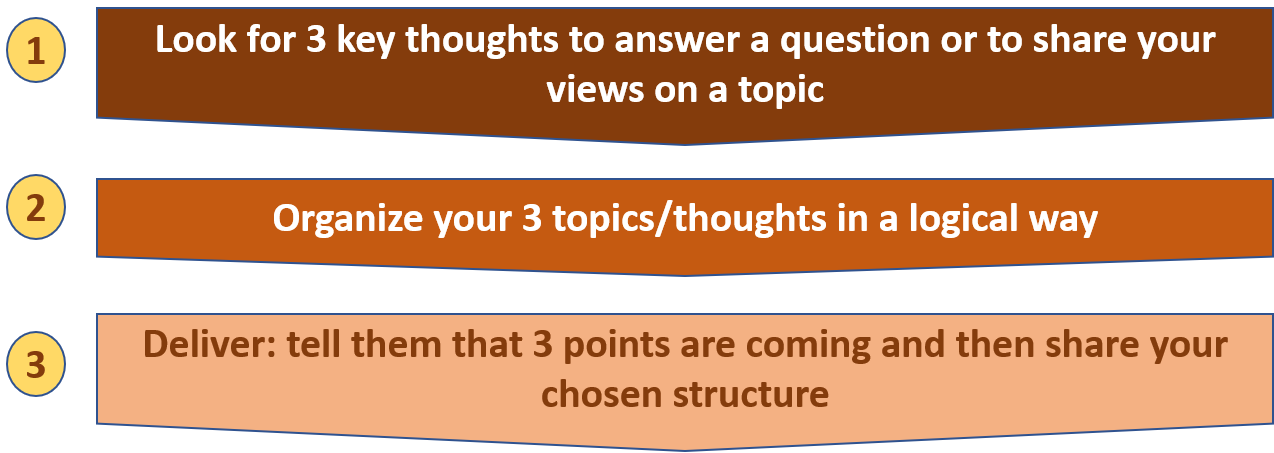
Many of us have heard about the power of three items or 3 key messages, but most people have not been shown how to use this in practice. While it is easy enough to make a list and restrict it to 3 items, picking 3 items that make sense from a logical perspective takes a little more thought. Our minds are highly responsive to patterns. Knowing that we will hear 3 key points and then having somebody deliver the 3 points in a logical fashion is something we are more likely to remember afterward. It comes across as more credible when we are able to recognize a pattern in the delivery of the key points.

Maybe you are coaching someone on how to deliver more impactful messages. Or perhaps you are preparing your own answers to questions in a group setting or you are planning a short speech on an important change initiative or project update? This resource can help you. It aids in formulating your thoughts in a logical way, which enables you to deliver a message that is easy for your audience to interpret and remember.

3 Step process to deliver powerful messages

model org message

The three key ideas you wish to communicate or the three top reasons why you suggest a certain course of action cannot be random or they may still fail to be memorable. The 3 key concepts should be structured in a way that would make sense to others so that they can easily be recalled after people hear them.

Grouping the 3 points in a logical way:

  • Three linked ideas like quality, time, money/costs; good, bad and ugly (see the specific example in the downloaded document )
  • Forward or backward motion – tell the story sequentially either from the present into the past in 3 steps or from the past into the future in 3 steps. For example: in the past, we used one process which worked, but since then many things changed to where we are today (with challenges and in need for things to change) and in the future, we will have additional challenges which simply requires us to make changes now. (You can fill in the details of your own message to explain the situation when you choose a structure that moves forward or backward in time).
  • Perspective – the 3 concepts move from a big idea to a small idea or from small ideas to big ideas/reasons. For example (out of) from this small team which will be impacted by the change to the bigger team and then to an even bigger group of people who may be impacted. (see the specific example in the downloaded pages)
org message structures

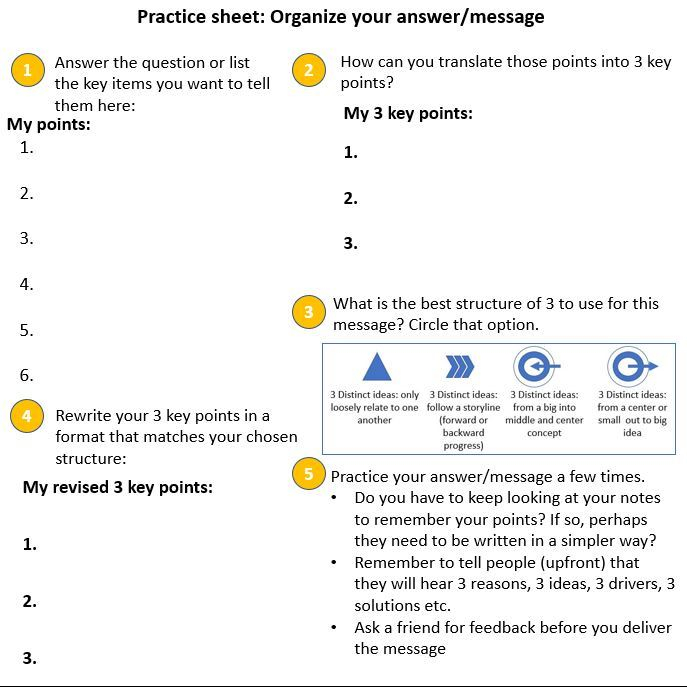
Use the practice sheet or template (included in the download file above) to learn this approach. It helps you to become more familiar with using this way of organizing your message or your answer to a group of people. Once you get used to how it works you will no longer need the template and you should be able to organize your thoughts while you are in the meeting or in transit to the meeting.

organize your message template

Some ideas of where to use this approach:

  • You are in a meeting and they are going around the table collecting everyone’s thoughts on a proposal (You take a moment to quickly organize your own response using this method.)
  • You have been asked to provide an update at a meeting, which starts in a few minutes. (Remembering this approach you are able to jot down your initial thoughts, choose a structure and then revise your points to fit your chosen structure of 3 points to make.)
  • You are attending a conference and have to introduce yourself or someone else (Using the structured way of choosing 3 key aspects to mention, your answer is memorable to the conference attendees.)
  • During lunch, some colleagues ask you why you support a particular proposal. (You easily recall the structured options and formulate a response consisting of 3 key thoughts to share after you have swallowed the food.)

Listening to long unstructured answers in meetings or trying to make sense out of facts presented in a complicated way in a meeting can be a confusing experience. Using a simple structure with only (no more and no less than) 3 key points, makes it much easier for you to avoid the same mistake. Instead, you can use this approach to deliver a message that they will easily understand and remember.

Let me know how this approach works for you or the person that you are coaching!