Streamline Your Workflow: Start, Stop, Change Strategy


Feeling overwhelmed by your to-do list? It’s time for a fresh approach. Whether you’re figuring out what new tasks to start, which processes to stop, or where to make improvements—including sustainability initiatives—this simple method will help you cut waste and boost efficiency. Think of it as a game-changer for your workflow, empowering your team to work smarter, not harder, while making real progress. Change doesn’t have to be overwhelming; it’s about making strategic, impactful adjustments that lead to better results, smoother workflows, and more sustainable outcomes.

A Fresh Approach to Tackling Chaos

Ever feel like your to-do list is out of control? This simple method helps bring clarity, meaning, and direction to your tasks. Whether you’re deciding what new actions to take, which processes need tweaking, or which habits to drop, this approach will streamline your workflow, boost productivity, and make your routine more manageable.

Even the best processes lose their effectiveness over time or fail to take advantage of the improved availability of better tools and templates, signaling the need to reassess. While big changes can be costly, small adjustments often get things back on track. The method I’ll share is perfect for team brainstorming, making it easier to identify areas for improvement together.

Think of it like tidying up a familiar room. Some things need to go, while others just need a small fix. This tool helps you do the same with your work, identifying what needs to change, what new actions to start, and what habits to stop.

Importantly, it’s also about working smarter with sustainability in mind. Rethinking processes to reduce waste, conserve resources, and adopt eco-friendly practices not only improves efficiency but also builds a more sustainable work environment for the future.

Think of yourself as a gardener, planning to refresh and revive your garden. To improve a process or outcome at work or in a volunteer setting, you need to plant new “seeds”—ideas and actions that hold the potential to bring positive change. These are the things you want to start doing to make a meaningful impact.

Ask yourself: What new tools, strategies, or approaches could help streamline work, solve problems, or improve how people experience your organization or team? It might be a fresh approach to a recurring issue or an idea that could make things more efficient. Like planting new flowers in a garden, these initiatives will need your time and attention to grow and flourish.

By starting these key actions, you create opportunities for improvement and success and build an environment that thrives on new ideas and growth.

When we talk about what needs to stop in the workplace, we’re focusing on behaviors and habits that hold everyone back. Think of gossip—it’s like a poison that erodes trust and divides teams. Then there’s micromanagement, which stifles creativity and leaves people feeling frustrated and demotivated. And multitasking? While it might seem productive, it often leads to mistakes and burnout. By eliminating these negative behaviors, we can create a more positive, collaborative, and efficient work environment.

Stopping isn’t just about behaviors, though; it’s also about simplifying how we work. This means cutting out unnecessary steps, avoiding redundant processes, and leveraging technology to make tasks easier and faster. It’s about working smarter, not harder.

The key to success is getting everyone involved. When the team collaborates and shares insights, it becomes easier to identify which tasks or processes don’t add value—and figure out the best ways to eliminate them. This not only streamlines workflow but also helps the entire team feel more aligned, motivated, and connected.

When identifying what needs to be changed, it’s about finding those processes or tasks that work to some extent but aren’t quite hitting the mark. These are not things you want to stop completely, but they could benefit from refinement or improvement. The goal is to enhance their efficiency or effectiveness rather than overhaul them entirely.

This step is about finding out with your team where bottlenecks occur, where confusion arises, or where inefficiencies creep in. Perhaps you uncover small tweaks that make a big difference. For example, a task might be taking longer than necessary because of an outdated step, or perhaps communication between teams could be improved to streamline a handoff.

Other possible candidates for change may lie in opportunities to improve: Are there tasks that could be automated? Is there a process that could be shortened or simplified without sacrificing quality? Sometimes it’s as simple as adjusting timelines or reallocating resources to better fit the demands of a project.

The key is not to throw out processes that have potential but to fine-tune them. By making small, thoughtful adjustments, you can improve the overall flow and outcomes. Involving the entire team in identifying these areas for change ensures that the solutions are practical, realistic, and beneficial for everyone.

Setting up time with the team

To kick off improvements, start by gathering input from everyone involved in the workflow. Set up a dedicated meeting where each person can share their unique insights. By involving the whole team, you’ll gain a diverse range of perspectives, helping you identify opportunities for improvement far more effectively than if you were working alone.

To make the session productive, team up with coworkers and dedicate about an hour to look for ways to enhance how you work, the environment you work in, or how your organization delivers value—whether it’s to customers, clients, or those benefiting from your volunteer efforts.
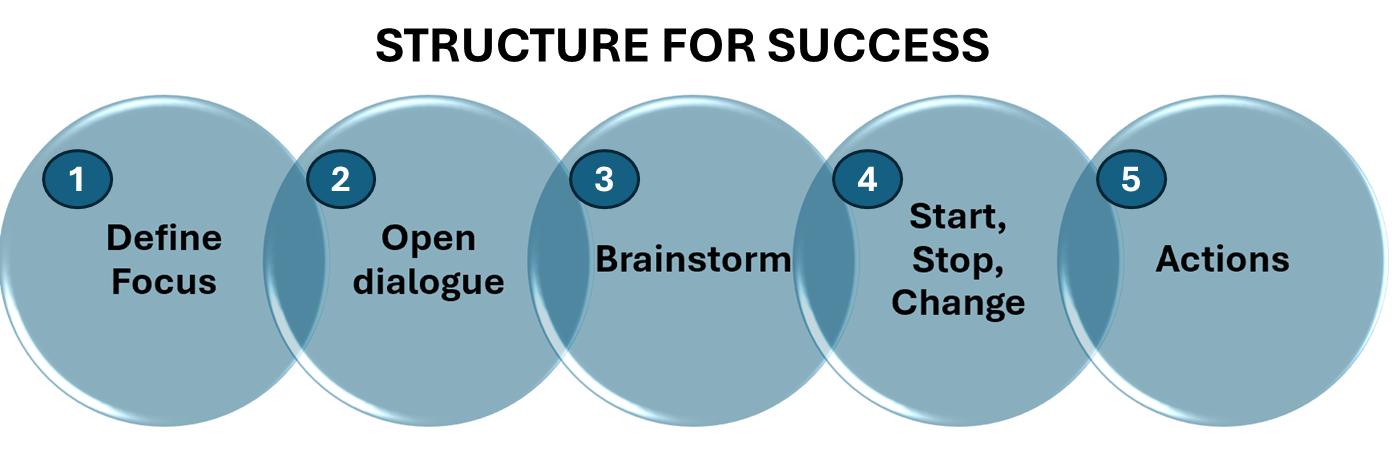
Here’s how to structure your session for success:

  1. Define the Focus: Clearly outline what the session is about. Are you looking to improve a specific process, boost safety, streamline workflows, or enhance customer/recipient satisfaction? Make sure everyone understands the goal before diving into discussions.
  2. Encourage Open Dialogue: Create a safe space for everyone to share their ideas, frustrations, and suggestions. Emphasize that all feedback is valuable and will contribute to positive change.
  3. Brainstorm Together: Work as a group to explore ways to make things better, smarter, and safer. This could involve improving the way tasks are done, optimizing the workspace, or enhancing the delivery of value to customers or the community.
  4. Capture Ideas: Use Stop, Start, and Change flipchart pages to organize ideas. After brainstorming, categorize the suggestions:
  • Stop: What isn’t working and needs to stop?
    • Start: What new actions, processes, or tools should be introduced?
      • Change: What existing processes could be improved with a few adjustments?

5. Assign Actions: Once ideas are gathered, assign ownership for each action. Ensure there’s follow-up so the insights gained from the session translate into real improvements. Also, set up a follow-up recurring meeting to review how things are going to discuss if you need to change or improve how you are implementing actions to be more successful and avoid obstacles to success.

By following this structure, you’ll ensure that your team collaborates effectively and walks away with actionable steps to make meaningful changes.

Keep Stakeholders in the Loop

After the meeting, it’s important to keep key stakeholders, such as your supervisor or others involved in the implementation, informed about the progress. Provide them with an update on the discussions, including the proposal for items to start, stop, or change. This transparency ensures they are aware of the team’s efforts and can offer support as needed. Additionally, ask for their feedback and suggestions. This will help ensure that no key opportunities for improvement are missed and that the plan is as comprehensive as possible. Engaging others in this way enhances collaboration and strengthens the overall success of the initiative.

Now It’s Your Turn to Change the Game

Taking a structured approach to what you start, stop, and change can really improve how your team works and help you reach your sustainability goals. I encourage you to take a fresh look at your team, your environment, and how you get things done. Find ways to not only make customers happier and save money, but also to reduce waste, save resources, and lessen your impact on the planet. Involving your team in this process will help everyone work smarter and feel more motivated as they see their ideas making a difference. Whether you’re working or volunteering, these changes can lead to a more rewarding and sustainable experience. Now is the time to act—start looking for where you can make a real difference for your team and the environment.

Stakeholders – How to keep them happy


Stakeholders

Not shareholders – they are the ones who own shares in the company. Stakeholders are those groups of people who have a keen interest in the initiative or process that you are working on. It could be because your success or your failure will impact their groups or processes in their groups. It could also be because your initiative could generate risks which they would like to keep an eye on. For some reason, these people or groups care more than the average person or employee about the initiative that you are working on.

It is therefore smart to understand who they are and secondly to understand why they care so much about this initiative. And as a result of what you learn, you can plan to keep them happy and informed. If you don’t, you risk them blocking or stalling progress on your initiative, or (if in executive levels) they may put another person in place to supervise you to make sure their interests are well-managed and protected.

For your success as a project manager of an initiative – find out who the stakeholders are, find out what they need and make sure you meet their needs!

Find out who they are

Which groups have processes that overlap or connect to processes you are managing? Who are the receivers or end-users of what you are creating? Answers to these questions could help you start your list of stakeholders.

Tips:

  • Start outside your organizations – are there any authorities, special interest groups, communities, clients, suppliers who are somehow connected to the product or service that you are providing? They may be stakeholders!
  • Look at the high-level organization chart of your company. Do any of the groups you see contribute to, receive outcomes, or participate in key processes you are managing? If so, add them to your stakeholder list.
  • Look for individuals at management levels who may need to give others updates on your project or processes you manage. They may also be stakeholders.

What do they care about?

Once you have your list of stakeholders with their titles and even down to name level. It is time to validate their interest in your project or process.

What they need:

Why would they care about the outcomes of your process or the way you run the project? Do they need information for their role or group? Or do they use the outcomes from your project somehow?

What they want to avoid:

What outcomes or messages would each of the identified stakeholders want to avoid? Think of anything that would cause them to have to do extra work or have to explain unsatisfactory results.

Make a plan

Use the template below to document a plan that you follow throughout the year to ensure each of your stakeholder groups receive required data, updates or opportunities to provide input or suggestions to your project on a regular basis.

Templates to download

Check-in on a regular basis with your stakeholders whether it is a quarterly survey or a personal call from you. Make sure that you have not missed anything they need to know or be informed about and make sure that they are not dealing with rising frustration due to a lack of updates or output from your team!

Learning how to manage the expectations of stakeholders on an initiative is a great way to learn new skills which will become important as you get promoted to take on more responsibilities. People at higher levels in any organization succeed by keeping aligned with a lot of different personalities and groups and they do this by understanding the needs and concerns of these other parties and then managing that (in a similar way as managing stakeholder expectations) on an ongoing basis.

Transform Your Meetings with Role-Based Engagement


Picture1

Tired of unproductive meetings? It’s time to shake things up. By assigning specific roles to participants, you can harness the collective intelligence of your team and achieve more in less time. Discover how to structure your meetings for maximum impact and engagement.

Are your meetings draining your energy without delivering results? Was there insufficient time to consider all the options available or make the best decisions following an open discussion? Perhaps it is time to consider assigning roles to those who attend your meetings.

Productive Meetings

Unleashing the Power of Effective Meetings

Meetings often suffer from a lack of focus and engagement. By assigning specific roles to participants, we can transform these gatherings into productive and collaborative sessions. When everyone has a clear purpose, discussions are more focused, decisions are made faster, and everyone feels valued.

By designating individuals as questioners, devil’s advocates, or summarizers, you encourage diverse perspectives and ensure all voices are heard. This approach fosters a more dynamic and productive meeting environment where everyone contributes meaningfully to the discussion and decision-making process.

The roles are specific and defined and it would require specific individuals to act accordingly for the duration of the meeting. Roles can vary from being the one to bring up a lot of questions about the issues on the agenda to being someone who plays devil’s advocate or being the critical one when it comes to suggestions tabled for consideration. Of course, all meeting participants continue to bring their own skills, opinions, and knowledge to the meeting and are expected to contribute those to the discussions too.

How to assign roles

Roles can be assigned before a meeting, the chairperson can ask meeting participants to volunteer for the various roles before the meeting starts or the chairperson can randomly assign roles at the start of the meeting (often done by means of handout out cards which explain the task of each role on a 2×4 inch card).

Task roles to assign

Initiator/Contributor

Contributes ideas and suggestions or proposes solutions and decisions. Proposes new ideas or reframes existing ideas in a different way.

Information Seeker

Asks for clarification related to comments – are they based on verified data? Asks for information or facts relevant to the problem. Suggests when more information may be needed before making decisions.

Opinion Seeker

Asks for clarification related to comments made by meeting participants.  Find out how people feel about ideas on the table.  Include those who have not yet been able to contribute an opinion during the discussion.

Critic

In a constructive manner, verbalize ways in which a suggestion or idea could have unforeseen negative consequences for other (internal or external) stakeholders in the implementation of such a suggestion/idea.

Process guard

Indicates decision-making errors and biases which may be skewing support towards a particular outcome. Points out departures from agreed-on agenda and discussion goals. Tries to bring the group back to the central issues and raises questions about the direction in which the group is heading

Summarizer

Summarizes what has taken place and what decisions have been made to date. Reminds the group of assumptions made along the way during discussions.

Note-taker and timekeeper

Keeps notes of decisions made, and actions agreed to. Reminds the group of an approaching break/end of the meeting.

Dysfunctional roles at meetings

Sometimes meetings are unproductive because one or more meeting participants are engaging in playing a dysfunctional role during the meeting which stifles discussion, shuts down conversations, and focuses the attention in unhelpful ways. Discussing these before the meeting starts could be another way to create awareness of unproductive meeting behaviors in order to avoid them. Sometimes it can be interesting to review a meeting in hindsight to identify if anyone engaged in any of these dysfunctional roles. This would be useful to help meeting participants develop self-awareness related to their meeting participant behaviors.

dysfunctional roles

By implementing role-based meeting structures, you can transform your gatherings from time-consuming obligations into dynamic problem-solving sessions. Not only will you achieve more in less time, but you’ll also foster a collaborative environment where everyone feels valued and engaged. Remember, it’s not just about the meeting itself; it’s about the outcomes and the impact it has on your team’s overall productivity.

Change Management – Getting senior management onboard


change-mgt-overview-blog-pic

Before any organizational change is launched there has to be meetings with executives and senior leaders to ensure alignment around the reason(s) and main principles of the change initiative. Meeting objectives would also typically include getting their support for executing change activities and to help them understand expectations of them as executives and senior leaders during the change period and beyond.

The downloadable slide deck (above) can be used as a basis for creating your messages to senior leaders and executives. The slides helps to explain how change will likely impact the organization and the people plus explaining how leaders can help by being role models and also by actively addressing resistance and other signs of low engagement in those around them.

Use this resource as optional examples to help communicate the specific messages that makes sense for the change management initiative that you may be leading and the meeting participants/audience that you will be facing.

Here are the steps I would suggest you follow:

  1. Be clear on the reasons that your change initiative need to be implemented and how the changes will improve on status quo. (Business case or burning platform)
  2. Did you get executive buy-in from one or more sponsors before your presentation? (Highly recommended – in fact, do not proceed until you have it!)
  3. Consider the presentation you will be doing – who will be there? What do they know and what do you need them to know, understand and do once they leave the presentation?
  4. What impact will the planned changes likely have on the employees at your company and how do you think your targeted audience can help and should act/behave given the change process and desired outcomes?
  5. Review the slides in the resource I am sharing and determine if any of them could help you and support the messages that you would like to communicate to the audience that you will be facing.

Of course these slides are not going to substitute the preparation work you need to do before starting a change initiative, but they may be helpful to use as background or to explain some of the specific change management aspects that may be of particular importance to your audience.

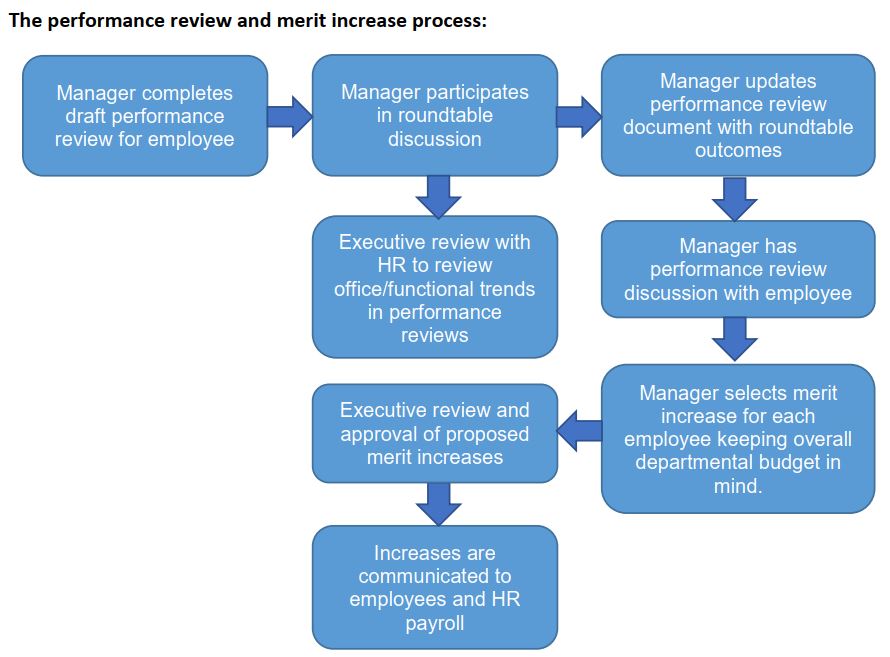
Linking Performance Reviews and Merit Increases


Employee performance outcomes is one important aspect to be reviewed when it comes to considering merit increases. It is not the only consideration though. Overall merit increase budgets, inflation, changes in external benchmarks for specific roles, current compensation ratios etc. are all additional elements which would impact actual merit increases per department and employee.

The resource I have here ties a specific overall individual performance review score to a specific range of possible merit increases. Some managers require a highly structured and fixed process for determining % changes and this is one way to create one. One should however also be sure to consider the other aspects mentioned above: budget for increases that year, company performance in the last year (overall), the market value of specific roles (roles that are in high demand). Compensation has a powerful influence on employee engagement and retention, but it is not the only one. Employees also care about career growth, flexible benefits and being helped to develop further.

I would caution anyone to consider unintended outcomes when attempting to standardize and establish rigid structures for considering individual performance and linking that in a fixed way to merit increase percentages. While intentions may be good: to reward your best performers for their contributions and to ensure those with lesser performance improve or leave the company, a process that is overly structured could fail to accomplish that intention.

The approach shared above – see download link – indicates one way in which a group has established a direct link tying the performance review process directly to the merit increase process. This example does not take into account some of the considerations highlighted above when it comes to selecting the actual increase percentage and I chose to share this resource anyway, because it does happen that HR is asked for a process like the attached on a regular basis and I want to make an example available to you if you find yourself in that situation.

I do suggest you consider ways to incorporate the other aspects as outlined above when you finalize your proposal to implement a more structured approach to tie performance management to compensation review.

My main advice is to think it through carefully to ensure your good intentions have the best chance of being reinforced by your performance management process and pay-for-performance approach . And I would also add that you should remain flexible in working with your documented process. Be ready and willing to adjust and update it as you gather input about how successful your process is in driving desired outcomes – results and behavior that you and the executives would like to see in your pool of employees.

Performance Management – setting up the annual process


final perf imp

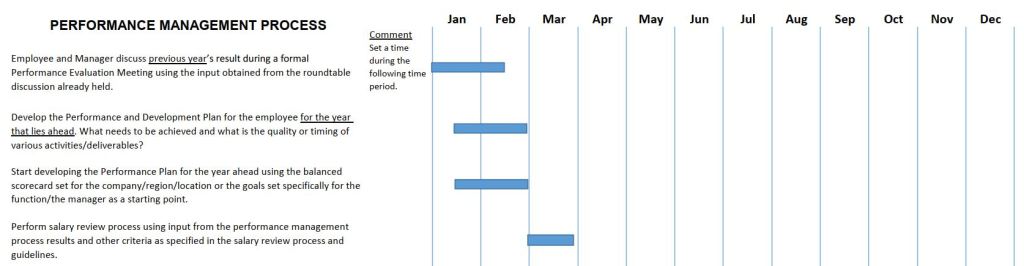
The HR function manages a few processes which take place at various points over a 12-month period. Think of the annual salary reviews, annual training needs analysis, bonus calculations and performance management processes.

It is important to managers to have a clear understanding of each of these processes and when they take place throughout the year. If you set all of these processes on a regular annual schedule it helps managers to correctly anticipate next steps in processes and provide input required in a timely manner.

The process

This generic performance management process schedule I am sharing with you (see download option below) shows the various basic steps that would need to be followed over a 12 month period. There are references to the link with a salary/compensation review process and also the link with identifying and reviewing individual development needs and progress along achieving improvement goals.

Download a copy below

Implementing a process like this would need a change management plan if your organization has never done anything like this before. Even if you have had some form of a performance management process in place, but would now like to expand on it to include some of the elements shown in the attachment, a change management plan would be recommended. Before you start you would of course ensure that the manager/director, who is accountable for the performance management process at your organization, is aligned with your ideas and suggestions and strongly supports the direction you would like to take.

The benefits of having a documented process for Performance Management are:
  • It is easy for HR to ensure new employees, current employees, new supervisors and existing managers understand the process and their role in the process.
  • It is a way to help stakeholders understand and then prepare for the input and actions they need to complete in order to support the process.
  • Linked to a balanced score card, the process can make it clear to individuals/departments how they collectively and as individuals support the attainment of larger organizational performance goals.
  • Knowing that there are check-in moments for feedback and discussion moments around performance expectations, progress and development needs and activities can be a strong way to reinforce employee engagement. Many employees tend to consider other employment options when they feel that their development and career progression goals are not being met by their current employer.

This list is not exhaustive. For more information about benefits see links like Benefits of performance management or Importance of Performance Management

Making Difficult Decisions


Making decisions is a key part of any leader or manager’s day. Most new leaders find this somewhat intimidating. There is the fear of making the wrong decision, the fear of not having enough time to make the decision, the fear of not having enough information to make the decision and the list goes on.

“Every decision has at least a 50% chance of being the wrong one.”

The decisions that leaders make add up to the value that he or she adds to a team or an organization. And yet there are those who say most of our decisions have a 50% chance of being the right choice between two options. They say this to make the point that you can better make a choice and be active in the process than to avoid making a choice or a decision and being reactive.

Competing Benefit decisions
Classic example of trade-off choices

Trade-offs

When it comes to commercial and operational decisions most of the time the difficulty in decision-making lies in the correct trade-off within the benefits triangle (shown to the left).  If you can get the article/outcome within the time-frame that you would like and with the right quality that you would like to have, there may be a high cost trade-off. Similarly you can find yourself having a low cost at the right quality, but you may have to wait longer to receive the outcome or article. Understanding the trade-off as shown in the graphic above may make it easier to decide which of the three are non-negotiable and where a compromise may be appropriate.

Competing values

Another challenging area for decision-making can be competing values. Imagine you value employee development (as a leader or manager) and you also value productivity. Choosing to develop your employees typically means you have to take them away from their daily activities to attend a development or learning event. This implies they are not able to produce the results you need during that time. This kind of choice often comes at the last minute. Imagine you had planned for Employee A to attend a training course, but at the last moment he or she is sick or otherwise unable to attend and HR asks you to nominate a substitute and thereby presents you with a decision-making dilemma.

Competing Values Decisions

The graphic shown the the left illustrates some competing value trade-off decisions that you may be called upon to consider as a leader or manager.  If you have already completed a review of your own values as a leader you may have the advantage of using that as a framework for decision-making.  You would also need to look at the values that the company represent to make sure your trade-off options also include that perspective.

Finally when you do make a decision, be sure to explain your reasoning and make the values you are honoring clear to the impacted employee(s) or colleagues.

Decision-making styles

Decision Making Styles

Leaders and managers also often fall into the trap of trying to use only one decision-making style and they neglect to consider the other options open to them. There is a time and a place for every type of decision-making style.

Sometimes it may be appropriate to make autocratic decisions – this can be useful when the impact is limited, the need is immediate and the risk low of encountering resistance during implementation. At other times a more collaborative and inclusive decision-making process may be appropriate – such as when there are many stakeholders, people need to change their behaviors or work methods, time is on your side etc. Selecting only one decision-making style as a leader can make decisions difficult since you may find you experience a lot of resistance from others to implement your decisions especially if you favor autocratic decision-making most of the time.

The main job of a leader and a manager is to make decisions and choices in order to move projects and initiatives forward. Decisions also impact dealing with risks, unplanned barriers to success, and how to achieve the goals set for organizations and teams. All this, while respecting approval matrices, client satisfaction and the profitability of a project.

Decision-making is a skill that many leaders need help with and being more mindful about their own process for making decisions and understanding options open to decision-makers, is a good start. Work with a coach or trusted advisor if you want to talk through tough choices you need to make – it is a best practice that most successful executives engage in.

What are your Values -TEMPLATE


Before you can select goals and development objectives for your life and your career, you need to know what you value above all else in your life. Deciding how to spend your time, how to use your energy and where to focus your efforts – all of that starts with knowing what matters to you. Only when you know what you value the most, are you ready to make deliberate choices that reflect what matters to you the most.

Values drive how you spend your time and how you make choices and decisions for activities and events that are important to you. Your values are especially helpful with choosing among options – which events to attend, what to do first, which actions to take next etc. When it comes to decision-making: select options that align best with your values and avoid options that are not aligned with your values or may even be opposites to your values.

This tool (see download option above) an help you define your own values; it contains a list of statements to guide you on your quest. Instructions on how to use the template can be found at the top of the worksheet. First you read through the statements and then put a Y for yes in the first column to indicate those statements which most appeal to you from a gut-feel perspective. (It seems or feels right to you; knowing yourself and what you find important in life). The next step is to look at only the ones you have selected with a Y – put a score between 1 and 10 next to the selected items using the column to the right of each statements to indicate how important that selected statement (representing a value) is to you. The highest scores indicate your highest values. Rephrase or clarify any of the value statements if they do not fit 100% with how you see it.

Tips:

  • Feel free to add more statements or words at the bottom of the list if you think of values that are not shown. I find that these lists are good at helping one start-up the process and then your own ideas and words start to pop into your mind. This then enables you to complete the process without needing to use the listed statements.
  • Once you have your list of top 5 values, check that against how you spend your time and ask yourself if your choices reflect your values or not. If they do, great. If they do not, what will you change to ensure you spend your time in a way that reflects your values better?
  • Look at people you spend time with. Are you surrounded by people who share your values or do they have different values? If their values are aligned with yours, great. If their values are not aligned with yours, what will you do to ensure that you are able to live up to your own values?
  • Your job and the company you work for/the office environment – do you feel that your values are compatible with the environment and how leaders are behaving? Are people (employees and customers) being treated in a way that you feel is aligned with your values? I am not suggesting that you resign tomorrow if there is a disconnect between your values and status quo. Instead I would like to pose a question… what can you do to positively impact how things are being done right now? And what do you think are the best steps to take if you do not see any improvement over time or a better alignment with your values?

It is not easy to hold yourself accountable in this way; knowing what your values are and being honest with yourself about how well your life choices align with your values.  It is possible that some people will get upset with you when you consciously start making different choices with the way you spend your time and the things you are interested in or willing to do. The benefit of making decisions with your values in mind is that you will be able to take a more direct line to accomplishing your goals.  This will impact time management, prioritizing preferences and cutting out those items that distract you from achieving the goals and objectives that you have set for yourself.

Analyze how you use your time


“All we have to decide is what to do with the time that is given us.” (Gandalf)

J.R.R. Tolkien, The Fellowship of the Ring

How you choose to spend your time is a good indicator of the activities and people who are most important to you in your life. It shows your priorities clearly. How well do your daily activities reflect your priorities?

Have you faced any of these challenges?

Personal Development. Maybe you have considered taking an evening class to improve your skills or obtain a qualification you need, but you are not sure how you will find time to attend that class because of your busy life.  Taking a closer look at how you spend the time that you do have may help you see opportunities to change your schedule and make more time for career development activities.

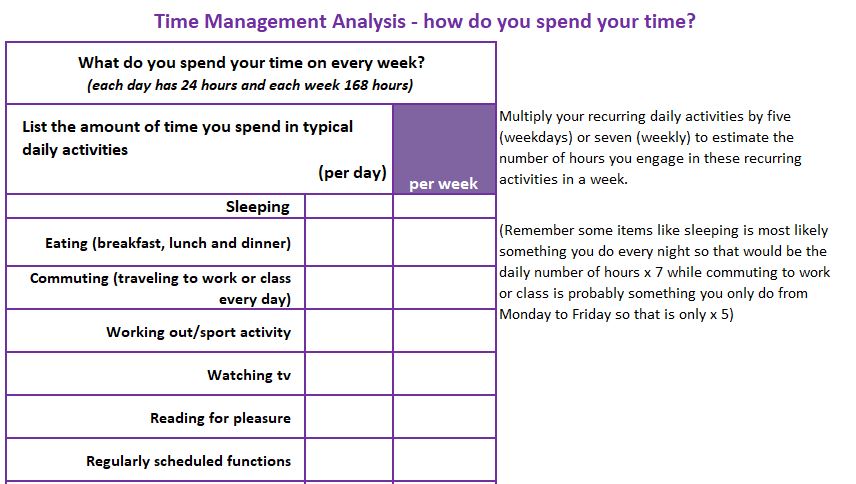
Leaders and managers have many priorities to manage and often feel there are not enough hours in every day to accomplish the business objectives they have set for themselves and their teams. Taking a closer look at how you spend every day and every week my give you some interesting insights. You may discover areas where you could refocus yourself or delegate activities to free up more time for those other priorities.

Performance feedback could be indicating that your supervisor/manager feels you are not using your time at the office in productively. This template can also help you discover where he or she may be right and whether you are actually using your time optimally to achieve the performance goals that you and your boss have agreed upon.

The template, which you can download below, helps you to take stock of what you are doing with all of the time that you have available to you. I once discovered that 30% of my time was at my own discretion and I created a mantra for myself “make the 30% count.” Whenever I caught myself involved in an activity that I had labeled as of low value to me given my own goals and values, I would just remind myself of the mantra and shift my focus to a higher value activity.

Should you need more development in how to be more effective at work, I suggest you look for a class on time management tools. These classes typically focus on how to get better at email management, how to better plan your day to do the right type of activities at the right time of the day (energy management) and also how to get better at keeping track of your highest priorities and making sure that you are working on the right items at various check-in moments with yourself during the day. A coach or a buddy can also help you with this by not only sharing tools with you but also helping to keep you accountable for the goals and outcomes you have committed to.

I hope your efforts to take a closer look at how you spend your time has given you the awareness of how much time you have available to spend at your own discretion. Are you using your time wisely? Are you doing things that will get you closer to the goals you have for your life?

I found one has to repeat these quick checks on a regular basis – maybe every 6 months – to make sure you are still on the path you had set for yourself when it comes to being in charge of the time you have.

Meeting Makeover: Improve Your Meetings with this Template


One of the most frustrating elements of many managers’ calendars are meetings. If you ask people they mostly believe there are too many participants, that meetings take too long, and that some individuals talk too much and venture off-topic. And most people are unable to remember what was decided or which actions came out of the meeting. The tool I am sharing helps a chairperson to prepare for a meeting and it helps him or her communicate the specific overall objectives for the meeting and also for every agenda item.

Some of the meeting maladies mentioned above can be cured simply by creating and distributing an agenda to participants before having the meeting. This tool goes further though – it also helps to create clarity around each agenda item’s purpose in informing participants or driving decision-making to move a project or initiatives forward.

The template you can download above contains an example to illustrate its use. Just replace the agenda items shown with your own meeting agenda items and then complete each column as demonstrated to clarify who is responsible for each agenda item, the purpose of each item, and the allocated time and desired outcome for each of the agenda items.  Do share the objectives, time available and expected outcomes with those who are assigned to each agenda item – it helps him or her be prepared to guide the conversation and discussion accordingly.

Suggestions

  • Even with an agenda and a well-planned meeting there may be times when things need to change as it becomes clear that a critical issue requires to be solved right-away.  Give yourself the leeway to abandon the agenda for a particular meeting to deal with such a highly critical and important issue or set another meeting right after the planned meeting to address the issue.
  • Some successful chairpersons make use of meeting “agreements” or “ground rules” to further improve the quality of the meeting. Some have items such as “each speaker gets a maximum of 1 minute to make his or her point” and “we debate issues and we respect the opinions of others.”
  • To know if your meetings are getting better – get feedback from your meeting participants. Take a few minutes at the end of the meeting to ask what went well and what could be better in future – exactly how. Reviewing the feedback when you plan the next meeting can help you to be mindful of further improvements that can be included going forward.

I hope this tool helps you plan your next meeting and move closer to having productive meetings which helps you progress your project or initiative as you had hoped.