Conflict Resolution between Teams – an Activity


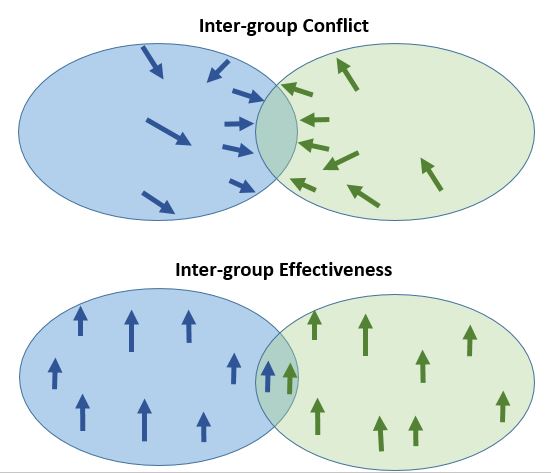
Teams or groups mostly get upset with each other due to ill-defined or badly executed processes or unclear interface issues between them. There are of course other reasons too, but whatever the cause inter-team upsets can cause an overall failure to achieve planned outcomes and a project/location not achieving targets.
Intergroup conflict and effectiveness

This process that can be used to help two (or more) teams/groups work through their issues with each other and how they are impacting each other.
The process and activity is described in the document which you can download above. Estimated timing for each step of the process is also included. The timing is based on only two groups/teams working through the process. If you add teams/groups, do add additional presentation and discussion time to the combined portions of the process.

Each group or team have an assignment to work on independently and when the groups all gather together the results are presented and discussed in the larger group. The objective is to improve everyone’s understanding of exactly where things go wrong, what works and what does not work and how we will move forward with a new agreement of how we will work together.

The process requires at least one facilitator provided the combined groups comprise of no more than 18 people. If you combine more than two groups I would also consider having an additional facilitator to assist in the breakout sessions. The opening and closing sessions should be attended by one senior manager or executive that interfaces with all of the attending groups – to make opening comments to set the scene and establish the importance of the meeting and also to close off the event with encouraging and appreciative comments.

Note this:

  • The process is flexible and it would be up to you, as the facilitator, to make judgment calls along the way. Looking at how you are doing on timing and how well the process is going you may choose to avoid the second breakout session and instead have that discussion in the combined-group setting.
  • This process may not work well if the inter-group/team dysfunctions have been going on for quite some time and the frustration levels are high. In such cases I would recommend that you prepare for the session by first doing a pre-session interview with all or most of the intended participants. That way you can prepare for an intervention having a clear understanding of the issues at hand and the mindsets of those that will be attending. This may cause you to choose for a more comprehensive intervention.
  • If more than one facilitator is involved, do make sure every facilitator is completely aware of how the process will work. This is especially important when you choose to make some changes along the way – i.e. skipping the 2nd breakout session in favor of a large group discussion on the same topic.  It can be quite frustrating for groups/teams when they receive mismatched instructions from different facilitators for the activity they are to complete.

Ice Breaker Questions


meeting (2)

Starting a meeting or dealing with the after-lunch session involving a group of people often requires that you use some sort of ice breaking exercise or activity to help participants get to know each other better, have some fun and in many cases move around the room a bit. Most facilitators have their own set of ice breaking activities and exercises in their mind in case they need it. If you are new at it, you may need some inspiration and this post may be for you!

How would you go about it?

There is a list of questions you can download below. Use them and then you have a few ways to use them for ice breaking activities:

  1. Use it to start the meeting and incorporate the introductions and capture expectations at the same time. Ask each participant to share his/her name, location, role, expectations for the session/day and then answer one of the questions on the list. (There is a reason to ask them to share their answer to one of the questions AFTER they stated their expectations – so you have time to write down their expectations on a flip-chart before the next participant starts sharing)
  2. Use it at the start of the meeting. Ask participants to get up and move around the room while introducing themselves to others they encounter along the way. Sharing their answer to the question you gave the group and asking the other person to share his/her answer to the same question. Let them mingle in this way for about 5 to 10 minutes (depending on the size of your group). Ask them to return to their seats and ask a volunteer (or a few) to share the most surprising response they heard.
  3. If the group is small (12 people or less). Ask each person to provide an answer to the question you selected on a post-in note. Collect all of them. Read out the answer and have participants try to guess who responded in this way. (Rules for this exercise includes that the writer of the answer cannot participate in guessing who wrote it).
  4. If you have more time, you can do this: Give the group a question and ask them to first consider how they would answer it and write their own answers down on a post-it note. Then you ask them to walk around in the room and when they encounter another meeting participant, to guess what the other would have answered then have the other reveal how they really did answer the question. The other then guesses the first person’s response and again the first person would reveal how he or she really did answer that question. Encourage them to briefly discuss why they guessed the answer in the way that they did. It can get to deeper discussions about assumptions we make about people – whether we already know them or not. You can time the interactions and give them a signal when to move on to a new conversation participant to engage with around guessing each other’s answers. When everyone has completed the conversations you can debrief the group with questions like: How often were you right in what you guessed the other person would say? Did you learn anything surprising from those you talked to ? (aspects of his/her personality that you had no idea about?) How accurate do you think guessing is when it comes to how other people think?

Ice breakers can be really effective in breaking down barriers to making contact with people you have never met before at a meeting or training event. Yes, extroverts mostly don’t have any difficulties approaching and talking to strangers, but introverts often do. These kinds of exercises help everyone to get to know each other without feeling too inhibited during the initial contact moments.

Team Effectiveness Check


The strength of teams lies in their ability to achieve more as a group working together than as individuals working independently on various parts of a project or activity.  The main obstacle to a team achieving the optimal performance level is the ability of the individual team members to work together collaboratively.

You can select the right team members based on the knowledge you need, the skills and competencies you need and the experience levels you need for a project. And the team performance can still be very disappointing if the team members do not communicate effectively, are not sharing information in a comprehensible way, and are not clear on how to coordinate with each other to avoid rework or waste their efforts working on the wrong items.

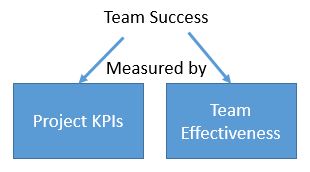
The success of a team is measured by more than one aspect. Examples include:

  • Achieving project milestones and objectives
  • Satisfied stakeholders
  • How well team members are working together – getting more done with more innovation and inclusiveness in a shorter period of time
Team Success Measures

Phases of a team

Any team will go through developmental phases starting from the first day the team members spend together. If these phases are navigated successfully, they can help team members build a high level of trust which enables the team to achieve a high performance level. The leader of a team has an important role to play throughout the phases of team development to help the team achieve their goals in the most effective and efficient .

Measuring team outcomes

Setting out to measure the progress of a team’s efforts is simply about communicating and then monitoring KPIs (Key Performance Indicators) on a regular basis. KPIs are typically set around costs, time to completion, quality of the product etc.

Measuring the cohesion between team members and how well the team is functioning is not that simple. Every team member most likely has his or her own opinion of how well the team is functioning and where improvements may be needed. Team members also would have opinions about whose “fault” it may be that things are not better. The question is often whether it is a lack of knowledge, a lack of motivation or actually interpersonal conflicts and distrust which is contributing the most to dysfunctions.

Team effectiveness Check

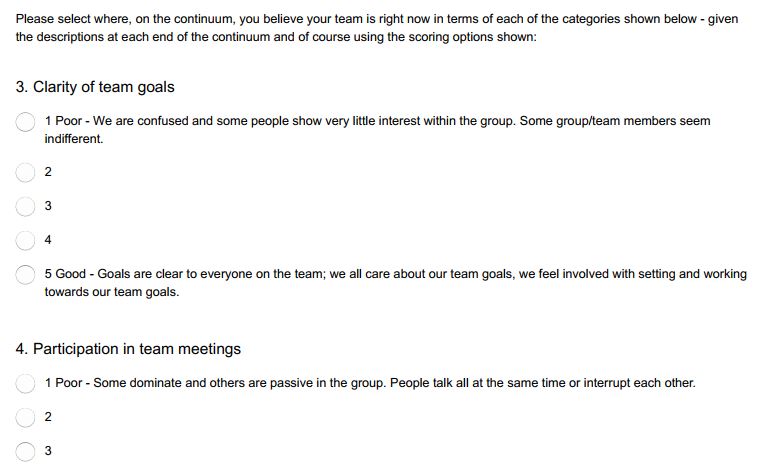
Using this short team effectiveness check, is a great way for leaders to take a quick look at how each of the team members see the team at that moment in time and identify where discussions may be needed to clarify or remove issues that may be hampering team functioning.

The purpose of this quick survey is to gather input from the team on their own perspectives. Remember that a perspective is just how one person sees things at that moment in time. It does not mean that the perspective of one person holds true for the rest of the team. It is important though that you understand whether one or more team members are not feeling included, engaged or unable to contribute based on a lack of internal alignment with other team members on goals etc

As the team leader or team coach, ask your team members to fill this out maybe once a month – more often if you are going through a difficult phase as a team and you are concerned about how well things are going for each team member. I would not do this more than once per week.

Note that your team dynamics will most likely change when you add members, remove members or when your project enters a completely new phase of functioning and performance expectations. At those moments you are likely to see a decline in previously recorded good scores for team effectiveness and functioning.

Use this tool as a way to quickly diagnose where the team is at and use it as a starting point for some team or one-on-one discussions to address concerns raised. Include an external person to facilitate difficult team discussions if you feel it may be helpful – someone from HR/Learning and Development/team coach may be able to use their expertise and skills in group dynamics, conflict resolution and interpersonal relationships to get your team out of a rough spot when it occurs.

Delegate Smarter, Not Harder: A Practical Tracking Solution


Delegation isn’t just about offloading work; it’s about developing your team’s potential. By strategically assigning tasks, you not only free up your time but also equip your employees with new skills and responsibilities. However, keeping track of who’s doing what can be challenging. That’s why a clear system for delegating and monitoring tasks is essential for maximizing productivity and employee growth. The template I am sharing is a great way to keep track of not only who is working on which delegated task, but also what was the overall purpose of the delegated task.

Try to match the task or activity/project you need to delegate to the right person in your team given their current skills and competencies and also matched to current development needs each of them have.  The template is based on a list of categories to consider: (see second tab in template for the definitions shown below)

The delegation tracking sheet helps you keep track of the level of capability the person has – which uses the definitions above to help remind you how much support he or she might need with that task.

Use the drop down list in column B to select the category that applies to that task/project and the person that you are delegating to.  You can create more lines for delegated tasks by just inserting a line between the existing lines.

Reasons why this list can be very useful:

  • Keeping this list up to date and referring to it in a regular basis will help you remember when to check in on someone working on a delegated task or project.
  • You keep track of the reasons why you gave a specific task to someone – from a developmental perspective. This means you know how much support and coaching may be needed while the person is working on this task.
  • Avoid giving the same task to more than one person. There is nothing more demotivating to an employee than finding out another colleague is working on the exact same project as he or she is after having already spent several hours doing research and talking to people about the project in order to deliver a great result.

You can do more and accomplish more as a manager when you don’t have to rely on your memory alone to remember who is working on which tasks and projects for you.

Effective delegation is the cornerstone of successful management. By utilizing this template to track delegated tasks, managers can optimize workload distribution, identify development opportunities for team members, and ensure that projects stay on track. This proactive approach not only boosts productivity but also builds a culture of empowerment and growth within the team.

Boost Teamwork with an Indoor Scavenger Hunt


Looking to inject some fun and creativity into your workday? A scavenger hunt is a fantastic way to boost team morale, encourage collaboration, and foster a sense of camaraderie. Whether you’re in a bustling office or a quiet workspace, an indoor scavenger hunt can be a refreshing break from the routine, offering a unique opportunity for employees to connect and engage in a fun, competitive activity.

Crafting the Perfect Scavenger Hunt

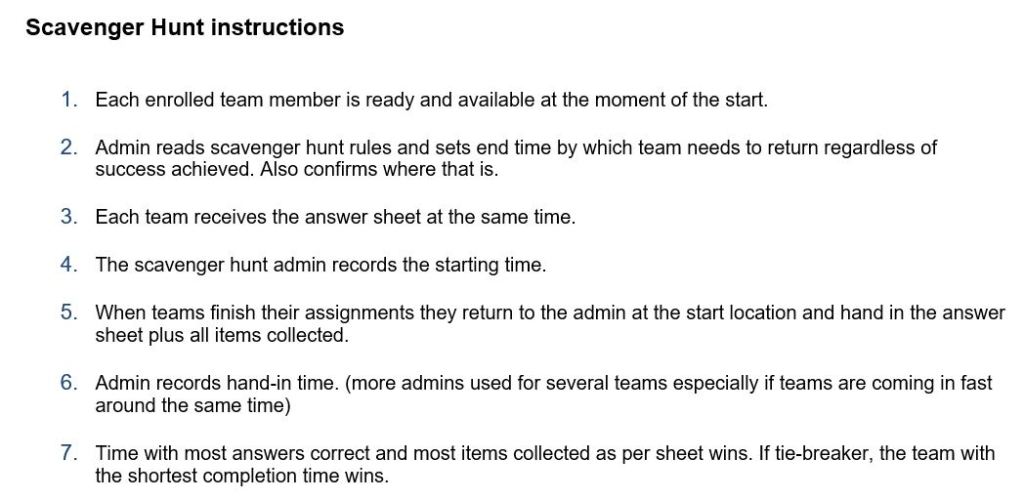
To maximize engagement and fun, tailor the hunt to your team’s size and time constraints. Smaller teams (3-4 people) might require more time to complete challenges than larger groups (5-6 people). Consider dividing larger teams into sub-groups to foster collaboration and friendly competition. The template shown before took around 2 – 2.5 hours for 10 teams of 4 people to complete.

Design a worksheet that includes a mix of questions, physical challenges, and creative tasks. Setting a time limit adds excitement and encourages teamwork. The team that successfully completes the most challenges within the allotted timeframe emerges victorious.

Remember, the goal is to create a fun and engaging experience that brings your team closer together.

When the group is ready, you would first share the instructions with them. Be sure to include areas that they are not to visit or boundaries for the exercise. Include the maximum time they should take to work on the assignment and where everyone should meet at the end of that period – whether they were able to complete the task or not.

Continue reading “Boost Teamwork with an Indoor Scavenger Hunt”

Employee Satisfaction Score


Smiley Charts

Sometimes you don’t want to run a full employee engagement survey, but you just want to do a quick check to see how things are going. Call it a “mood meter” or a high level check to see if you can catch some underlying issues that may require further investigation.

Of course it is understood that a quick check is not meant for applications where the correlation between questions and outcomes require a statistically defensible position. HR folks and OD folks sometimes just need a quick tool that would help you see if there may be a trend that is worth looking into further at your location. Sometimes the trend you see can be as simple as a low level of responses to your quick check.

Continue reading “Employee Satisfaction Score”