Inbox Exercise for leadership development


Inbox exercises are often used when there is an evaluation of leadership/management style and skills or training in time management, judgment or decision-making. I believe the value of this resource lies in revealing the thought processes of an exercise participant. It reveals HOW the person going through the exercise reasons and reacts to typical tasks that they could face as a manager or supervisor.

While you can keep track of how many pages the person completed within the time provided or how many of the actions the person chose aligned with what is considered “correct” in your company (and desired company culture) the highest value (for me) is the coaching conversations that can be had around the reasons that the actions were chosen. These conversations can really help leaders understand their impact on others and improve their self-awareness as a result.

The exercise setup

The attached inbox exercise requires you to print out items and provide them to intended participants in the exercise. The first page describes the situation which you should share with the participant(s) as part of the exercise. The next two pages are then for your eyes only and they will help you to understand the set-up and what you, as the facilitator, should do with that particular exercise page. The section that follows behind the “Worksheet” page is provided to participants once the Q and A portion of the instructions discussion is over.

Once the participant understands the scenario the worksheets are handed out to him/her to complete. This is the inbox exercise and it is usually a timed exercise. Exercises include aspects like this:

Considerations:

  • If you choose to include priory setting as one of the test elements, consider using something like the Eisenhower/Covey matrix:
eisenhower covey priority box

You can read more about it here : Priority matrix write-up  If you decide to   include priority-setting as an element, this  approach will give you a  better   foundation for debriefing discussions.

  • You can use this exercise with a class of participants and then I would suggest you have each participant check the work of his/her neighbor once the exercise has been timed-out. Read out the action considered best for each of the incidents and assign a score for correct answers. Of course you can use your own judgment when some participants have similar answers/responses, but just worded it differently.
  • I prefer to use this with a small group of people who are in a coaching program. The results of their work can then be debriefed more fully with their coaches who can explore their responses deeper by asking questions around : how did they interpret the note/incident? Why did they choose that action? Did they consider other options? If so, which ones? How/why did they decide to select that particular action? How did the limited time impact their thinking and responses?

Leaders learn through reflection and an experience such as this inbox exercise is full of opportunities to reflect on own actions, choices and mindsets. The hardest part about improving one’s mindset or way of doing things, is gaining awareness of one’s own style or impact on others. The specific examples that come out of this inbox exercise is a very tangible basis for reflection with a coach and then choosing better ways in the future.

Coaching Effectiveness Survey


While it is a good idea for coaches to periodically discuss how well the process may be working for those that they are coaching, it is also a good idea for HR/Learning and Development to get feedback on the coaching program on an annual basis. Occasional informal feedback from the person being coached to the coach directly may help the coach improve the person’s coaching experience and outcomes reached.

A formal annual survey helps the department responsible for managing and monitoring the coaching program to understand a few things:

  • General questions that coaching participants may still have about the process or program objectives.
  • How to improve the training of coaches to improve developmental outcomes.
  • How well the relationships are working between coaches and those being coached. Perhaps an intervention may be needed in cases where a high level of dissatisfaction is recorded?
  • Whether the coaching process is working well in general – meetings are held on a regular basis and the right topics are being discussed.

Coaching survey

The coaching survey above (see download option) contains questions you may want to consider for your annual coaching effectiveness survey and it also contains some suggested wording for the introduction email to those who are being coached to explain the survey and its purposes.

Gather the survey feedback and analyze it for overall coaching program effectiveness, but also look at individual responses to see if anyone is having a particularly negative view about his or her coach or the coaching process.  When you take action on individual responses pay close attention to the confidentiality statement you put in the email that went with the survey. Do not reveal someone’s input to his or her coach unless it was expressly established that the survey respondent consent to this course of action. Also use the information gathered from the survey to improve your orientation slides for the next coaching program and to improve future training you offer to coaches.

Other coaching resources that may be useful for setting up your coaching program: preparing for coaching, coaching questions, coaching program orientation slides.

Coaching Program Orientation – Presentation


All coaching programs should contain an orientation as one of the starting elements. This session should cover the objectives of the program, what the expectations are for both coaches and those to be coached and any other general information that would be important for the participants of your coaching program. You can choose to combine the two groups for the session or you could choose to do separate sessions for coaches and those to be coached. If you choose the former you may want to add a training or reminder section of any specific coaching aspects that you wish to empathize.

Slides for the orientation meeting

The download file above contains a series of slides to help you get started creating your own. It shows some of the typical questions that coaching program participants may have and answers that may be relevant, but of course subject to your edits to suit your specific needs.

Tips:

  • Be sure to have a Q and A portion to answer any specific questions that anyone may have.
  • The front part of the presentation which sets the scene in terms of “no entitlement to promotion etc.” would be relevant if you have experienced that as an issue in your workforce or talented employee pool. In some cultures that may be seen as “offensive” or even “threatening” that it would be mentioned. So be culturally sensitive when you consider keeping that comment.
  • In the roles section I mention HR as the function supporting the coaching program – depending on your organization that could be your Learning and Development department, your Organization Development (OD) group or any other department/group.
  • Be sure to provide the coaches and those to be coached with all the tools they will need. If not printed and handed out at your orientation session, then perhaps a soft copy on a USB stick or per email after the session. Coaching questions or Preparation for Coaching

Preparing for a Coaching Session


Coaching sessions and programs are more successful when there are clear coaching goals and actions planned are documented. These developmental actions and activities should be reviewed and updated on a regular basis. It helps both the coach and the person being coached to maintain focus on desired outcomes..

Many employees who are new to coaching have misguided expectations about the coaching process and their own role in it. They expect the coach would show up at each session ready to provide them with useful information and advice and all they needed to do was to show up. In reality the coaching process works much better when both parties actively participate and prepare for each session.

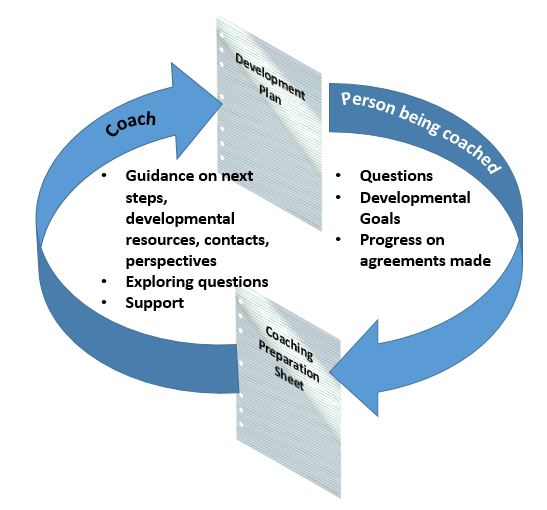
Coaching process JAG

This process graphic shows that each party in the coaching process provides input and participates in the process. The results are written down and shared to ensure a common understanding of the goals and that progress towards goal achievement is maintained.

Preparation worksheet for Coaching

Tips:

  • For those being coached: make sure you get your completed preparation sheet to your coach at least a few days before the session so that the coach can take your feedback into account. This helps him or her prepare to answer your questions and obtain any additional information and resources that may be useful to you at this time and bring it to the session.
  • For coaches: take note of the questions and struggles that may be noted in the preparation sheet. Consider how you can best help address those issues and which resources can you provide to help in the process? What is the best way to approach the coaching session – given those questions, issues and of course the overall goals that had been set for the coaching process?
  • Do remember to look back at previous preparation sheets and also the updated development plan on occasion (maybe once every 6 months) to recognize and appreciate progress made to date and to help motivate those being coached to take the next steps that may be required towards ultimate goal achievement.

Coaching is a shared responsibility between the coach and the person being coached. Only then, does the process yield the best results. And preparation is a key part of this shared responsibility.

Questions for Coaching


Many managers mistakenly think coaching is about “telling” others what they should be doing. While some very inexperienced people may need you to tell them what to do or how to do it, most others need to learn and explore topics and new skills or behaviors with their coaches instead. The hard part for many coaches is to listen and ask the right questions. And also to refrain from taking up most of the airtime during coaching sessions talking about their own lives and their own stories or just offering advice. While children happily accept new information simply because you tell them how things are, adults prefer to explore and learn by comparing and assimilating what you are sharing with what they already know and have learned in their pasts.

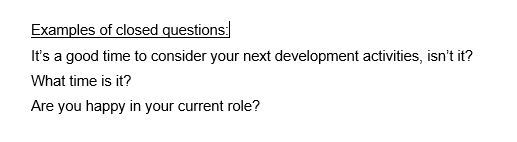
closed question examples
Closed Questions

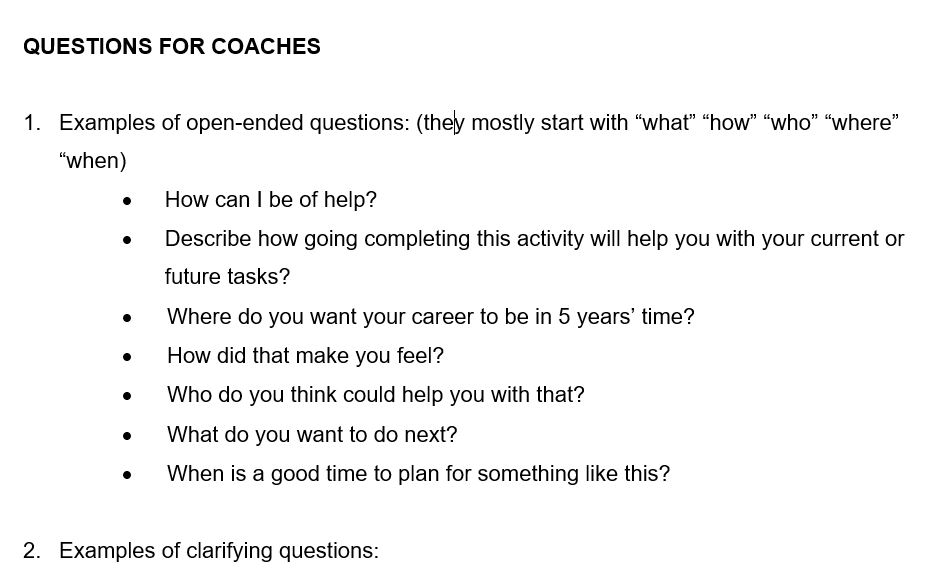
Coaching sessions is about asking open-ended questions which leads to learning and exploring. Asking the right questions is not an easy assignment to have as a coach. Some questions shut others down while limiting them to “yes” or “no” answers which does not allow for a rich conversation of exploration around the topic concerned. Closed questions are those that can be answered by a simple yes or no answer.

More useful questions to ask :

  • Open-ended questions help others expand on ideas and contribute to the conversation vs staying mostly in listening-mode. These kinds of questions can help you discover the other person’s thought processes, motivations and how they feel about a topic or an option.
  • Clarifying questions are helpful to ensure you understood your conversation partner correctly. When people get going on topics that they feel quite excited or passionate about they can sometimes lose sight of how familiar you are with that same topic. To ensure you (the coach) are able to follow along, you may need to pause, look back and clarify any comment made which you were unable to place within the context of the topic being discussed.
  • Paraphrasing. This is a useful technique to summarize what you heard so far and help move the conversation towards a decision or planning a specific path forward (action). It also helps ensure that your impressions of what was said are correct. It can be very validating for someone to hear their own words summarized correctly by another trusted person (in this case you, as the coach).

This list of questions for coaches (which you can download above) can help you to ask the right questions at your next coaching session. I recommend you read through this as you prepare for the session, but do not commit yourself to asking specific pre-determined questions regardless of how the conversation goes. The important part about asking questions at a coaching session is that you (the coach) show up with a mindset of curiosity. That opens up the exploration in the conversation and enables learning to take place which is vital for adults in their learning process.

Use the links to other content which I show below and also the resource I am sharing above as a way to prepare for and get into inquiry mode before the planned coaching session.

These are great questions to consider asking when you coach: Life Coaching Questions    Coaching questions for managers

How to start Coaching your direct reports


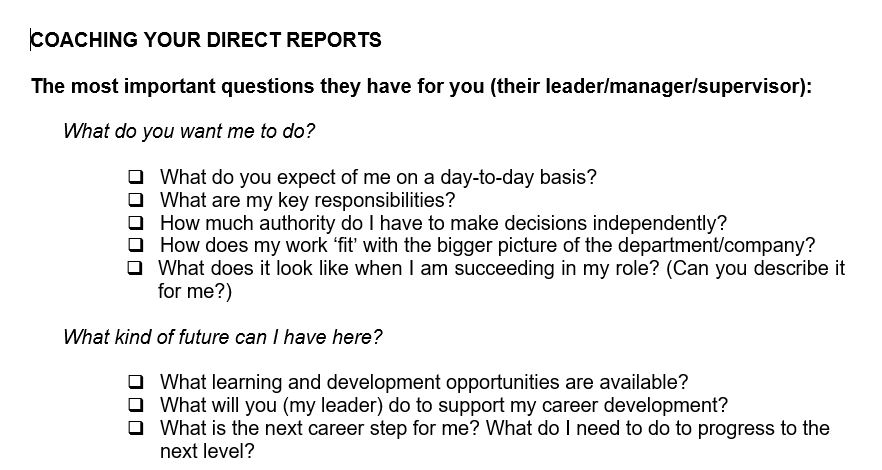
I often hear from managers that they don’t know how to approach coaching their direct reports. It appears the word coaching implies to them that they must have some special insights and skills which would qualify them to coach someone else. Most managers do not realize that they actually know a lot about the company, how things work, how things should be working and how it is going generally. Perhaps all they need is a way to get the conversation going?

Sometimes employees have questions, which are easy to address and other times you need time to get back to them with answers.

Coaching may seem a little less daunting if you had this checklist ( see download button above) of topics to discuss with employees as a group or as individuals. There is a lot to be said for group coaching sessions! They can also be very effective in developing a group of people who may roughly all have the similar development needs and questions for you.

As their manager, you can open a conversation covering one of the questions on the sheet and just state “I can imagine you may have some questions or would like to know more about….” (use one of the questions shown on the sheet). Once the conversation is kicked-off it often happens that the employee will start to bring up more specific questions that he or she may have.

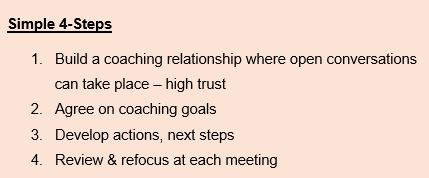
coaching process 4 steps

This graphic shows the basic 4 steps that can be used to start and keep a good coaching relationship going. Trust is a key component and building trust is important – honesty, integrity and showing employees that you care about their work, their careers and their well-being all help to build trust.

Coaching can be a highly structured program requiring a lot of specialized communication and coaching skills and training. It can also be simply helping employees understand the basics around their roles, the company and how things work in their environment. It is your role as their manager to coach them and develop their knowledge, skills and competencies on an on-going basis. If you need more training and support with regards to coaching, do talk to your HR or L&D representative. In the interim, this conversation-starting summary sheet may be helpful to you!

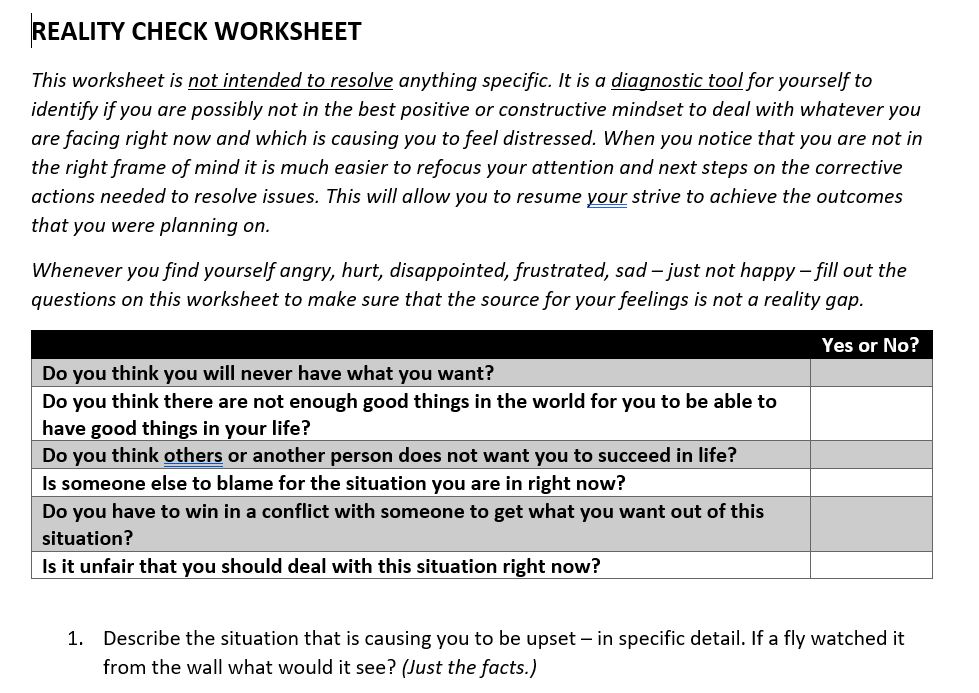
Use a reality-check worksheet for a Positive Mindset


The success of a leader, a manager or an ambitious employee depends largely on the mindset that he or she operates on. When we are in a positive state of mind we can focus on our goals and collaborate and communicate in positive ways which inspire and motivate others to help us succeed in our goals.

It is unfortunately also possible for us to get pulled away from the positive state of mind when we are in high stress situations for a long period of time and when we allow ourselves to go down a spiral of negative thinking. Successful leaders and managers have learned how to quickly realize when this happens and to start implementing corrective actions and adjustments to their way of thinking. This self-awareness and regulating their own emotions help them rapidly get back to a focused mind and closer to the outcomes that they are planning for.

Expectations and Reality Curves

This model shows the blue path which I call the Expectation Trap or summarized as the kind of thinking that believes “things should not be this way”. This kind of thinking very easily moves us out of a positive mindset and it is aligned with going against reality. We wish that reality was different and we build this on our expectations of how good things should be and how badly others are acting or behaving as if others are actually causing the negative outcomes which we do not want to see.  The green curve is the way out of the negative thinking. It is a different mindset which aligns with 1) doing a reality check and using that as the basis for moving towards a better way of thinking, 2) learning from the past, 3) changing or improving the plans we had before something happened to interrupt our progress and then 4) moving into the new direction with a positive focus and determination.

The first step, doing a reality check – is often the toughest and once a person is already in a negative state of mind it is really hard for him or her to realize that it is necessary to do this.

Use the outcomes from this worksheet for further discussions with your mentor/coach or adviser. It may be that you need some coaching or just someone to be a sounding board for you as you talk through the situation and how to resolve it in the best way.

Some tips:

  • Be sure to really connect with the negative feelings when you complete the worksheet. Some people are really good at being able to temporarily switch off their emotions to focus on business – but for this form, do make sure you are connecting with how it feels inside of you when you think about that situation or event that had caused you to feel pulled away from your positive mindset and down the Expectation Trap.
  • Do take the steps necessary to resolve any upsetting situation/event. There is nothing worse than unfinished business behind you. It slows you down and drains you of positive mental energy that you need to accomplish the goal(s) that you have set for yourself. Your coach/mentor or adviser can help you with that if you are not sure how to resolve the upset so you can leave it behind you.

Succession Plan Template


succession

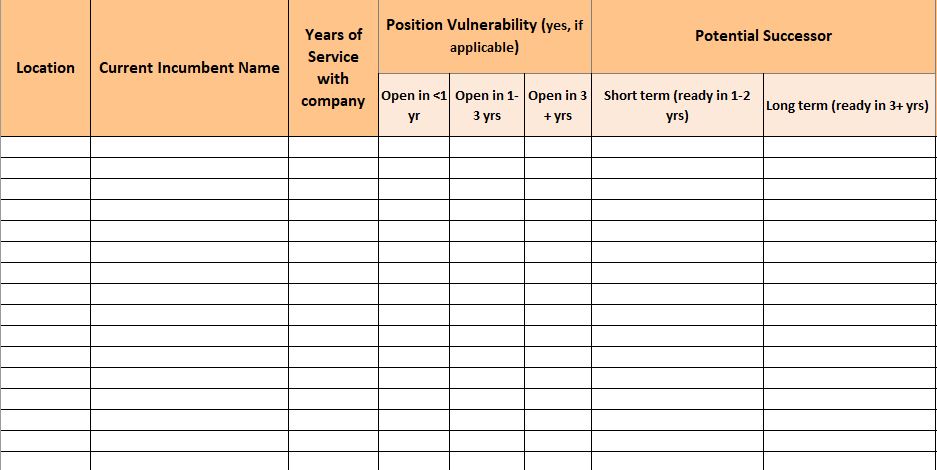
Every leader wants to build a high-performing team capable of taking the reins. That’s where succession planning comes in. It’s not just about preparing for the day you move on; it’s about developing a pipeline of talent ready to step up when opportunities arise. By investing in your team’s growth, you’re not only ensuring business continuity but also fostering a culture of development and advancement. People retire, people leave their roles and, new roles are created during reorganizations and restructuring efforts. All of these scenarios may create the need for someone else to take over in a leadership role and the question becomes… do you have anyone available internally who is promotion-ready?

Knowing who can step into a key role when needed is crucial. It’s like having a bench full of star players ready to take the field. By keeping a close eye on your team’s strengths and potential, you can ensure a smooth transition and minimize disruptions when leadership changes occur.

Continue reading “Succession Plan Template”

Track and Develop: A Guide to Portfolio Assignments


Dev plan (3)

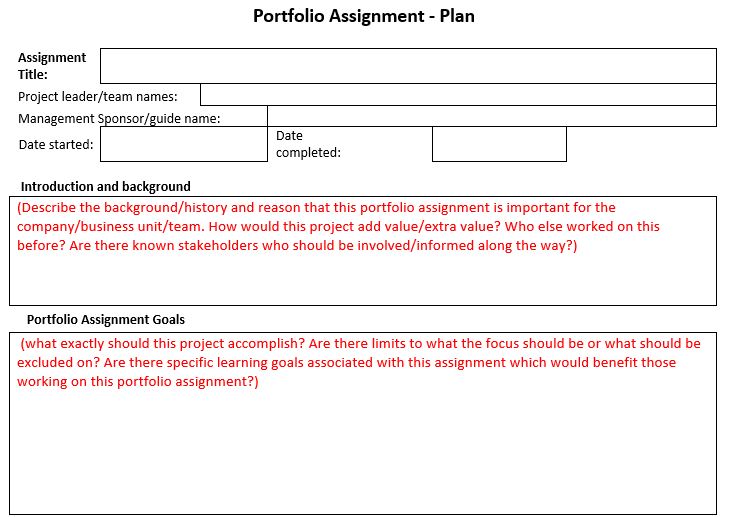
A powerful way to develop employees is to give them a portfolio assignment. This would be something they are asked to do while they remain responsible for their normal daily duties. Motivated employees with the ambition to learn new skills and take advantage of new opportunities to achieve developmental goals typically welcome such assignments. Portfolio assignments are less popular among employees who are less driven to succeed and develop their careers.

Continue reading “Track and Develop: A Guide to Portfolio Assignments”

Personal Development Plan


Continuous learners have the best chances of being noticed for new opportunities and promotions. It is important to be structured around what you will focus on learning next. Ask for feedback from more senior people around you or from your manager/supervisor. Then create a personal development plan for yourself. As you complete learning goals, set new learning goals and update your personal development plan accordingly.

The best way to have a structured learning approach is to have a Development Plan. Creating your own development plan is the first step towards mapping out your learning needs and priorities. Ask someone with experience to help you with it. It could be your supervisor or manager and it can also be a coach or mentor that you are working with. Such a person should be able to provide you with valuable feedback as you aim to prioritize your planned development actions.

Start the plan

Continue reading “Personal Development Plan”