Onboarding Plan Template


Onboarding Plan Template

One of the key reasons that companies lose new hires with some experience is that they fail to support these new hires adequately during their first few months. In some companies, it can be quite hard to understand how things work there, how to fit in and be successful, feel valued and included. Having a written onboarding plan from the start is a great way to bring more clarity to the person and also help them understand expectations during the crucial early months in their new roles in the new company.

The onboarding plan can be written as early as during the recruitment process. In one best-case scenario, it was shared with a senior executive right after his interview with the CEO. It was such an unexpected and appreciated action that the executive commented how refreshing he found the transparency and it made him see the hiring company as head-and-shoulders above the competition which led to him accepting the offer and joining the company a few months later.

The Process

While the plan can help clarify the set-up and structure for a new hire, it is important to set up review meetings with the newly hired managers or key hires. In some cases, reviews with an HRBP could be useful to understand for example how performance management is organized and how the process works. Such review moments could also clarify talent development programs and processes, which is useful to know for the new hire regarding his/her own career but also for helping the new hire manage the development actions for those who report to him/her.

Review meetings with the manager that the new hire reports to could help identify priorities and understand where to connect with more people or build additional internal or external relationships. The manager can also answer questions about activities planned to ensure desired outcomes are achieved after 30-days, 60-days, and 90-days as captured in the onboarding plan.

The people side of success

The template captures not only the tasks and activities needed to succeed in a new role but also identifies people with whom to build relationships. These are important relationships and contacts that the new hire would need to establish and maintain to ensure his/her success in the long run. They could be key client contact personnel or contacts from key suppliers or subcontractors. They could also be internal – people who know how things work and who can advise on the best course of action to get something done at that company.

And it is also important to identify people who can be trusted to keep things to themselves and who could advise on who to talk to before moving in specific directions for changes the new hire would like to implement. Either the HR Director/HRBP or the new hire’s manager may be helpful to identify who those contacts may be.

Note that confidants or advisors may also be external people such as professional coaches or consultants.

Accountability

While it is important from a company’s perspective to ensure key new hires are provided with onboarding plans, completing the details and setting priorities to accomplish the outcomes defined in the plan lie with the new hire. The success of the new hire is only partially dependent on helping him/her get up to speed faster by having review meetings and an onboarding plan and giving him or her access to professional helpers and advisors. The new hire remains accountable for his or her own performance and following through on the items recorded in the onboarding plan.

When both the process of onboarding works well and the new hire holds himself/herself accountable for the outcomes produced, the risks of failure due to onboarding gaps are lowered and retention success is more likely in the medium to long term!

Useful posts for new employee/ new manager onboarding and orientations :

https://jo-anngarbutt.org/2015/09/15/new-employee-on-boarding-checklist-template/

https://jo-anngarbutt.org/2016/03/01/starting-right-new-managerleader-and-team/

Steps to creating a life you love


sketchguru_20200521195945

When someone wants to change something about his or her life or create new outcomes in key areas, they often need more than just someone telling them to create goals and then implement it. Most people seem to need the steps more clearly spelled out and a workbook or playbook is something they really appreciate.

The steps can be broken down in the steps shown below. The downloadable worksheets link is right here:

Step 1:

Understand the process:

Step 2:

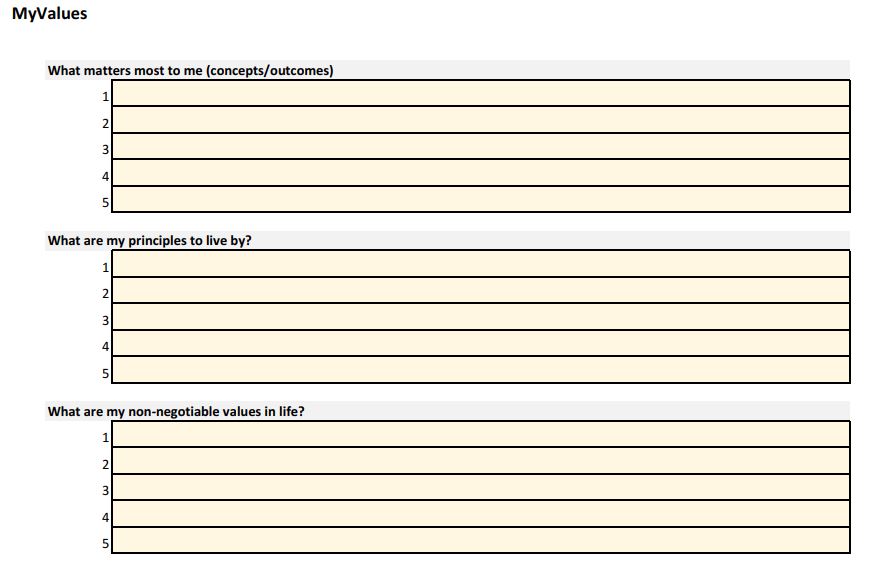
What matters to you?

Being clear on what matters to you makes it easier to understand WHY you would want more of some things in your life and less of others things in your life. While most people think they know the answers to these questions, you will notice how much clearer it gets when you have to write it down and then read it back to yourself.

Step 3:

Do I have time for this?

Most of us would have more time to work on projects that matter to us if we simply started eliminating activities that do not add value to our lives – based on what is important to us. The next two sheets first of all help to highlight how you spend your weeks (typically) and then help you identify how much time you could potentially free up for working on meaningful activities to get you closer to the life that you want for yourself.

Step 4:

What would I like to achieve?

This sheet starts with jotting down new outcomes that one would like to see in some key areas and then it moves to the right planning needed – which activities would do you plan to do in each month? The overall objective is to avoid having competing priorities within the same time of the year. Spacing activities out over a year period helps to ensure you keep focused while making progress in the most important areas over a 12-month period. Note that is is almost always a good idea to pick only maybe two or three projects to work on every month to avoid feeling overloaded and overwhelmed. Those two can lead to feeling demotivated and abandoning all of your plans to create a life you can love.

Step 5:

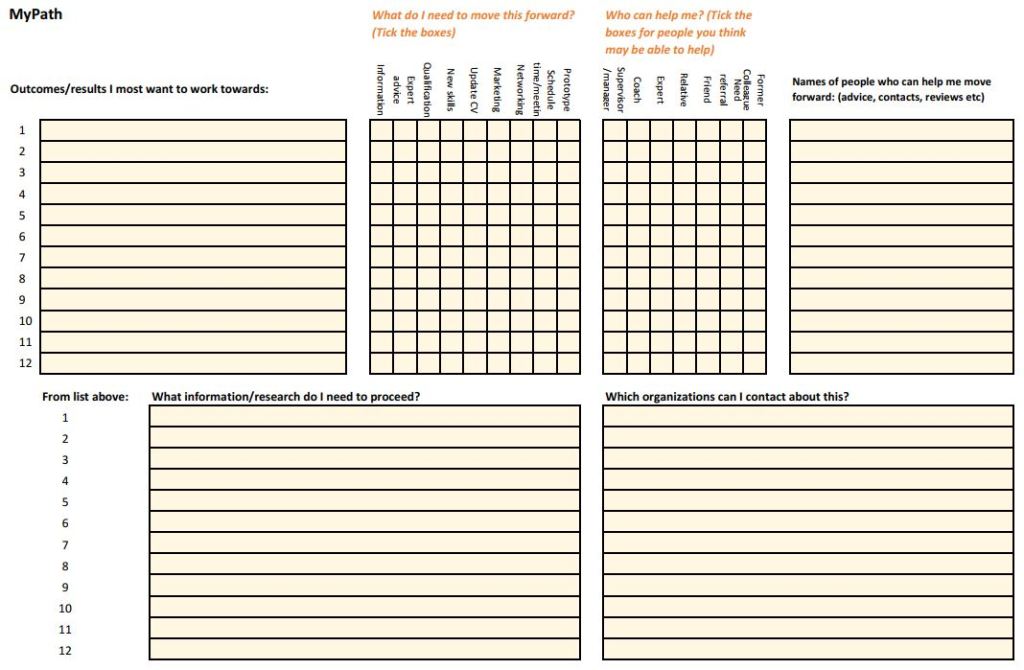
How will I move forward?

This step gets into more detail regarding your plan. There is an area to select what the next step may be for each of the projects you want to work on. It could be that you may need to gather more information or maybe you need to reach out to more people to learn from them or get advice from them- but who? Perhaps you need to build a prototype or get others to give you feedback on your idea? Maybe you need to try to see how it works for you – trying a new way of doing something? The page continues on with identifying whom you know who could help you with advice or maybe introduce you to someone who could help you. And then finally identifying where (place or area of interest) you need to do some research to find out more about what you could explore next and which organizations in your area may be able to help you move forward.

Step 6:

What is my plan for the next few months?

Looking at what needs to be investigated or one over the next few months, this sheet provides a space to keep rack of the top 2 or 3 things you would like to achieve this month to move forward on the projects you have picked for the next few months. There is also a handy check-box which helps you keep track of completed activities versus ones that are still open.

Step 7:

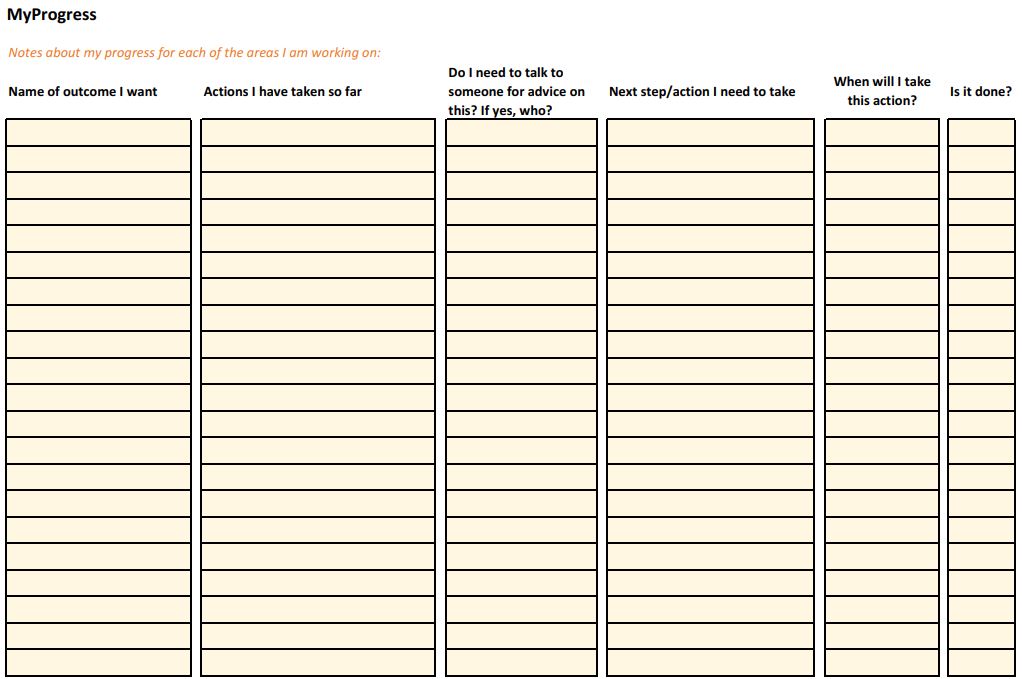
How am I doing?

Sometimes we start on the path of working on life improvement projects and then we get stuck or we get so distracted that we lose our focus. There are many reasons why we might get stuck but getting unstuck is not always easy. This sheet helps you do that.

Taking you from your original objectives, this sheet helps you acknowledge how far you got and what you have completed. Then it helps you think through what the next steps would be. You may need to continue making progress and maybe you need to stop and ask for advice or get more information in order to move forward.

Step 8:

Go back to Step 2 and renew your plans

When you have worked through the sheets and some months have passed it is a good idea to go back and review the reasons you are working on the projects – which are captured in Step 2. Then follow through each of your completed sheets to consider what you might like to change or add to your planning to renew your approach. Some projects end up unfinished because they seem less important once yo have taken more time to do research and talk to people with more knowledge in a specific area. It is okay to decide to abandon these project if they do not matter to you anymore.

Other new projects may be started while a few may continue from your earlier efforts and enter new phases – maybe you are ready to finalize a website or start selling something you have been meaning to put on the market.

I hope these workbook/playbook pages have given you new enthusiasm to plan out and move forward on creating more outcomes in your life that matter to you resulting in having a life that you love!

Transform Your Meetings with Role-Based Engagement


Picture1

Tired of unproductive meetings? It’s time to shake things up. By assigning specific roles to participants, you can harness the collective intelligence of your team and achieve more in less time. Discover how to structure your meetings for maximum impact and engagement.

Are your meetings draining your energy without delivering results? Was there insufficient time to consider all the options available or make the best decisions following an open discussion? Perhaps it is time to consider assigning roles to those who attend your meetings.

Productive Meetings

Unleashing the Power of Effective Meetings

Meetings often suffer from a lack of focus and engagement. By assigning specific roles to participants, we can transform these gatherings into productive and collaborative sessions. When everyone has a clear purpose, discussions are more focused, decisions are made faster, and everyone feels valued.

By designating individuals as questioners, devil’s advocates, or summarizers, you encourage diverse perspectives and ensure all voices are heard. This approach fosters a more dynamic and productive meeting environment where everyone contributes meaningfully to the discussion and decision-making process.

The roles are specific and defined and it would require specific individuals to act accordingly for the duration of the meeting. Roles can vary from being the one to bring up a lot of questions about the issues on the agenda to being someone who plays devil’s advocate or being the critical one when it comes to suggestions tabled for consideration. Of course, all meeting participants continue to bring their own skills, opinions, and knowledge to the meeting and are expected to contribute those to the discussions too.

How to assign roles

Roles can be assigned before a meeting, the chairperson can ask meeting participants to volunteer for the various roles before the meeting starts or the chairperson can randomly assign roles at the start of the meeting (often done by means of handout out cards which explain the task of each role on a 2×4 inch card).

Task roles to assign

Initiator/Contributor

Contributes ideas and suggestions or proposes solutions and decisions. Proposes new ideas or reframes existing ideas in a different way.

Information Seeker

Asks for clarification related to comments – are they based on verified data? Asks for information or facts relevant to the problem. Suggests when more information may be needed before making decisions.

Opinion Seeker

Asks for clarification related to comments made by meeting participants.  Find out how people feel about ideas on the table.  Include those who have not yet been able to contribute an opinion during the discussion.

Critic

In a constructive manner, verbalize ways in which a suggestion or idea could have unforeseen negative consequences for other (internal or external) stakeholders in the implementation of such a suggestion/idea.

Process guard

Indicates decision-making errors and biases which may be skewing support towards a particular outcome. Points out departures from agreed-on agenda and discussion goals. Tries to bring the group back to the central issues and raises questions about the direction in which the group is heading

Summarizer

Summarizes what has taken place and what decisions have been made to date. Reminds the group of assumptions made along the way during discussions.

Note-taker and timekeeper

Keeps notes of decisions made, and actions agreed to. Reminds the group of an approaching break/end of the meeting.

Dysfunctional roles at meetings

Sometimes meetings are unproductive because one or more meeting participants are engaging in playing a dysfunctional role during the meeting which stifles discussion, shuts down conversations, and focuses the attention in unhelpful ways. Discussing these before the meeting starts could be another way to create awareness of unproductive meeting behaviors in order to avoid them. Sometimes it can be interesting to review a meeting in hindsight to identify if anyone engaged in any of these dysfunctional roles. This would be useful to help meeting participants develop self-awareness related to their meeting participant behaviors.

dysfunctional roles

By implementing role-based meeting structures, you can transform your gatherings from time-consuming obligations into dynamic problem-solving sessions. Not only will you achieve more in less time, but you’ll also foster a collaborative environment where everyone feels valued and engaged. Remember, it’s not just about the meeting itself; it’s about the outcomes and the impact it has on your team’s overall productivity.

Evaluating Leaders – a template


pen writing final

The ability to reflect and learn from experiences and observations is one I most commonly associate with and admire in the best leaders that I have met over the years. This resource can be used to help leaders reflect on their own behaviors to identify development and improvement needs.

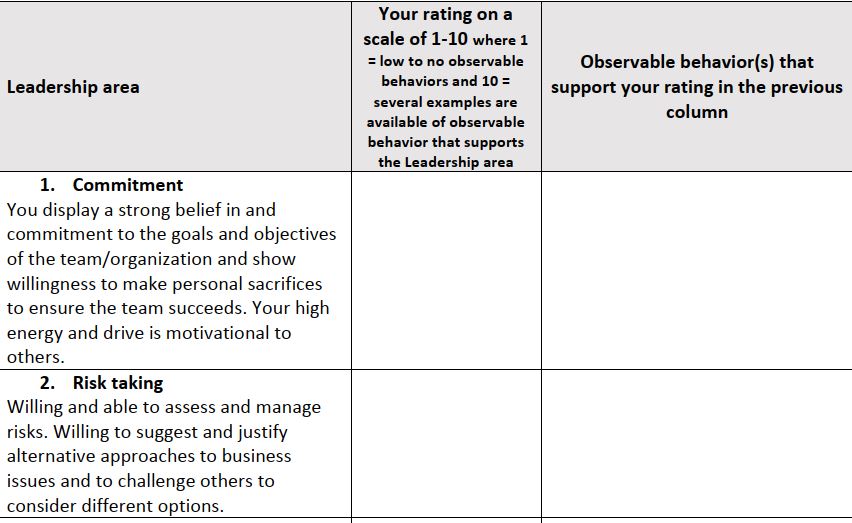
The leadership rating worksheet shared contains a sheet for self rating and also a sheet which can be shared with others for feedback purposes.

The resource (see downloadable file above) is not only helpful for leaders in rating themselves and uncovering possible developmental needs, but can also be used as a 360-type feedback tool. In that case the leader rates himself or herself and then requests feedback from others – in more senior roles, same level peers or in lower hierarchical roles – interacting with the leader on a regular basis. The 360 view can help eliminate any blind-spots that a leader may have concerning his or her own leadership behaviors as the perspectives are from others who often interface with the leader.  

The leadership aspects covered in this resource are:

  • Commitment
  • Risk taking
  • Motivational style
  • Open-mindedness
  • Diversity conscious
  • Trustworthiness
  • Continuous learning
  • Self-adjustment
  • Steadiness

Each of the aspects come with a brief description to ensure ratings are comparable after you have obtained feedback from others.

Uses for this resource include:

  1. Updating your own development plan and setting new goals and priorities for your own development activities
  2. Discussing the results with a coach or mentor to get guidance on what to focus on and how to plan next steps to improve on key leadership aspects.
  3. If a manager rates all of the leaders working in his or her department using this tool you can compare the leaders to each other in terms of strengths and development needs. This would be useful information to help select the best development programs for the team over the next year (for example).

Developing leadership skills is a lifelong journey. We can all learn to do better in some aspects over time and tools like this one can be a very useful check-in for reflection even for those who have been leaders for a long time. It is also true that we expect more from leaders in a globalized business world and concepts like “diversity conscious” and “cross cultural” skills are becoming very important for leaders to be effective on a global scale.

Life Balance Blueprint – a Template


Understanding Your Starting Point: A Blueprint for Balanced Living

Before embarking on a journey of self-improvement, it’s essential to assess your current position. This template will guide you through a self-evaluation, helping you identify strengths, weaknesses, and life areas that require greater attention. By understanding your starting point, you can set realistic goals and create a personalized plan for achieving a more balanced and fulfilling life.

A Holistic Approach to Self-Assessment

Many coaches utilize tools like this template to help clients gain a broader perspective on their lives. By examining various aspects of life, such as career, relationships, health, and finances, coaching clients can identify areas of strength and areas that need improvement. This holistic approach provides a clearer picture of overall well-being and facilitates more effective goal-setting.

Consider using this template as a yearly check-in to track progress and ensure a balanced lifestyle.

Addressing Burnout Through Self-Assessment

If you’re experiencing signs of burnout, this tool can be a valuable aid. By examining your life from a holistic perspective, you can identify areas where your actions and schedule choices may not align with your values. This self-awareness can help you make necessary lifestyle adjustments to restore balance and turn things around.

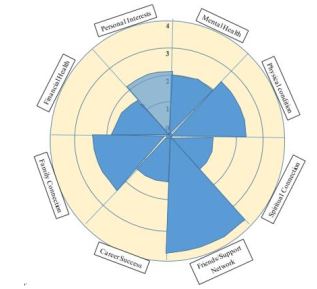
Imagine your life looked like a pizza

The starting point is to imagine your life has segments or aspects that matter to you. Imagine there is a segment called Financial Health which is important to you because you like to have nice new clothes and a nice car. So you would have to make sure you pay attention to being able to earn money so that you are able to buy those things that matter to you. Another segment may be friends – and it would be important to spend time with your friends or you may find they are less engaged with you. This is how one starts to identify what each of those “pizza slices” of your life may be.

Visualizing Your Life Balance

After completing the self-assessment below, color-code each segment to visualize your life balance. A high score in one area might contrast sharply with a low score in another. This visual representation provides a clear picture of where your focus lies and where you might need to make adjustments.

This template can be the basis for evaluating your “life set-up” and then you can work with your coach to discuss how balanced this is for you given your priorities in life. If you want to increase the outcomes in a specific area, simply start setting some goals in that area and then plan to follow through with actions to help achieve them.

Partnering with a Coach for Personalized Guidance

While self-assessment is valuable, working with a coach can provide deeper insights and personalized guidance. A coach can help you interpret your results, set meaningful goals, and create a tailored action plan. Additionally, having a coach to hold you accountable can increase your motivation and ensure you stay on track.

Achieving a Balanced Life: The Power of Prioritization

By regularly assessing your life balance and identifying areas that require attention, you can take proactive steps to enhance your overall well-being. Remember, life balance is not about perfection; it’s about consciously prioritizing the areas that matter most to you. By aligning your actions with your values, you can create a more fulfilling and harmonious life.