

Every leader wants to build a high-performing team capable of taking the reins. That’s where succession planning comes in. It’s not just about preparing for the day you move on; it’s about developing a pipeline of talent ready to step up when opportunities arise. By investing in your team’s growth, you’re not only ensuring business continuity but also fostering a culture of development and advancement. People retire, people leave their roles and, new roles are created during reorganizations and restructuring efforts. All of these scenarios may create the need for someone else to take over in a leadership role and the question becomes… do you have anyone available internally who is promotion-ready?
Knowing who can step into a key role when needed is crucial. It’s like having a bench full of star players ready to take the field. By keeping a close eye on your team’s strengths and potential, you can ensure a smooth transition and minimize disruptions when leadership changes occur.
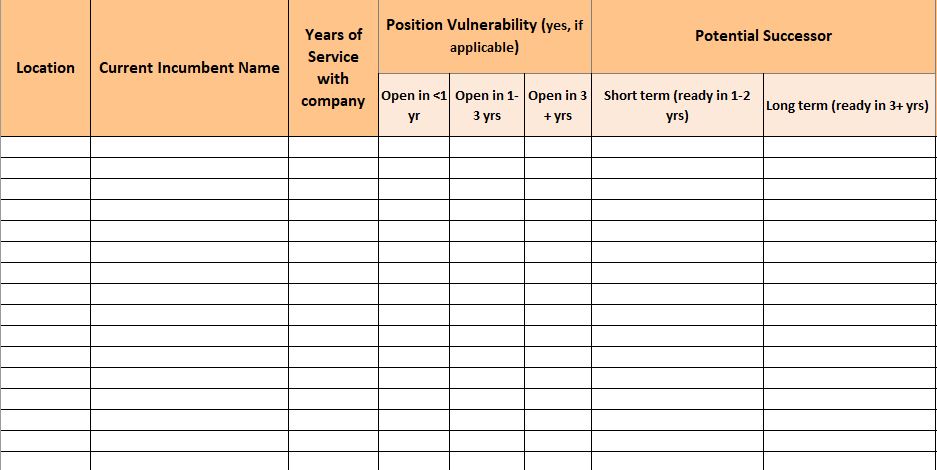
The template starts with the key roles in the first column. Then you have to reflect on the likely time period when that role could become vacant. Retirement is a reasonably predictable event – even though it is true that several people do not wish to retire once they reach the legally set retirement age.
When you start considering those who could potentially step into a leadership role in future be sure you follow up afterwards to ensure that all those indicated as potential successors have a persona development plan and that their development needs are clearly understood and being worked on.
Not every leadership role has to be filled from within. It is good to bring in some new leaders from external sources into the organization. It helps you grow the company in terms of capability, introduces new (desirable) mindsets and helps you fill any succession plan gaps.
Many larger companies may be using an HR system which could include modules for leadership development and tracking succession planning. If you do not have access to such a system, this template (see download button above) may come in handy.
Tips
- Review the plan at least once a year with the manager for the location/region that you are responsible for. The two of you should agree on the contents of the plan.
- Be careful – this plan is just about looking ahead for planning purposes, but you do not want details of this plan leaking out creating expectations or demotivating anyone who is not on your list of potential successors. So put confidentiality first!
- Remember it is a plan, which is a good start. But plans can change over time. Sometimes leaders are “late bloomers” and only start showing the motivation and ability to take on higher leadership roles later in their careers. Be sure to review all of the people in your employee pool when you review the plan.
- Do follow up for each potential successor: ensure that development plans exist that document developmental needs relating to the roles you would like to consider an individual for in future.

 The Rethink Shelf