Planning Developmental Assignments – Process and Preparing Assignee


global travel5

A decade ago it seemed to be more common for employees to be on developmental assignments for longer periods of time. These days the duration of assignments seems to have become shorter. The required steps are not much different though.

It is vital for the organization to have a clear process around the mobilization, preparation, sustaining, return, development of assignees and there are multiple organizations (internally and possibly externally if outsourced) which need to contribute to the process in order to make the assignment a successful one for the company and the employee

Some of the biggest unintended outcomes of assignments are:

  • The employee (and/or family) did not fully understand what they were getting into and found it too overwhelming at the assignment location – wished to return earlier or resigned.
  • Employee did not understand how the assignment was adding to his or her skill sets or competencies and he or she ended up frustrated and demotivated.
  • Employee on assignment no longer felt connected to the home office and were anxious about what happens after the assignment – wished to return earlier or resigned.
  • Employees (and families) experienced a high level of anxiety associated with the assignments due to inadequate preparation and support before, during and after return to home location.

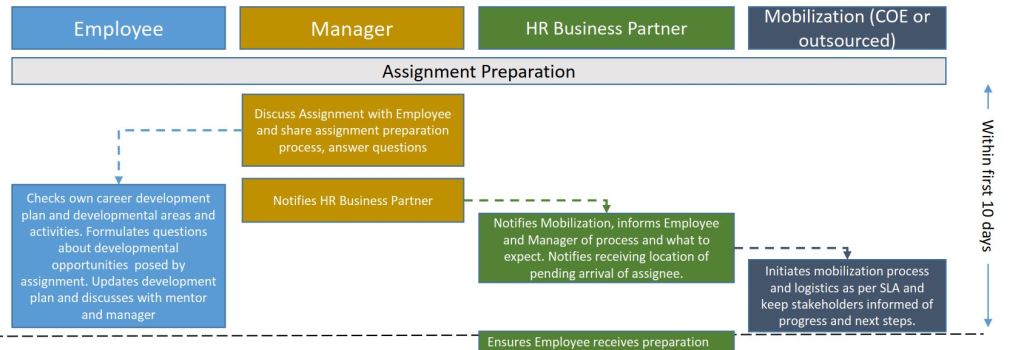
The process flow shared here shows a simplified version of how a developmental assignment should be planned and executed before mobilization, during and after an assignment has ended. It takes into account the logistics part, which may be an internal organization (Center of Excellence) or an outsourced party, the role of the manager, the role of the employee and how the Business Partner can contribute to ensure the entire process yields the desired outcomes. There are also some suggestions for surveys to capture any feedback to identify useful improvements to the process.

Some additional tips:

  • Make sure that managers are clear on the process, the various steps and the specific roles and responsibilities. Most employees will ask their managers for advice and information first. The role of the manager is very important to ensure future retention of the employee by staying in touch and ensuring the employee continues to feel valued by the organization during and after the assignment.
  • Create or outsource a solid assignment preparation program for employees (and families as applicable). This includes cultural awareness training, language training (if applicable) and developing the right mindset and approach to living in a new country for a period of time.
  • Apply attention and diligence when outsourcing logistics and defining the SLAs associated with mobilization. Lost goods, delays in finding accommodation, faulty or missing paperwork can cause a lot of unnecessary distraction and anxiety on the part of an employee on assignment. Conduct regular audits and have discussions with an outsourcing partner/COE using the surveys as a basis to provide input aimed at improving the experience of assignees.
  • Ensure either the Business Partner or the Manager has discussions with the employees to be sent on the assignment to ensure they understand how to leverage the opportunity to improve on their own skill sets/competencies and how they should contribute to the learning of those at the assignment location and again to the learning of those at the home office upon their return.

Preparation and Training

Training and support in these areas (see below) will help each assignee and his/her family – should they accompany the assignee – the best opportunity to understand the assignment requirements and the local culture better. And having an improved awareness will enable the assignee (and family) to have a solid plan of how they would set-up their start-up activities at the new location for a successful assignment experience and conclusion.

Being sent on an assignment is both an opportunity and a responsibility for the assignee. It can bring out the best and worst in a person as he/she (and the family) face huge life changes compared to life at the home office. The experience can lead to increased maturity, improved leadership skills and understanding and increased knowledge and skills if managed properly. As the manager, business partner or any other stakeholder in the process, it is important you ensure there is a clear process mapped out which details the various steps by process contributor and that each stakeholder is acutely aware of the bigger picture while performing own parts.

Life Balance Blueprint – a Template


Understanding Your Starting Point: A Blueprint for Balanced Living

Before embarking on a journey of self-improvement, it’s essential to assess your current position. This template will guide you through a self-evaluation, helping you identify strengths, weaknesses, and life areas that require greater attention. By understanding your starting point, you can set realistic goals and create a personalized plan for achieving a more balanced and fulfilling life.

A Holistic Approach to Self-Assessment

Many coaches utilize tools like this template to help clients gain a broader perspective on their lives. By examining various aspects of life, such as career, relationships, health, and finances, coaching clients can identify areas of strength and areas that need improvement. This holistic approach provides a clearer picture of overall well-being and facilitates more effective goal-setting.

Consider using this template as a yearly check-in to track progress and ensure a balanced lifestyle.

Addressing Burnout Through Self-Assessment

If you’re experiencing signs of burnout, this tool can be a valuable aid. By examining your life from a holistic perspective, you can identify areas where your actions and schedule choices may not align with your values. This self-awareness can help you make necessary lifestyle adjustments to restore balance and turn things around.

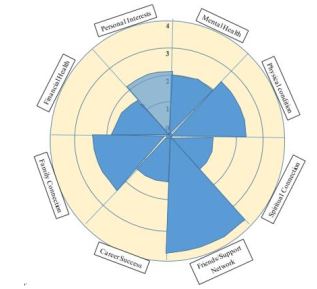
Imagine your life looked like a pizza

The starting point is to imagine your life has segments or aspects that matter to you. Imagine there is a segment called Financial Health which is important to you because you like to have nice new clothes and a nice car. So you would have to make sure you pay attention to being able to earn money so that you are able to buy those things that matter to you. Another segment may be friends – and it would be important to spend time with your friends or you may find they are less engaged with you. This is how one starts to identify what each of those “pizza slices” of your life may be.

Visualizing Your Life Balance

After completing the self-assessment below, color-code each segment to visualize your life balance. A high score in one area might contrast sharply with a low score in another. This visual representation provides a clear picture of where your focus lies and where you might need to make adjustments.

This template can be the basis for evaluating your “life set-up” and then you can work with your coach to discuss how balanced this is for you given your priorities in life. If you want to increase the outcomes in a specific area, simply start setting some goals in that area and then plan to follow through with actions to help achieve them.

Partnering with a Coach for Personalized Guidance

While self-assessment is valuable, working with a coach can provide deeper insights and personalized guidance. A coach can help you interpret your results, set meaningful goals, and create a tailored action plan. Additionally, having a coach to hold you accountable can increase your motivation and ensure you stay on track.

Achieving a Balanced Life: The Power of Prioritization

By regularly assessing your life balance and identifying areas that require attention, you can take proactive steps to enhance your overall well-being. Remember, life balance is not about perfection; it’s about consciously prioritizing the areas that matter most to you. By aligning your actions with your values, you can create a more fulfilling and harmonious life.

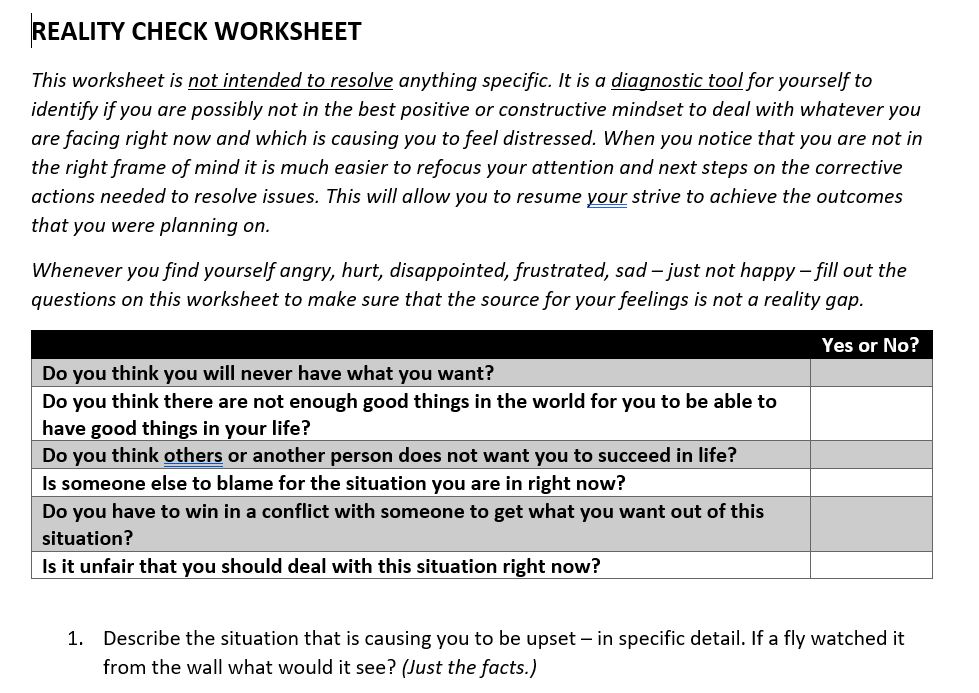
Use a reality-check worksheet for a Positive Mindset


The success of a leader, a manager or an ambitious employee depends largely on the mindset that he or she operates on. When we are in a positive state of mind we can focus on our goals and collaborate and communicate in positive ways which inspire and motivate others to help us succeed in our goals.

It is unfortunately also possible for us to get pulled away from the positive state of mind when we are in high stress situations for a long period of time and when we allow ourselves to go down a spiral of negative thinking. Successful leaders and managers have learned how to quickly realize when this happens and to start implementing corrective actions and adjustments to their way of thinking. This self-awareness and regulating their own emotions help them rapidly get back to a focused mind and closer to the outcomes that they are planning for.

Expectations and Reality Curves

This model shows the blue path which I call the Expectation Trap or summarized as the kind of thinking that believes “things should not be this way”. This kind of thinking very easily moves us out of a positive mindset and it is aligned with going against reality. We wish that reality was different and we build this on our expectations of how good things should be and how badly others are acting or behaving as if others are actually causing the negative outcomes which we do not want to see.  The green curve is the way out of the negative thinking. It is a different mindset which aligns with 1) doing a reality check and using that as the basis for moving towards a better way of thinking, 2) learning from the past, 3) changing or improving the plans we had before something happened to interrupt our progress and then 4) moving into the new direction with a positive focus and determination.

The first step, doing a reality check – is often the toughest and once a person is already in a negative state of mind it is really hard for him or her to realize that it is necessary to do this.

Use the outcomes from this worksheet for further discussions with your mentor/coach or adviser. It may be that you need some coaching or just someone to be a sounding board for you as you talk through the situation and how to resolve it in the best way.

Some tips:

  • Be sure to really connect with the negative feelings when you complete the worksheet. Some people are really good at being able to temporarily switch off their emotions to focus on business – but for this form, do make sure you are connecting with how it feels inside of you when you think about that situation or event that had caused you to feel pulled away from your positive mindset and down the Expectation Trap.
  • Do take the steps necessary to resolve any upsetting situation/event. There is nothing worse than unfinished business behind you. It slows you down and drains you of positive mental energy that you need to accomplish the goal(s) that you have set for yourself. Your coach/mentor or adviser can help you with that if you are not sure how to resolve the upset so you can leave it behind you.

Analyze how you use your time


“All we have to decide is what to do with the time that is given us.” (Gandalf)

J.R.R. Tolkien, The Fellowship of the Ring

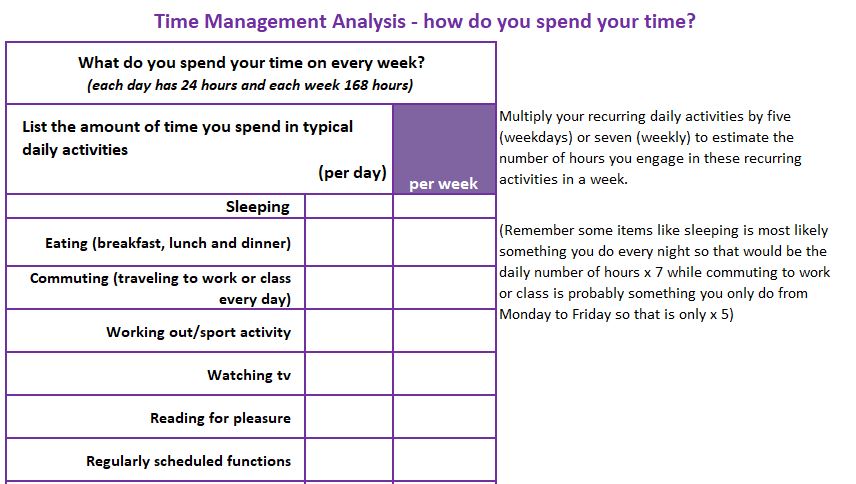
How you choose to spend your time is a good indicator of the activities and people who are most important to you in your life. It shows your priorities clearly. How well do your daily activities reflect your priorities?

Have you faced any of these challenges?

Personal Development. Maybe you have considered taking an evening class to improve your skills or obtain a qualification you need, but you are not sure how you will find time to attend that class because of your busy life.  Taking a closer look at how you spend the time that you do have may help you see opportunities to change your schedule and make more time for career development activities.

Leaders and managers have many priorities to manage and often feel there are not enough hours in every day to accomplish the business objectives they have set for themselves and their teams. Taking a closer look at how you spend every day and every week my give you some interesting insights. You may discover areas where you could refocus yourself or delegate activities to free up more time for those other priorities.

Performance feedback could be indicating that your supervisor/manager feels you are not using your time at the office in productively. This template can also help you discover where he or she may be right and whether you are actually using your time optimally to achieve the performance goals that you and your boss have agreed upon.

The template, which you can download below, helps you to take stock of what you are doing with all of the time that you have available to you. I once discovered that 30% of my time was at my own discretion and I created a mantra for myself “make the 30% count.” Whenever I caught myself involved in an activity that I had labeled as of low value to me given my own goals and values, I would just remind myself of the mantra and shift my focus to a higher value activity.

Should you need more development in how to be more effective at work, I suggest you look for a class on time management tools. These classes typically focus on how to get better at email management, how to better plan your day to do the right type of activities at the right time of the day (energy management) and also how to get better at keeping track of your highest priorities and making sure that you are working on the right items at various check-in moments with yourself during the day. A coach or a buddy can also help you with this by not only sharing tools with you but also helping to keep you accountable for the goals and outcomes you have committed to.

I hope your efforts to take a closer look at how you spend your time has given you the awareness of how much time you have available to spend at your own discretion. Are you using your time wisely? Are you doing things that will get you closer to the goals you have for your life?

I found one has to repeat these quick checks on a regular basis – maybe every 6 months – to make sure you are still on the path you had set for yourself when it comes to being in charge of the time you have.

Learning from Leavers: The Power of Exit Surveys -Template


Understanding the Why Behind Employee Departure

Employee turnover can be costly and disruptive. To address this challenge effectively, we must delve deeper into the reasons why people leave. By analyzing exit data and conducting thorough exit interviews, organizations can identify underlying issues and implement targeted retention strategies.

Unexpected employee resignations can often be alarming. More so if the resignations come from star employees whom you had high hopes for in terms of future expert or leadership roles at your company. How will it impact your project and your team, you may wonder? The question I would ask is, was it avoidable?

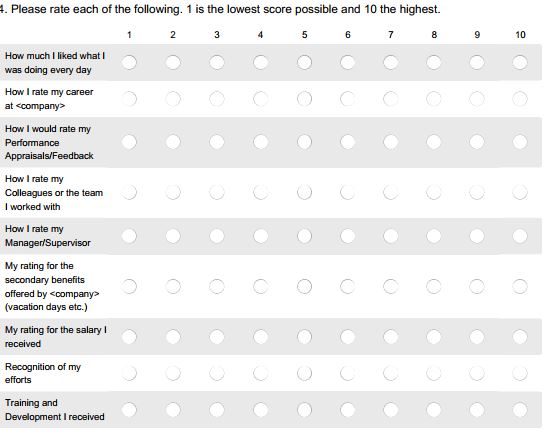
The Exit Interview helps with gathering feedback on employees’ decisions to leave the company and what next steps they are planning to further their careers elsewhere. This structured interview can greatly support your ability to narrow down the reasons for the exit and whether you have any large internal issues to address to avoid more people leaving the company.

While it appears to be a written survey, it works well as an interview conducted in person and then the interviewer (usually from HR) can complete the survey later in order to capture the answers from exiting employees in a structured way. Based on your company set-up and employee conditions you may want to add some questions or statements to be rated. Just avoid overloading the employee with too many questions. Perhaps you can remove some of the existing questions if you decide to add any?

Tips:

  • You could choose to use this as a survey which the departing employees complete independently. I would however recommend that you ask these questions as part of an exit interview conducted in person as it offers the opportunity to ask follow-up questions to clarify answers to make sure you really understand the factors that led to the decision to leave the company.
  • There is a good chance that the departing employee may not tell you the truth. Sometimes they are afraid you may give them a bad reference in the future if a prospective employer calls you up. Other times they may be worried about being the whistle-blower on an existing organizational issue in terms of potential impact on any friends they still have at the organization. It may be worth considering the use of an outsourced vendor to gather feedback from departing employees before or just after they have left.
  • Do take the time to review feedback received from exit interviews to determine whether you or anyone else at your company may need to take action to improve a situation, revise benefits, improve communications to employees on specific topics, etc. These actions may be exactly what is needed to prevent other employees from leaving for similar reasons.
  • Mind confidentiality around these interviews. Be sure to be honest with the departing employee on who will get to know about the information shared and stick to the agreement.
  • Talk to those employees who remain with the company and make sure they understand how much you value their continued service and loyalty to the team/organization. When a prominent person leaves – whether a subject matter expert or a much-liked leader – people may start wondering about their own careers and consider leaving too. Taking employee retention actions and communicating especially to those in key roles will go a long way toward putting people’s minds at rest.

Employee turnover is inevitable, but it doesn’t have to be detrimental. By conducting thorough exit interviews and analyzing the data, you can transform departures into opportunities for growth. By identifying and addressing the root causes of turnover, you can create a more engaged and loyal workforce, ultimately strengthening your organization’s overall performance.

Succession Plan Template


succession

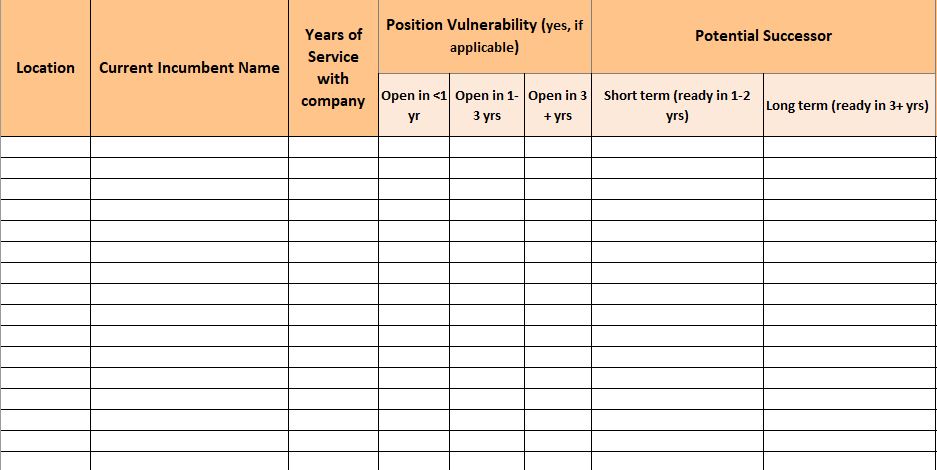
Every leader wants to build a high-performing team capable of taking the reins. That’s where succession planning comes in. It’s not just about preparing for the day you move on; it’s about developing a pipeline of talent ready to step up when opportunities arise. By investing in your team’s growth, you’re not only ensuring business continuity but also fostering a culture of development and advancement. People retire, people leave their roles and, new roles are created during reorganizations and restructuring efforts. All of these scenarios may create the need for someone else to take over in a leadership role and the question becomes… do you have anyone available internally who is promotion-ready?

Knowing who can step into a key role when needed is crucial. It’s like having a bench full of star players ready to take the field. By keeping a close eye on your team’s strengths and potential, you can ensure a smooth transition and minimize disruptions when leadership changes occur.

Continue reading “Succession Plan Template”

Crafting a Communication Plan: Your Roadmap to Change Success


Whether it’s a new process, a revamped strategy, or a technological overhaul, effective communication is essential for a smooth transition. A well-crafted communication plan outlines the who, what, when, where, and how of sharing information, ensuring everyone is on the same page and aligned with the change journey. Let’s dive into the key components of creating a powerful communication plan.

Tailoring Your Message to Your Audience

Effective communication means understanding who you’re talking to. Different groups will need different information. Start by identifying everyone who’s affected by the change. This could include employees or different groups of employees, customers, partners, and even the wider community. By mapping out your audience, you can tailor your messages to their specific needs and interests. Think about different functions, think about geographic locations, think about management levels, and think about people outside your company who may be affected.

Communication messages could be intended to explain why things have to change, what is going to change, when and how it is going to change, how the change is going (progress update) and what (if anything) people need to start doing, stop doing or what should change in the way they have acted in the past.

Continue reading “Crafting a Communication Plan: Your Roadmap to Change Success”

Post-survey Action Plan


You’ve got the employee survey results. Great! But don’t just let them gather dust. Find the biggest pain points, make an action plan, and get moving. It’s about turning those numbers into real improvements. Remember, less is often more. Focus on a few key areas instead of trying to fix everything at once. Let your team know you’re listening and planning to make needed changes.

The first template helps you pinpoint exactly what worked and what didn’t. Don’t just list random stuff – get specific. Once you know what to improve, create clear action steps. Make sure you can measure your progress and know when an action is complete by defining what done looks like.

Continue reading “Post-survey Action Plan”