Streamline Your Workflow: Start, Stop, Change Strategy


Feeling overwhelmed by your to-do list? It’s time for a fresh approach. Whether you’re figuring out what new tasks to start, which processes to stop, or where to make improvements—including sustainability initiatives—this simple method will help you cut waste and boost efficiency. Think of it as a game-changer for your workflow, empowering your team to work smarter, not harder, while making real progress. Change doesn’t have to be overwhelming; it’s about making strategic, impactful adjustments that lead to better results, smoother workflows, and more sustainable outcomes.

A Fresh Approach to Tackling Chaos

Ever feel like your to-do list is out of control? This simple method helps bring clarity, meaning, and direction to your tasks. Whether you’re deciding what new actions to take, which processes need tweaking, or which habits to drop, this approach will streamline your workflow, boost productivity, and make your routine more manageable.

Even the best processes lose their effectiveness over time or fail to take advantage of the improved availability of better tools and templates, signaling the need to reassess. While big changes can be costly, small adjustments often get things back on track. The method I’ll share is perfect for team brainstorming, making it easier to identify areas for improvement together.

Think of it like tidying up a familiar room. Some things need to go, while others just need a small fix. This tool helps you do the same with your work, identifying what needs to change, what new actions to start, and what habits to stop.

Importantly, it’s also about working smarter with sustainability in mind. Rethinking processes to reduce waste, conserve resources, and adopt eco-friendly practices not only improves efficiency but also builds a more sustainable work environment for the future.

Think of yourself as a gardener, planning to refresh and revive your garden. To improve a process or outcome at work or in a volunteer setting, you need to plant new “seeds”—ideas and actions that hold the potential to bring positive change. These are the things you want to start doing to make a meaningful impact.

Ask yourself: What new tools, strategies, or approaches could help streamline work, solve problems, or improve how people experience your organization or team? It might be a fresh approach to a recurring issue or an idea that could make things more efficient. Like planting new flowers in a garden, these initiatives will need your time and attention to grow and flourish.

By starting these key actions, you create opportunities for improvement and success and build an environment that thrives on new ideas and growth.

When we talk about what needs to stop in the workplace, we’re focusing on behaviors and habits that hold everyone back. Think of gossip—it’s like a poison that erodes trust and divides teams. Then there’s micromanagement, which stifles creativity and leaves people feeling frustrated and demotivated. And multitasking? While it might seem productive, it often leads to mistakes and burnout. By eliminating these negative behaviors, we can create a more positive, collaborative, and efficient work environment.

Stopping isn’t just about behaviors, though; it’s also about simplifying how we work. This means cutting out unnecessary steps, avoiding redundant processes, and leveraging technology to make tasks easier and faster. It’s about working smarter, not harder.

The key to success is getting everyone involved. When the team collaborates and shares insights, it becomes easier to identify which tasks or processes don’t add value—and figure out the best ways to eliminate them. This not only streamlines workflow but also helps the entire team feel more aligned, motivated, and connected.

When identifying what needs to be changed, it’s about finding those processes or tasks that work to some extent but aren’t quite hitting the mark. These are not things you want to stop completely, but they could benefit from refinement or improvement. The goal is to enhance their efficiency or effectiveness rather than overhaul them entirely.

This step is about finding out with your team where bottlenecks occur, where confusion arises, or where inefficiencies creep in. Perhaps you uncover small tweaks that make a big difference. For example, a task might be taking longer than necessary because of an outdated step, or perhaps communication between teams could be improved to streamline a handoff.

Other possible candidates for change may lie in opportunities to improve: Are there tasks that could be automated? Is there a process that could be shortened or simplified without sacrificing quality? Sometimes it’s as simple as adjusting timelines or reallocating resources to better fit the demands of a project.

The key is not to throw out processes that have potential but to fine-tune them. By making small, thoughtful adjustments, you can improve the overall flow and outcomes. Involving the entire team in identifying these areas for change ensures that the solutions are practical, realistic, and beneficial for everyone.

Setting up time with the team

To kick off improvements, start by gathering input from everyone involved in the workflow. Set up a dedicated meeting where each person can share their unique insights. By involving the whole team, you’ll gain a diverse range of perspectives, helping you identify opportunities for improvement far more effectively than if you were working alone.

To make the session productive, team up with coworkers and dedicate about an hour to look for ways to enhance how you work, the environment you work in, or how your organization delivers value—whether it’s to customers, clients, or those benefiting from your volunteer efforts.
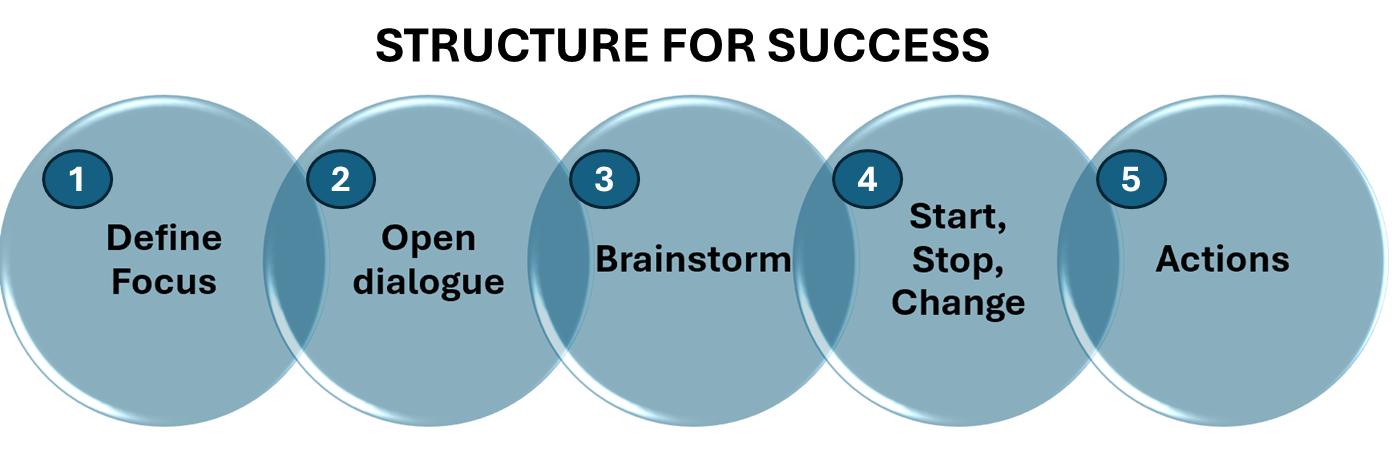
Here’s how to structure your session for success:

  1. Define the Focus: Clearly outline what the session is about. Are you looking to improve a specific process, boost safety, streamline workflows, or enhance customer/recipient satisfaction? Make sure everyone understands the goal before diving into discussions.
  2. Encourage Open Dialogue: Create a safe space for everyone to share their ideas, frustrations, and suggestions. Emphasize that all feedback is valuable and will contribute to positive change.
  3. Brainstorm Together: Work as a group to explore ways to make things better, smarter, and safer. This could involve improving the way tasks are done, optimizing the workspace, or enhancing the delivery of value to customers or the community.
  4. Capture Ideas: Use Stop, Start, and Change flipchart pages to organize ideas. After brainstorming, categorize the suggestions:
  • Stop: What isn’t working and needs to stop?
    • Start: What new actions, processes, or tools should be introduced?
      • Change: What existing processes could be improved with a few adjustments?

5. Assign Actions: Once ideas are gathered, assign ownership for each action. Ensure there’s follow-up so the insights gained from the session translate into real improvements. Also, set up a follow-up recurring meeting to review how things are going to discuss if you need to change or improve how you are implementing actions to be more successful and avoid obstacles to success.

By following this structure, you’ll ensure that your team collaborates effectively and walks away with actionable steps to make meaningful changes.

Keep Stakeholders in the Loop

After the meeting, it’s important to keep key stakeholders, such as your supervisor or others involved in the implementation, informed about the progress. Provide them with an update on the discussions, including the proposal for items to start, stop, or change. This transparency ensures they are aware of the team’s efforts and can offer support as needed. Additionally, ask for their feedback and suggestions. This will help ensure that no key opportunities for improvement are missed and that the plan is as comprehensive as possible. Engaging others in this way enhances collaboration and strengthens the overall success of the initiative.

Now It’s Your Turn to Change the Game

Taking a structured approach to what you start, stop, and change can really improve how your team works and help you reach your sustainability goals. I encourage you to take a fresh look at your team, your environment, and how you get things done. Find ways to not only make customers happier and save money, but also to reduce waste, save resources, and lessen your impact on the planet. Involving your team in this process will help everyone work smarter and feel more motivated as they see their ideas making a difference. Whether you’re working or volunteering, these changes can lead to a more rewarding and sustainable experience. Now is the time to act—start looking for where you can make a real difference for your team and the environment.

Protect Your Organization: Your Risk Assessment Step-by-Step Guide


In today’s world, unexpected things happen. That’s why it’s important to be prepared. This free template download below will help you identify potential problems and figure out how to fix them. You can keep your organization safe and strong by staying ahead of risks.

Remember, this isn’t a one-time thing. You need to keep reviewing and updating this checklist to make sure it’s always relevant. With a little effort, you can create a stronger organization that is able to withstand life’s little surprises.

Here are two examples of big problems that can hurt an organization:

  1. Hackers stealing information: Bad guys can steal important stuff like customer data or company secrets. This can ruin your reputation and cost you a lot of money.
  2. Mother Nature strikes back: Hurricanes, floods, or earthquakes can damage your business and disrupt operations.

A Risk Assessment: Your Roadmap to a Safer Future

In today’s uncertain world, risks are everywhere. From financial losses to reputational damage, the potential consequences can be severe. That’s where a risk assessment comes in. By identifying potential threats and understanding their impact, you can take proactive steps to protect your organization.

So, what exactly is a risk assessment? It’s like a crystal ball, helping you see potential problems before they happen. Think of it as a map that guides you through the dangers ahead. By understanding the risks you face, you can develop strategies to avoid or reduce them.

But how do you do it? It’s actually simpler than you might think. Let’s break it down into two key steps:

  1. Identify the risks: Think about all the things that could go wrong. Financial losses? Safety issues? Reputation damage? Write them down.
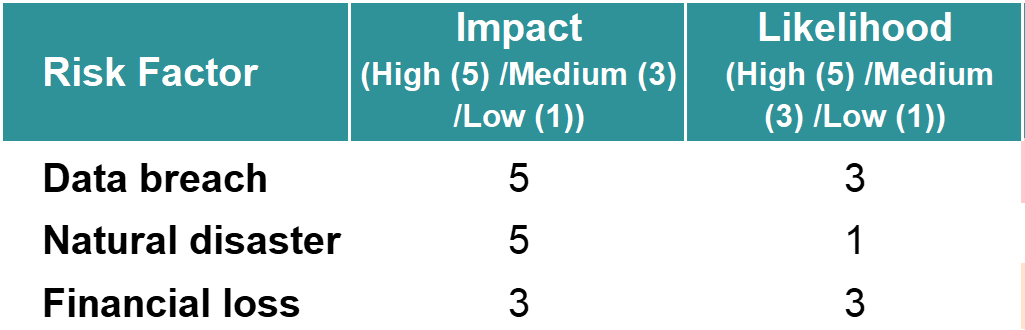
  2. Assess the impact and probability: For each risk, figure out how bad it would be if it happened (the impact) and how likely it is to happen (the probability).

By combining these two factors, you can rank the risks that pose the biggest threat to your organization. Then, you can create a plan to tackle them.

Have a strategy for risk management

A strong risk management plan is like a safety net for your business. By spotting potential problems and having a plan to deal with them, you can protect your money, keep your good name, and build a stronger, more stable company.

  • Find potential threats: By understanding the risks you face, you can take proactive steps to prevent or mitigate them.
  • Protect your assets: Effective risk management helps safeguard your organization’s financial resources, reputation, and operations.
  • Make informed decisions: Risk strategies give valuable insights that can inform smart decisions and resource allocation.
  • Guarantee long-term sustainability: You can build a more resilient and sustainable organization by managing risks effectively.

What is risk?

A risk is simply a potential problem or danger. It’s something that might happen in the future that could cause harm or loss to your organization. Think of it as a threat that you need to be prepared for.

A risk assessment is a proactive tool that helps you discover potential threats to your organization and develop strategies to mitigate their impact. By understanding the risks you face, you can take steps to avoid or manage them effectively, protecting your assets and ensuring long-term success.

Unpacking the two ratings

What is the meaning of risk impact?

Impact refers to the potential consequences or severity of a risk event. It measures the harm or damage that could result if the risk occurs. For example, a high-impact risk might involve significant financial loss, reputational damage, or operational disruption.

How to look at probability or likelihood

Probability refers to the probability of a risk event occurring. It measures the chances that the risk will materialize. For example, a high-probability risk is more likely to happen than a low-probability risk.

By considering both the impact and probability of a risk, you can focus your efforts on mitigating the most significant threats to your organization.

Assessing Risks: A Step-by-Step Guide

Identify Potential Risks:

  • Brainstorm a list of potential risks that could affect your organization. Consider risks that could impact your financial situation, the way you are able to run your organizational processes, your reputational, and risks that relate to legal issues – think about compliance and adhering to legal requirements and regulations.

2. Evaluate Impact:

Assess the potential impact of each risk on a scale of 1-5 where you use either a 1 a 3 or a 5 to rate the impact of every risk you noted in case they happened:

  • 1: Low impact (minor financial loss or inconvenience)
  • 3: Medium impact (noticeable financial loss or disruption)
  • 5: High impact (significant financial loss, reputational damage, or operational disruption)

3. Assess Probability:

  • Estimate the probability of each risk occurring on a scale of 1-5. Use a number 1, 3, or 5 to rate the probability or likelihood that the risks you have would happen:
    • 1: Very low probability
    • 3: Medium Probability
    • 5: High Probability

4. Calculate Overall Risk:

  • The download template below will multiply the impact rating by the probability rating to determine the overall risk level.
  • Rank risks based on the calculated overall risk score. The higher the score, the more important it is to have a plan to avoid it, lower its impact (mitigation), or manage it if there is no way you can avoid it.

5. Develop Risk Strategies

This is where you spot potential problems and make a plan to deal with them. It could be to protect your money, keep your good name, and build a stronger, more stable organization.

Here are some types of strategies that might be needed:

  • Risk Avoidance: Remove or avoid the risk completely by putting some form of protection in place to ensure it can’t easily happen.
  • Risk Reduction: Instead of just letting problems happen, take steps to make them less likely or less harmful. Or you could say it is about implementing measures to reduce the likelihood or impact of the risk.
  • Risk Transfer: Instead of taking on the risk yourself, pass it on to someone else, like an insurance company.
  • Risk Acceptance:  Sometimes, risks are unavoidable. Instead of trying to stop them completely, be prepared for them. Have a backup plan in case things go wrong.

Taking Action: Protecting Your Organization

Once you’ve identified and assessed your risks, it’s time to act. Focus on the risks with the highest scores and implement your mitigation strategies. Remember, a risk assessment isn’t a one-time thing. Review it regularly to make sure it’s still relevant and up to date.

Share your risk assessment with key leaders in your organization. Their insights can help you refine your strategies and check to be sure they align with your overall business goals. By actively managing risks, you’re taking a proactive step toward protecting your organization and securing its long-term success.

Data Privacy Essentials: Your Compliance Starter Kit


Navigating the complex world of data protection can be overwhelming, especially for small organizations like charities and businesses.

The Perils of Data Breaches

When personal data falls into the wrong hands, the consequences can be devastating. Individuals may become victims of identity theft, financial loss, or emotional distress. Trust, once broken, is difficult to rebuild. Organizations face reputational damage, monetary penalties, and legal repercussions. Moreover, a data breach can erode public confidence in digital services, hindering innovation and economic growth. Safeguarding personal information is not just a legal obligation but a moral imperative.

Compliance

The General Data Protection Regulation (GDPR) has set a new global standard for data privacy in Europe. At this time there are several countries worldwide with similar compliance requirements – from Australia’s Privacy Act to California’s Consumer Privacy Act (CCPA), organizations across the globe are grappling with the complexities of safeguarding personal information.

Free draft forms and guidelines

Data protection can be a real headache, especially for small businesses and charities. That’s why this toolkit of draft forms and policies is here to help you get started with practical templates to help you stay compliant without the hassle.

Think of these draft documents as your trusty sidekick, providing a solid foundation for your data protection journey.

The toolkit has the following elements:

Data Protection draft Policy Template: Establish clear guidelines for handling personal data.

Data Breach draft Incident Report: Outline steps to take in case of a data breach.

Auditing and Monitoring draft Procedure: Maintain data protection compliance through regular checks.

Drat Data Subject Access Request (DSAR) Form: Efficiently handle requests for personal data.

Draft Data Protection Impact Assessment (DPIA) Form: Assess the potential risks of data processing activities.

While these may be a handy starting point, remember, that data protection is about more than just paperwork. To really protect your donors’, your employees’, your vendors’, and customers’ info, you’ll need to build a solid system that covers everything from training your staff to dealing with data breaches to having a process to report incidents, investigate and draw up an incident report and understanding the data you have and know if you have any risks if that data leaks out somehow.

  • Data protection impact assessments: You need to start out by identifying and managing high-risk data processing activities and making sure you address any high risks you identified in the process. Conduct regular assessments (maybe once a year) to identify potential vulnerabilities and implement appropriate data protection safeguards. [There is a draft form for that in the templates.]
  • Employee Training: Regular training to ensure staff understands their data protection responsibilities and can identify and prevent potential risks.
  • Data Minimization: Collect and retain only the necessary personal data and give them examples to help them understand what personal data is.
  • Rights of those whose data you have: Implement procedures to handle data access requests – they generally have the right to erasure or update of data you store, and other rights include the right to ask to see the personal data you keep on them. [There is a draft form that people can use to request access to the personal data you have]
  • Supplier Management: Ensure data processors comply with data protection requirements through contracts and oversight.
  • Incident Response: Develop a clear plan for responding to data breaches, including notification procedures. And make sure everyone knows which number to call or which email to use to report a suspected data breach. [there is draft information in the templates for how to report an incident and also questions to ask when talking to someone reporting a potential data breach.]
  • Continuous Monitoring and Review: Regularly assess data protection practices to identify and address potential vulnerabilities.

By combining the templates with these additional measures, you can help your organization build a strong foundation for data protection compliance and protect the privacy of your data subjects.

Risk Management TEMPLATE


Considering risks is a high priority for any project execution planning activity. It is important to also frequently re-assess during the project life-time. The project team should check the status of the risk plan against reality at various moments in time to ensure all risks are captured and accurately reflected along with mitigation or risk avoidance plans as required.

A risk plan is simply a plan that helps you identify where obstacles to successful outcomes could appear and what you could do about it. In some cases a potential risk can be avoided by taking some preventative actions in time. Some risks or obstacles could be things that can happen at any moment and some would only occur under specific circumstances. The project team should consider the key elements of the  project plan – where would the project plan have the highest risk of failing if key milestones or achievements are not met? That is the starting point of the template that I am sharing with you.

The risk mitigation template  shows you how to identify risks, identify the risk level of a possible obstacle to project success, determine what can be done to avoid or mitigate an issue/obstacle to success  and of course select who exactly should take the actions in the event that the risk is realized or upfront as a preventative measure.

Just download the attachment and complete the sections in yellow for each of the key elements of your project plan. Then answer the questions as outlined at the top of each column for each of the key parts of your plan.

When you review the plan look at the elements that were rated as “high risk” that it could occur and also a “high impact” if that risk did materialize. Focus your attention more on those items, but it is also true that sometimes a “low risk” obstacle could have a high impact on the project so be sure to review every element of the risk plan when you do your regular risk plan checks.

Every plan has risks and great returns on investments are often associated with a higher level of risks. The objective is not to avoid risks completely since the ability to manage risks well and willingness to accept and manage risks can be a competitive advantage in the marketplace. This template can help you increase your awareness of risks and learn how to manage them throughout your project. Becoming better at risk management will make you a valuable project member and business partner.