Leading and managing a group of people at a single location is not an easy task and managers often tell me it is the people-side that wears them down. When your team is very diverse and located at different remote locations instead of at one location, the challenges and risks of the team not reaching goals multiply. The resource I am sharing today is a checklist for team leaders or managers/supervisors of remote teams and it focuses primarily, but not exclusively, on the the people-side.
The downloadable checklist above lists a number of items to consider when you are leading a dispersed or remote team. This may be a useful check for team leads or project managers to ensure they are taking into account the additional challenges that remote teams bring and are taking the appropriate actions and precautions to manage the interpersonal and communications aspects on such a project.
The checklist items are grouped by the following main topics:
Critical Skills for Supervising International Project teams
Setting Goals and Expectations
Giving Feedback and Coaching
The team
Communication
Establishing a Good Start
Working with dispersed team members can be very interesting and it can be fun to learn about other cultures and other perspectives. However, those same interesting differences can make remote teamwork frustrating and difficult. The checklist shared here can go a long way towards helping you, as the team leader, take advantage of leading a diverse team while successfully managing the harder part of leading teams.
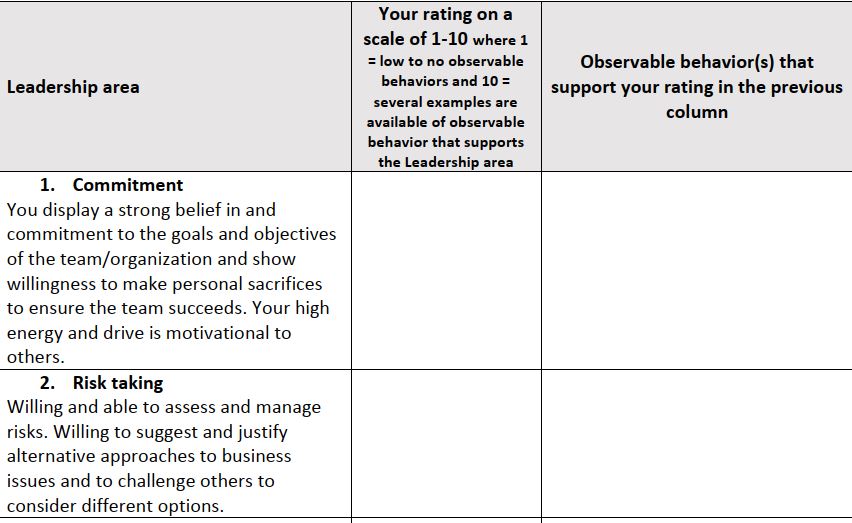
The ability to reflect and learn from experiences and observations is one I most commonly associate with and admire in the best leaders that I have met over the years. This resource can be used to help leaders reflect on their own behaviors to identify development and improvement needs.
The leadership rating worksheet shared contains a sheet for self rating and also a sheet which can be shared with others for feedback purposes.
The resource (see downloadable file above) is not only helpful for leaders in rating themselves and uncovering possible developmental needs, but can also be used as a 360-type feedback tool. In that case the leader rates himself or herself and then requests feedback from others – in more senior roles, same level peers or in lower hierarchical roles – interacting with the leader on a regular basis. The 360 view can help eliminate any blind-spots that a leader may have concerning his or her own leadership behaviors as the perspectives are from others who often interface with the leader.
The leadership aspects covered in this resource are:
Commitment
Risk taking
Motivational style
Open-mindedness
Diversity conscious
Trustworthiness
Continuous learning
Self-adjustment
Steadiness
Each of the aspects come with a brief description to ensure ratings are comparable after you have obtained feedback from others.
Uses for this resource include:
Updating your own development plan and setting new goals and priorities for your own development activities
Discussing the results with a coach or mentor to get guidance on what to focus on and how to plan next steps to improve on key leadership aspects.
If a manager rates all of the leaders working in his or her department using this tool you can compare the leaders to each other in terms of strengths and development needs. This would be useful information to help select the best development programs for the team over the next year (for example).
Developing leadership skills is a lifelong journey. We can all learn to do better in some aspects over time and tools like this one can be a very useful check-in for reflection even for those who have been leaders for a long time. It is also true that we expect more from leaders in a globalized business world and concepts like “diversity conscious” and “cross cultural” skills are becoming very important for leaders to be effective on a global scale.
A decade ago it seemed to be more common for employees to be on developmental assignments for longer periods of time. These days the duration of assignments seems to have become shorter. The required steps are not much different though.
It is vital for the organization to have a clear process around the mobilization, preparation, sustaining, return, development of assignees and there are multiple organizations (internally and possibly externally if outsourced) which need to contribute to the process in order to make the assignment a successful one for the company and the employee
Some of the biggest unintended outcomes of assignments are:
The employee (and/or family) did not fully understand what they were getting into and found it too overwhelming at the assignment location – wished to return earlier or resigned.
Employee did not understand how the assignment was adding to his or her skill sets or competencies and he or she ended up frustrated and demotivated.
Employee on assignment no longer felt connected to the home office and were anxious about what happens after the assignment – wished to return earlier or resigned.
Employees (and families) experienced a high level of anxiety associated with the assignments due to inadequate preparation and support before, during and after return to home location.
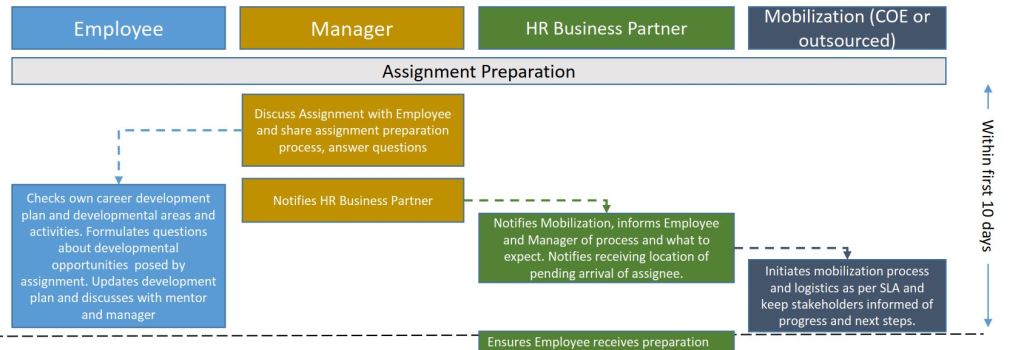
The process flow shared here shows a simplified version of how a developmental assignment should be planned and executed before mobilization, during and after an assignment has ended. It takes into account the logistics part, which may be an internal organization (Center of Excellence) or an outsourced party, the role of the manager, the role of the employee and how the Business Partner can contribute to ensure the entire process yields the desired outcomes. There are also some suggestions for surveys to capture any feedback to identify useful improvements to the process.
Make sure that managers are clear on the process, the various steps and the specific roles and responsibilities. Most employees will ask their managers for advice and information first. The role of the manager is very important to ensure future retention of the employee by staying in touch and ensuring the employee continues to feel valued by the organization during and after the assignment.
Create or outsource a solid assignment preparation program for employees (and families as applicable). This includes cultural awareness training, language training (if applicable) and developing the right mindset and approach to living in a new country for a period of time.
Apply attention and diligence when outsourcing logistics and defining the SLAs associated with mobilization. Lost goods, delays in finding accommodation, faulty or missing paperwork can cause a lot of unnecessary distraction and anxiety on the part of an employee on assignment. Conduct regular audits and have discussions with an outsourcing partner/COE using the surveys as a basis to provide input aimed at improving the experience of assignees.
Ensure either the Business Partner or the Manager has discussions with the employees to be sent on the assignment to ensure they understand how to leverage the opportunity to improve on their own skill sets/competencies and how they should contribute to the learning of those at the assignment location and again to the learning of those at the home office upon their return.
Preparation and Training
Training and support in these areas (see below) will help each assignee and his/her family – should they accompany the assignee – the best opportunity to understand the assignment requirements and the local culture better. And having an improved awareness will enable the assignee (and family) to have a solid plan of how they would set-up their start-up activities at the new location for a successful assignment experience and conclusion.
Being sent on an assignment is both an opportunity and a responsibility for the assignee. It can bring out the best and worst in a person as he/she (and the family) face huge life changes compared to life at the home office. The experience can lead to increased maturity, improved leadership skills and understanding and increased knowledge and skills if managed properly. As the manager, business partner or any other stakeholder in the process, it is important you ensure there is a clear process mapped out which details the various steps by process contributor and that each stakeholder is acutely aware of the bigger picture while performing own parts.
Understanding Your Starting Point: A Blueprint for Balanced Living
Before embarking on a journey of self-improvement, it’s essential to assess your current position. This template will guide you through a self-evaluation, helping you identify strengths, weaknesses, and life areas that require greater attention. By understanding your starting point, you can set realistic goals and create a personalized plan for achieving a more balanced and fulfilling life.
A Holistic Approach to Self-Assessment
Many coaches utilize tools like this template to help clients gain a broader perspective on their lives. By examining various aspects of life, such as career, relationships, health, and finances, coaching clients can identify areas of strength and areas that need improvement. This holistic approach provides a clearer picture of overall well-being and facilitates more effective goal-setting.
Consider using this template as a yearly check-in to track progress and ensure a balanced lifestyle.
Addressing Burnout Through Self-Assessment
If you’re experiencing signs of burnout, this tool can be a valuable aid. By examining your life from a holistic perspective, you can identify areas where your actions and schedule choices may not align with your values. This self-awareness can help you make necessary lifestyle adjustments to restore balance and turn things around.
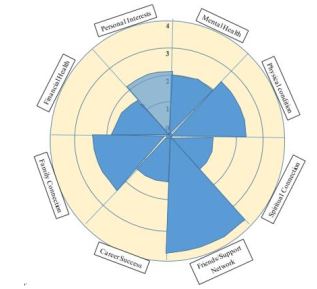
Imagine your life looked like a pizza
The starting point is to imagine your life has segments or aspects that matter to you. Imagine there is a segment called Financial Health which is important to you because you like to have nice new clothes and a nice car. So you would have to make sure you pay attention to being able to earn money so that you are able to buy those things that matter to you. Another segment may be friends – and it would be important to spend time with your friends or you may find they are less engaged with you. This is how one starts to identify what each of those “pizza slices” of your life may be.
Visualizing Your Life Balance
After completing the self-assessment below, color-code each segment to visualize your life balance. A high score in one area might contrast sharply with a low score in another. This visual representation provides a clear picture of where your focus lies and where you might need to make adjustments.
This template can be the basis for evaluating your “life set-up” and then you can work with your coach to discuss how balanced this is for you given your priorities in life. If you want to increase the outcomes in a specific area, simply start setting some goals in that area and then plan to follow through with actions to help achieve them.
Partnering with a Coach for Personalized Guidance
While self-assessment is valuable, working with a coach can provide deeper insights and personalized guidance. A coach can help you interpret your results, set meaningful goals, and create a tailored action plan. Additionally, having a coach to hold you accountable can increase your motivation and ensure you stay on track.
Achieving a Balanced Life: The Power of Prioritization
By regularly assessing your life balance and identifying areas that require attention, you can take proactive steps to enhance your overall well-being. Remember, life balance is not about perfection; it’s about consciously prioritizing the areas that matter most to you. By aligning your actions with your values, you can create a more fulfilling and harmonious life.
While it is a good idea for coaches to periodically discuss how well the process may be working for those that they are coaching, it is also a good idea for HR/Learning and Development to get feedback on the coaching program on an annual basis. Occasional informal feedback from the person being coached to the coach directly may help the coach improve the person’s coaching experience and outcomes reached.
A formal annual survey helps the department responsible for managing and monitoring the coaching program to understand a few things:
General questions that coaching participants may still have about the process or program objectives.
How to improve the training of coaches to improve developmental outcomes.
How well the relationships are working between coaches and those being coached. Perhaps an intervention may be needed in cases where a high level of dissatisfaction is recorded?
Whether the coaching process is working well in general – meetings are held on a regular basis and the right topics are being discussed.
The coaching survey above (see download option) contains questions you may want to consider for your annual coaching effectiveness survey and it also contains some suggested wording for the introduction email to those who are being coached to explain the survey and its purposes.
Gather the survey feedback and analyze it for overall coaching program effectiveness, but also look at individual responses to see if anyone is having a particularly negative view about his or her coach or the coaching process. When you take action on individual responses pay close attention to the confidentiality statement you put in the email that went with the survey. Do not reveal someone’s input to his or her coach unless it was expressly established that the survey respondent consent to this course of action. Also use the information gathered from the survey to improve your orientation slides for the next coaching program and to improve future training you offer to coaches.
Coaching sessions and programs are more successful when there are clear coaching goals and actions planned are documented. These developmental actions and activities should be reviewed and updated on a regular basis. It helps both the coach and the person being coached to maintain focus on desired outcomes..
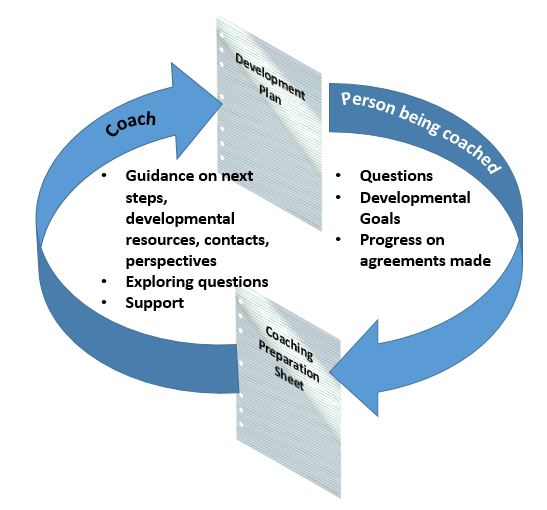
Many employees who are new to coaching have misguided expectations about the coaching process and their own role in it. They expect the coach would show up at each session ready to provide them with useful information and advice and all they needed to do was to show up. In reality the coaching process works much better when both parties actively participate and prepare for each session.
This process graphic shows that each party in the coaching process provides input and participates in the process. The results are written down and shared to ensure a common understanding of the goals and that progress towards goal achievement is maintained.
For those being coached: make sure you get your completed preparation sheet to your coach at least a few days before the session so that the coach can take your feedback into account. This helps him or her prepare to answer your questions and obtain any additional information and resources that may be useful to you at this time and bring it to the session.
For coaches: take note of the questions and struggles that may be noted in the preparation sheet. Consider how you can best help address those issues and which resources can you provide to help in the process? What is the best way to approach the coaching session – given those questions, issues and of course the overall goals that had been set for the coaching process?
Do remember to look back at previous preparation sheets and also the updated development plan on occasion (maybe once every 6 months) to recognize and appreciate progress made to date and to help motivate those being coached to take the next steps that may be required towards ultimate goal achievement.
Coaching is a shared responsibility between the coach and the person being coached. Only then, does the process yield the best results. And preparation is a key part of this shared responsibility.
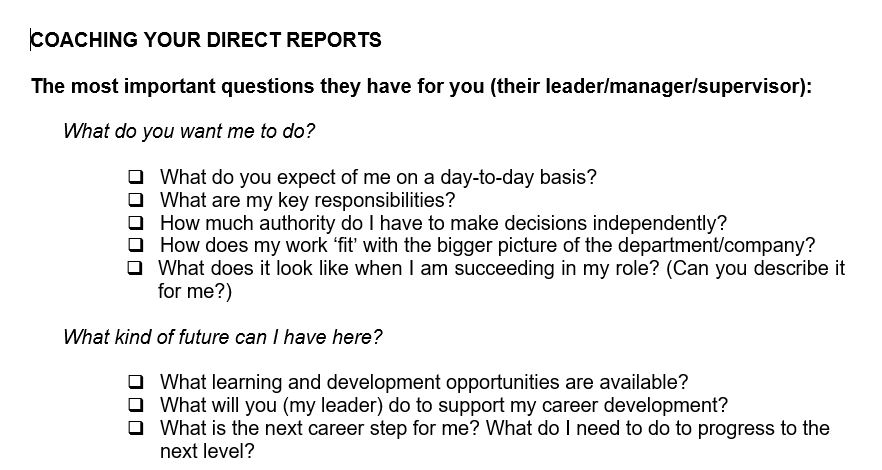
I often hear from managers that they don’t know how to approach coaching their direct reports. It appears the word coaching implies to them that they must have some special insights and skills which would qualify them to coach someone else. Most managers do not realize that they actually know a lot about the company, how things work, how things should be working and how it is going generally. Perhaps all they need is a way to get the conversation going?
Sometimes employees have questions, which are easy to address and other times you need time to get back to them with answers.
Coaching may seem a little less daunting if you had this checklist ( see download button above) of topics to discuss with employees as a group or as individuals. There is a lot to be said for group coaching sessions! They can also be very effective in developing a group of people who may roughly all have the similar development needs and questions for you.
As their manager, you can open a conversation covering one of the questions on the sheet and just state “I can imagine you may have some questions or would like to know more about….” (use one of the questions shown on the sheet). Once the conversation is kicked-off it often happens that the employee will start to bring up more specific questions that he or she may have.
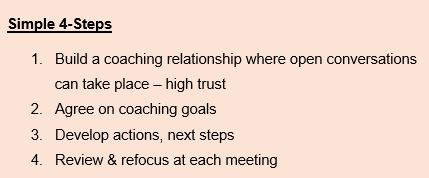
This graphic shows the basic 4 steps that can be used to start and keep a good coaching relationship going. Trust is a key component and building trust is important – honesty, integrity and showing employees that you care about their work, their careers and their well-being all help to build trust.
Coaching can be a highly structured program requiring a lot of specialized communication and coaching skills and training. It can also be simply helping employees understand the basics around their roles, the company and how things work in their environment. It is your role as their manager to coach them and develop their knowledge, skills and competencies on an on-going basis. If you need more training and support with regards to coaching, do talk to your HR or L&D representative. In the interim, this conversation-starting summary sheet may be helpful to you!
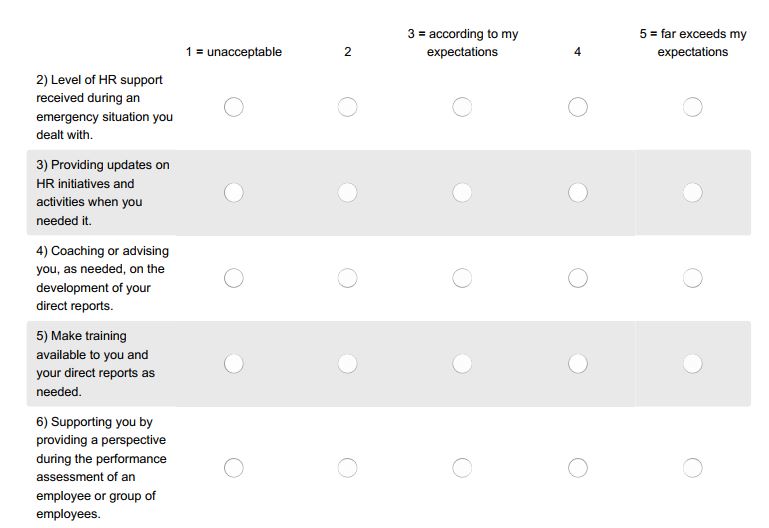
In the same way that companies would approach external customers to gather their views on what is going well and what needs improvement (customer satisfaction), the HR function should reach out to its internal customers to find out how satisfied they are with the services and support that they receive. It is true that there are more than one model for HR service delivery, but that does not change the fact that it is wise to gather feedback on the services and support that you do provide given the structure and focus for HR in your company.
The HR function is often guilty of focusing its developmental and improvement efforts exclusively on helping other departments and neglects using those same skills and expertise to improve the HR function as a whole and developing the people who deliver the HR services to others.
HR Function – Feedback Survey
This survey can help you gather the information you need from your internal customers to help you identify specific areas of excellence in HR and also those areas where improvement may be needed. When improvement is needed it will often imply additional training and development of some HR representatives (HRBPs or Generalists) and may also include communicating the HR vision and goals more clearly within the HR function. Remember to recognize and reward those who were part of delivering excellent services when you review the survey results.
Add comment fields next to scores if you want to be certain to capture specific comments about the scores.
Do be sure to provide survey participants with feedback on the outcome of the survey and the actions that you plan to take as a result of the survey. This motivates participants to continue providing you with valuable feedback in the future.
Create an action plan and communicate that clearly within the HR function so that everyone understands which areas you plan to address and how you plan to do that. It may help to set specific metrics around your planned improvements to make it easier to report progress.
Regularly update stakeholders – internal to the HR function and those who are internal customers in your company – on the progress of improvement efforts as you implement the post-survey action plan.
Remember to celebrate successes (milestones and outcomes achieved) and be prepared to add additional actions to your plan in cases where your improvement efforts are not reaping the results you had planned for.
Having a standard survey which you use ever year gives the opportunity to track the progress in specific questions over time and helps with trend analysis and showing % improvements over time.
The strength of teams lies in their ability to achieve more as a group working together than as individuals working independently on various parts of a project or activity. The main obstacle to a team achieving the optimal performance level is the ability of the individual team members to work together collaboratively.
You can select the right team members based on the knowledge you need, the skills and competencies you need and the experience levels you need for a project. And the team performance can still be very disappointing if the team members do not communicate effectively, are not sharing information in a comprehensible way, and are not clear on how to coordinate with each other to avoid rework or waste their efforts working on the wrong items.
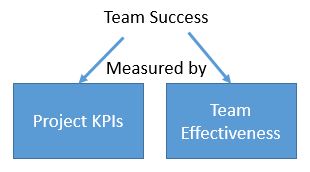
The success of a team is measured by more than one aspect. Examples include:
Achieving project milestones and objectives
Satisfied stakeholders
How well team members are working together – getting more done with more innovation and inclusiveness in a shorter period of time
Phases of a team
Any team will go through developmental phases starting from the first day the team members spend together. If these phases are navigated successfully, they can help team members build a high level of trust which enables the team to achieve a high performance level. The leader of a team has an important role to play throughout the phases of team development to help the team achieve their goals in the most effective and efficient .
Measuring team outcomes
Setting out to measure the progress of a team’s efforts is simply about communicating and then monitoring KPIs (Key Performance Indicators) on a regular basis. KPIs are typically set around costs, time to completion, quality of the product etc.
Measuring the cohesion between team members and how well the team is functioning is not that simple. Every team member most likely has his or her own opinion of how well the team is functioning and where improvements may be needed. Team members also would have opinions about whose “fault” it may be that things are not better. The question is often whether it is a lack of knowledge, a lack of motivation or actually interpersonal conflicts and distrust which is contributing the most to dysfunctions.
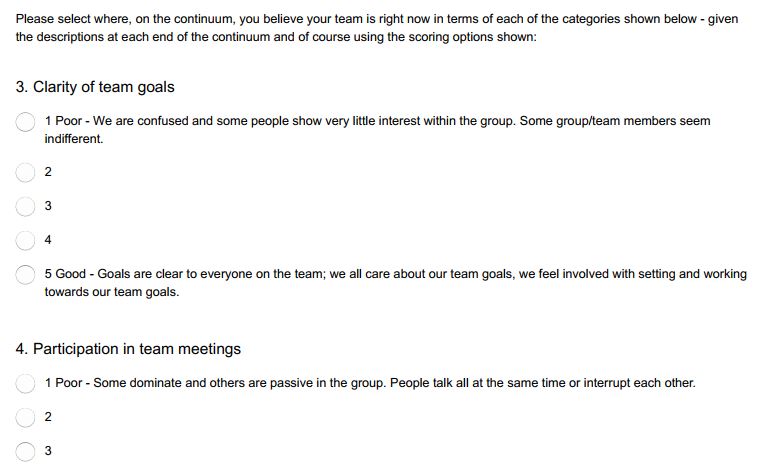
Using this short team effectiveness check, is a great way for leaders to take a quick look at how each of the team members see the team at that moment in time and identify where discussions may be needed to clarify or remove issues that may be hampering team functioning.
The purpose of this quick survey is to gather input from the team on their own perspectives. Remember that a perspective is just how one person sees things at that moment in time. It does not mean that the perspective of one person holds true for the rest of the team. It is important though that you understand whether one or more team members are not feeling included, engaged or unable to contribute based on a lack of internal alignment with other team members on goals etc
As the team leader or team coach, ask your team members to fill this out maybe once a month – more often if you are going through a difficult phase as a team and you are concerned about how well things are going for each team member. I would not do this more than once per week.
Note that your team dynamics will most likely change when you add members, remove members or when your project enters a completely new phase of functioning and performance expectations. At those moments you are likely to see a decline in previously recorded good scores for team effectiveness and functioning.
Use this tool as a way to quickly diagnose where the team is at and use it as a starting point for some team or one-on-one discussions to address concerns raised. Include an external person to facilitate difficult team discussions if you feel it may be helpful – someone from HR/Learning and Development/team coach may be able to use their expertise and skills in group dynamics, conflict resolution and interpersonal relationships to get your team out of a rough spot when it occurs.
The success of a leader, a manager or an ambitious employee depends largely on the mindset that he or she operates on. When we are in a positive state of mind we can focus on our goals and collaborate and communicate in positive ways which inspire and motivate others to help us succeed in our goals.
It is unfortunately also possible for us to get pulled away from the positive state of mind when we are in high stress situations for a long period of time and when we allow ourselves to go down a spiral of negative thinking. Successful leaders and managers have learned how to quickly realize when this happens and to start implementing corrective actions and adjustments to their way of thinking. This self-awareness and regulating their own emotions help them rapidly get back to a focused mind and closer to the outcomes that they are planning for.
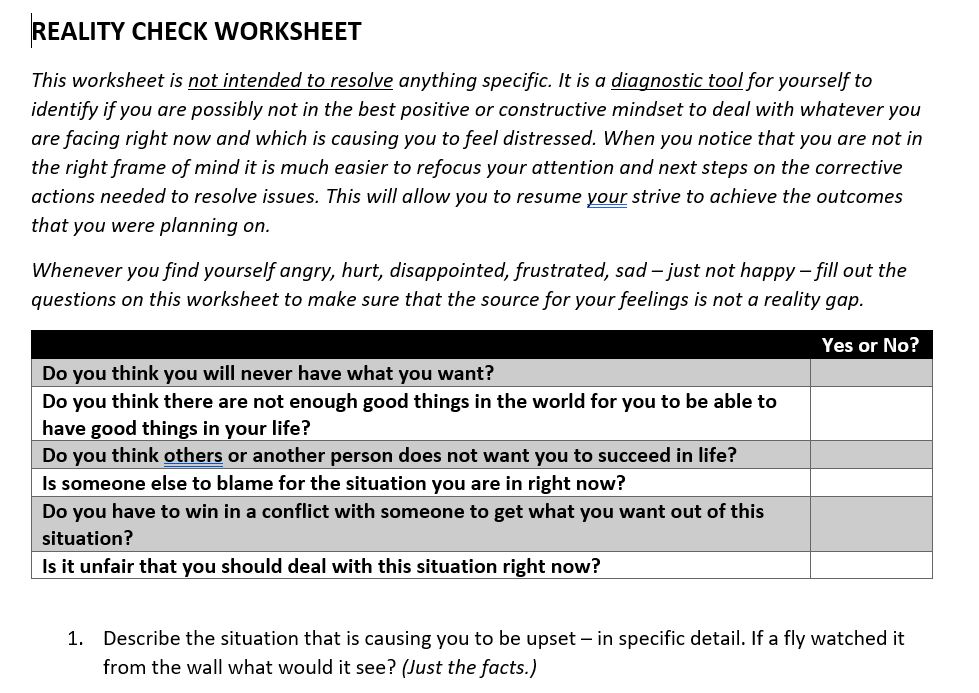
This model shows the blue path which I call the Expectation Trap or summarized as the kind of thinking that believes “things should not be this way”. This kind of thinking very easily moves us out of a positive mindset and it is aligned with going against reality. We wish that reality was different and we build this on our expectations of how good things should be and how badly others are acting or behaving as if others are actually causing the negative outcomes which we do not want to see. The green curve is the way out of the negative thinking. It is a different mindset which aligns with 1) doing a reality check and using that as the basis for moving towards a better way of thinking, 2) learning from the past, 3) changing or improving the plans we had before something happened to interrupt our progress and then 4) moving into the new direction with a positive focus and determination.
The first step, doing a reality check – is often the toughest and once a person is already in a negative state of mind it is really hard for him or her to realize that it is necessary to do this.
Use the outcomes from this worksheet for further discussions with your mentor/coach or adviser. It may be that you need some coaching or just someone to be a sounding board for you as you talk through the situation and how to resolve it in the best way.
Some tips:
Be sure to really connect with the negative feelings when you complete the worksheet. Some people are really good at being able to temporarily switch off their emotions to focus on business – but for this form, do make sure you are connecting with how it feels inside of you when you think about that situation or event that had caused you to feel pulled away from your positive mindset and down the Expectation Trap.
Do take the steps necessary to resolve any upsetting situation/event. There is nothing worse than unfinished business behind you. It slows you down and drains you of positive mental energy that you need to accomplish the goal(s) that you have set for yourself. Your coach/mentor or adviser can help you with that if you are not sure how to resolve the upset so you can leave it behind you.
















 The Rethink Shelf