Presentation Feedback Template


Conducting presentations at the end of developmental assignments is a common way for employees to share knowledge and demonstrate the value of his/her contribution to solving a situation or creating a new solution.

Presentations is also a great way to evaluate how much an employee has learned from an assignment, if you are the manager, mentor or L&D Partner supporting that function or project. Just telling someone that he or she did a “good job” at the end is not a substitute for specific and actionable feedback which a structured template can offer those attending the end-of-assignment presentation.

Structure

  • The structure of the end-of-assignment presentation typically would include these topics:
  • About the presenter – brief bio including background experience up to the assignment, role during the assignment and career ambitions and goals.
  • An executive summary of the solution provided or improvement implemented.
  • Brief overview of the Situation that had to be addressed, specific objectives identified and met and the team that were involved in addressing the situation.
  • Outcome achieved including metrics and recognition for support from other people and groups.
  • Summary of key learning points that the employee takes away from the assignment and will use in future
  • Questions and Answers session

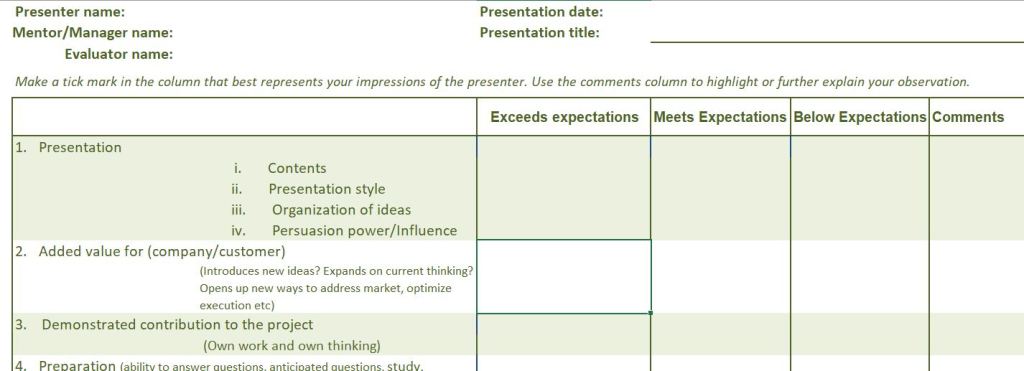
The templates I am sharing include the Presentation Feedback Form which can help those attending the presentation to structure their feedback to the presenter (the assignee) in a consistent way. An HR or Training/Learning/ Development representative can collect all the feedback forms afterwards and collate those into one feedback document for the benefit of the assignee.

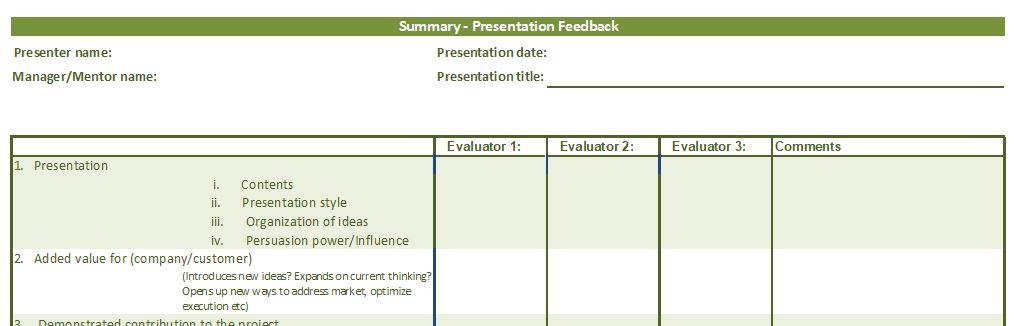
The second template is for the HR or L&D person who will combine all of the feedback received onto one Summary sheet which can be shared with the presenter. The feedback can offer helpful developmental suggestions and also recognize the successes and achievements that the presenter was able to demonstrate during the presenttion.

Tips:

  • Customize the first column to include specific details around developmental objectives that were set as a part of the assignment. That way the presenter gets very specific feedback on how well he or she met those expectations through the presentation and handling questions during the session.
  • Be sure to prepare those who would provide feedback so they understand how feedback is to be captured on the form – sometimes they are confused about the columns and you may even prefer to just have one column with a score. Specifically ask them to add comments to help enrich the feedback and make it easier for the presenter to understand how to improve on his or her performance in future.
  • Deliver the feedback in person (vs by email) once the combined Feedback form is completed. Presenters may have further questions on how to interpret the feedback or how to improve on their own performance and should have the opportunity to get guidance and coaching on that during the feedback meeting to optimize the learning opportunity.

Crafting a Communication Plan: Your Roadmap to Change Success


Whether it’s a new process, a revamped strategy, or a technological overhaul, effective communication is essential for a smooth transition. A well-crafted communication plan outlines the who, what, when, where, and how of sharing information, ensuring everyone is on the same page and aligned with the change journey. Let’s dive into the key components of creating a powerful communication plan.

Tailoring Your Message to Your Audience

Effective communication means understanding who you’re talking to. Different groups will need different information. Start by identifying everyone who’s affected by the change. This could include employees or different groups of employees, customers, partners, and even the wider community. By mapping out your audience, you can tailor your messages to their specific needs and interests. Think about different functions, think about geographic locations, think about management levels, and think about people outside your company who may be affected.

Communication messages could be intended to explain why things have to change, what is going to change, when and how it is going to change, how the change is going (progress update) and what (if anything) people need to start doing, stop doing or what should change in the way they have acted in the past.

Continue reading “Crafting a Communication Plan: Your Roadmap to Change Success”

Track and Develop: A Guide to Portfolio Assignments


Dev plan (3)

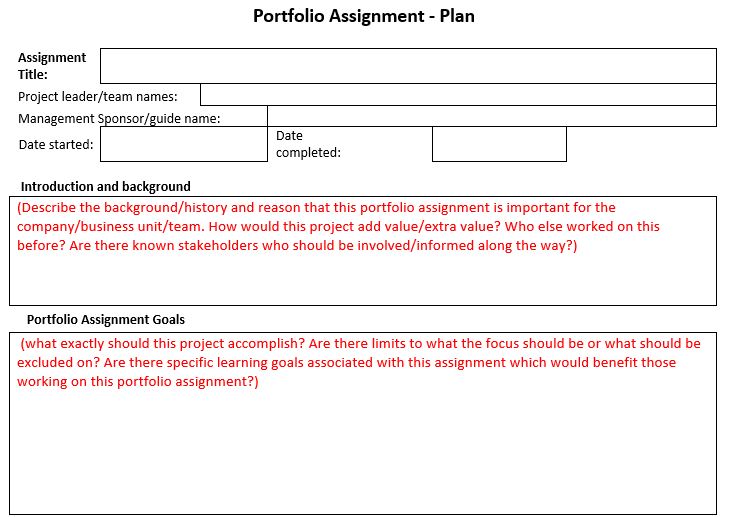
A powerful way to develop employees is to give them a portfolio assignment. This would be something they are asked to do while they remain responsible for their normal daily duties. Motivated employees with the ambition to learn new skills and take advantage of new opportunities to achieve developmental goals typically welcome such assignments. Portfolio assignments are less popular among employees who are less driven to succeed and develop their careers.

Continue reading “Track and Develop: A Guide to Portfolio Assignments”

From Skills Gap to Training Plan: A Strategic Approach


Training departments are usually expected to provide an annual plan showing training classes and learning interventions which will be offered over the course of the year. Managers want to see when they can plan to send employees to attend specific training courses and they also would like to see that the training plan addresses key areas where performance improvement may be needed for their departments or business units. Lastly, there is also usually the need to create a budget for the planned training. All of these focus areas are covered in the templates that can be downloaded below.

What kind of training should you provide?

Consider the following sources of information which could help:

  • Company strategies for growth and developing into new markets or expanding in existing markets – what skills would be needed?
  • Based on current performance – which skills need to be introduced and which skills should be improved upon?
  • Looking at employee career goals, which skills do you need to focus on in order to help move employees to being promotion-ready?
  • Which skills do managers believe would help their teams succeed better given performance targets and customer demands?

Summary of the kinds of Training Needs to Identify

Tools and Templates

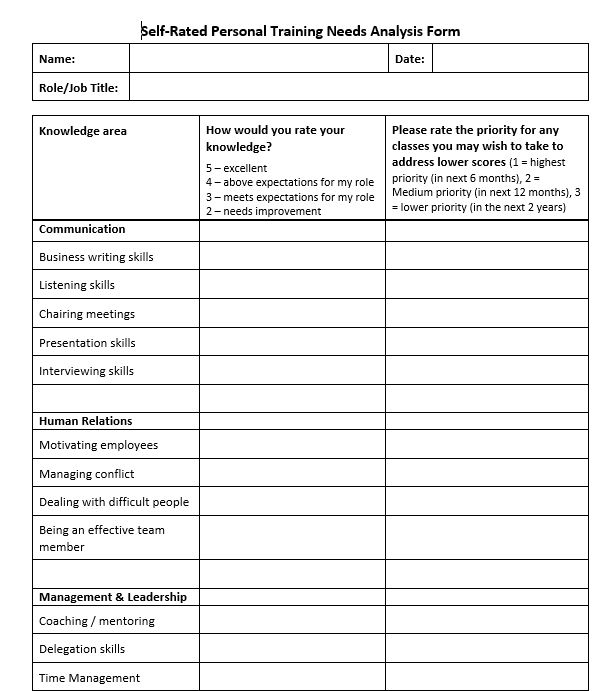
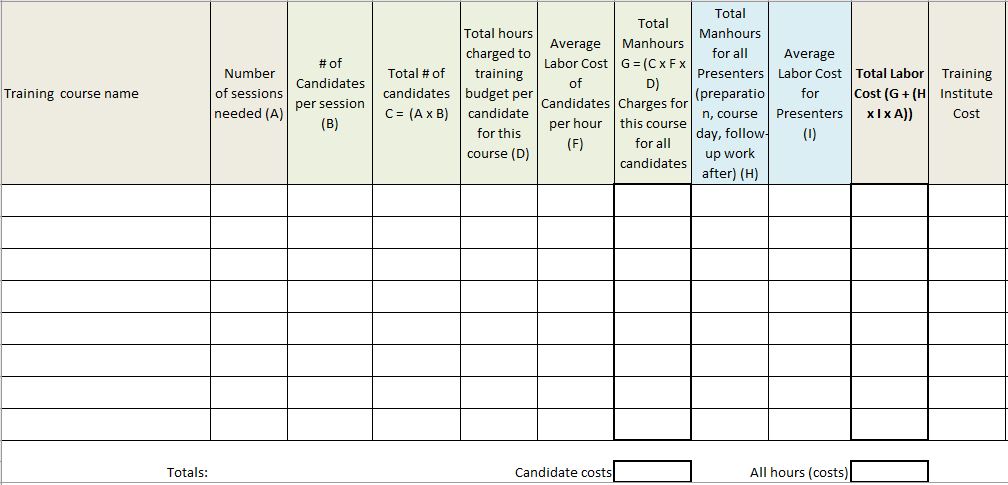
Here are three tools that can help you with conducting a training needs analysis. The first tool highlights individual training needs per employee and is based on employee self assessments. The second tool is a training needs view from a manager’s perspective focusing on the top 3 highest training needs for each employee in his/her group/team/department. The last tool helps you budget for the planned training.

  • Self-rated individual training needs. The quality of the results you obtain from this tool depends on whether you have a good career development tool/framework in place, motivated employees who maintain and work on their own development plans on an on-going basis and whether your managers/supervisors provide quality performance feedback to employees on a regular basis.
  • Manager assessment of department/team. Using knowledge of employee performance in his/her department, the manager selects the top 3 courses that each employee would need to improve own performance and/or to grow further in his/her career. Be sure to share course details with the managers too – what is the duration of the course and what aspects of the topic is covered?
  • Training needs and budgeting. This spreadsheet helps you budget for the planned courses. Check actual spending against this estimate to track the accuracy of your original budget and accurate allocation of items charged to your training budget.

Tips for training needs analysis:

  • Create a training needs analysis process that you follow consistently every year. This helps managers get into a rhythm of providing you with the required information on time for you to submit budget requests for the following year/quarter.
  • Be clear with managers which part of the training costs would be booked to their own budgets. For example – where do employees charge their time when they are in a training class? To your budget or to their manager’s budget?
  • Ask yourself how much training does it make sense to provide internally vs using an external vendor. Make wise trade-offs in terms of training costs, best value for money, expertise needed to provide the training etc.
  • Determining the training plan for the following year should also include a good review of the training evaluations and feedback obtained from course participants during the lasts year. Are your current training classes good enough or do they need to be improved or outsourced?

Personal Development Plan


Continuous learners have the best chances of being noticed for new opportunities and promotions. It is important to be structured around what you will focus on learning next. Ask for feedback from more senior people around you or from your manager/supervisor. Then create a personal development plan for yourself. As you complete learning goals, set new learning goals and update your personal development plan accordingly.

The best way to have a structured learning approach is to have a Development Plan. Creating your own development plan is the first step towards mapping out your learning needs and priorities. Ask someone with experience to help you with it. It could be your supervisor or manager and it can also be a coach or mentor that you are working with. Such a person should be able to provide you with valuable feedback as you aim to prioritize your planned development actions.

Start the plan

Continue reading “Personal Development Plan”