Getting Started with AI: Don’t Know? Just Ask.


You don’t need to be technical to use AI – you just need to start with purpose. Here’s how to do it well from the very first prompt.

[If you are totally new to AI, you may want to read this article first]

So you’ve heard of AI and maybe even read an introduction, but now you’re staring at a blank screen wondering what to do next. That’s perfectly normal. In this second post, let’s walk through how to actually use an AI tool well technically and thoughtfully and how to build a working partnership with AI from day one.

You don’t need to be a programmer to benefit from AI. This guide is for anyone working on real-world tasks from professionals and students to caregivers, planners, and creatives.

Before jumping into your first task, take a moment to ask a few simple questions. These help set expectations and establish a tone of curiosity and clarity and its especially helpful if you’re new to AI. Sometimes the best way to know how to best use AI is to ask AI:

a) “What kind of tasks are you best at helping with?”
This gives you a quick sense of AI’s strengths : idea generation, drafting, summarizing, and more. AI won’t do your homework or your job for you entirely. It helps with frameworks and drafts, but you need to proofread and check that the answer is actually addressing your needs.

b) “What are some things you can’t do or don’t know?”
Learn early what not to expect, like real-time data, personal opinions, or sensory experiences. It can’t watch a video or hear music. It can only tell you what people may have written about that painting or song.

c) “How should I ask for help with writing/summarizing/brainstorming?”
Helps you learn how to phrase requests clearly. The better the question, the faster the path to a useful result.

d) “What do you need from me to do this well?”
Encourages you to provide goals, format, audience, and context. For example, if it’s a fundraiser communication plan, share who it’s for, the desired tone, and who will review it.

Instead of simply typing “hi,” ask AI to help with something specific:

“Create a report on the current status of renewable energy in Finland. Include recent data, government policy highlights, and the role of wind and hydropower. Keep it under 800 words.”

If you’re unsure how to ask, explain your goal:

“I need to write a short report for work about renewable energy in Finland, but I don’t know where to begin. Can you help me outline it?”

AI will often guide you with clarifying questions or suggestions.

No need for perfect grammar, just clarity. Be specific:

  • “This is for a team of engineers. Keep the language precise.”
  • “Add a few bullet points to make this easier to skim.”
  • “Suggest a stronger title — something catchy but still professional.”

These details help AI understand your needs. Most paid versions of AI can remember your preferences.

Don’t expect perfection on the first try. Use follow-up prompts like:

  • “Can you make this shorter and punchier?”
  • “Add a paragraph about environmental impact.”
  • “Change the tone — it’s too formal for a presentation.”

You remain in charge of the project and how it is shaping towards the outcome with each step.

Different AI tools suit different needs:

Try a few and see which feels right for your style of work. Like any good toolbox, each tool has a role.

Suggested Prompt Starters

  • “Summarize this article into three bullet points.”
  • “Help me prepare questions for an interview with a circularity expert.”
  • “Give me 3 headline options for a company newsletter.”
  • “Explain this policy to someone without a technical background.”

You don’t need to be an AI expert to benefit. Just treat it like a smart teammate: fast, helpful, and always ready to try again.

But for now: Pick a tool. Try a task. Start the partnership.

9 Tips for Compelling Competition Entries in Sustainability


Entering the project you are most proud of into an excellence competition is an exciting opportunity to showcase your hard work and achievements. But let’s face it, the competition can be stiff—especially when sustainability is a key judging criterion. Don’t worry, though; this post will guide you through how to focus on the right elements and tell a compelling story that highlights your project’s success without making things up. The secret? It’s all about having the right data, understanding what it means, and explaining why it matters.

Here are nine ways to make your project stand out and be memorable and remarkable:

1. Start With the Basics: Read the Rules

Before drafting your entry, carefully review the competition guidelines, especially sections on sustainability or innovation. These often hint at what judges value most—energy efficiency, water conservation, carbon reduction, waste avoidance, community impact, or even all of these. Align your entry with these priorities. And don’t stress over word limits—stay within 10% of the specified count, as they’re there to keep entries focused, not to demand a full thesis.

2. Tell a Story, Not Just the Facts

Before you start writing your entry, read the competition guidelines carefully. Pay special attention to any sections about sustainability or innovation. Competitions often provide clues about what the judges are looking for—energy efficiency, water conservation, carbon reduction, waste avoidance, community impact, or maybe all of the above. Tailor your entry to match these expectations.

3 Focus on Measurable Outcomes

Judges love numbers, so don’t shy away from sharing your data. If your project saved energy, reduced emissions, or cut costs, include the specifics. Here are some examples:

  • Energy Efficiency: “We installed energy-efficient lighting and reduced electricity usage by 30%, saving EUR 10,000 annually.”
  • Waste Reduction: “By reusing materials on-site, we diverted 95% of construction waste from landfills.”
  • Sustainability Impact: “The project’s solar panels now produce 20,000 kWh annually, enough to power 10 homes.”

Don’t have all the data? That’s okay—start with what you do have. Just be sure to explain how you measured these outcomes and why they’re meaningful.

4. Highlight What Makes Your Project Unique

Competitions are about standing out. Did you try something new that hadn’t been done before? Did you find a way to make the project faster, cheaper, or more sustainable? Maybe you combined existing methods or approaches in creative ways. For example:

  • “We used prefabricated components to speed up construction, reducing on-site waste and emissions.”
  • “Our landscaping included native plants, which cut water usage by 40% and boosted local biodiversity.”

Be clear about how your approach sets your project apart.

5. Talk About What You Learned

No project is perfect, and judges appreciate honesty. Talk about what went well but also acknowledge what didn’t. Maybe a new method didn’t work as planned, or you realized late in the process that a different approach would have been better. What’s important is that you show you learned from the experience.

For example:
“We underestimated the time required to train staff on the new energy management system, which delayed implementation. In the future, we would schedule training earlier to avoid this issue.”

6. Sustainability: More Than Just Energy

When we think of sustainability, energy efficiency often comes to mind first. But there’s more to it. Judges might also look for:

  • Circular Economy: Did you reuse, upcycle or recycle materials?
  • Water Conservation: Did your project reduce water usage?
  • Community Impact: Did the project benefit local communities or create jobs?
  • Biodiversity: Did your landscaping include native plants to support local ecosystems, or did you create green spaces that attract pollinators like bees and butterflies?
  • Positive Local Community Impact: Did you partner with local schools for educational programs or support community groups through funding or volunteer initiatives during the project?

By broadening your perspective, you can show how your project goes beyond energy savings to create lasting, meaningful impacts. Be sure to cover these aspects if they apply to your project.

7. Be Honest—Don’t Fake It

It’s tempting to stretch the truth to make your project look better but resist the urge. Judges have likely seen it all, and they’ll spot exaggerations a mile away. Instead, focus on presenting your project’s real achievements as clearly and confidently as possible.

8. Make It Easy to Follow 

A clear, well-organized entry can make all the difference. Judges don’t have time to untangle cluttered submissions, so present your work in a way that flows logically and is easy to digest. Use clear headings, concise bullet points, and short paragraphs to guide the reader. 

Think about your structure: 

  • Timeline Approach: Are you walking judges through processes, events, or project phases step by step? 
    • Top-Down Method: Are you starting with a big-picture overview and then zooming in on specific achievements or highlights? 
    • Comparative Lens: Are you showcasing measurable improvements by comparing past performance to present outcomes and projecting future benefits? 

If you’re including technical data, don’t let it overwhelm the narrative. Break it down into simple, relatable terms that anyone—even those without technical expertise—can understand. For example, instead of saying “airtightness of 0.6 ACH at 50 pascals,” explain how that translates into better energy savings or indoor comfort. 

A polished, intuitive format not only keeps the competition judges engaged but also ensures they don’t miss the full scope of your project’s excellence.

9. Think About the Future

Judges often like to see how your project has inspired or informed future efforts. Did it set a standard for your company or industry? Has it led to new ideas or processes? For example:

  • “The success of this project has prompted us to roll out similar solar energy systems at three other sites.”
  • “We are now working to integrate lessons learned into our next project to achieve even greater sustainability.”

Entering a competition isn’t just about winning—it’s about showcasing what makes your work exceptional. By focusing on measurable outcomes, sustainability, and what you’ve learned, you can create a compelling entry that stands out.

Remember: the judges aren’t looking for perfection—they’re looking for impact, innovation, and integrity. Follow this approach, and you’ll not only improve your chances of winning but also demonstrate why your project truly matters.

Now go tell your story—sustainably, of course!

Streamline Your Workflow: Start, Stop, Change Strategy


Feeling overwhelmed by your to-do list? It’s time for a fresh approach. Whether you’re figuring out what new tasks to start, which processes to stop, or where to make improvements—including sustainability initiatives—this simple method will help you cut waste and boost efficiency. Think of it as a game-changer for your workflow, empowering your team to work smarter, not harder, while making real progress. Change doesn’t have to be overwhelming; it’s about making strategic, impactful adjustments that lead to better results, smoother workflows, and more sustainable outcomes.

A Fresh Approach to Tackling Chaos

Ever feel like your to-do list is out of control? This simple method helps bring clarity, meaning, and direction to your tasks. Whether you’re deciding what new actions to take, which processes need tweaking, or which habits to drop, this approach will streamline your workflow, boost productivity, and make your routine more manageable.

Even the best processes lose their effectiveness over time or fail to take advantage of the improved availability of better tools and templates, signaling the need to reassess. While big changes can be costly, small adjustments often get things back on track. The method I’ll share is perfect for team brainstorming, making it easier to identify areas for improvement together.

Think of it like tidying up a familiar room. Some things need to go, while others just need a small fix. This tool helps you do the same with your work, identifying what needs to change, what new actions to start, and what habits to stop.

Importantly, it’s also about working smarter with sustainability in mind. Rethinking processes to reduce waste, conserve resources, and adopt eco-friendly practices not only improves efficiency but also builds a more sustainable work environment for the future.

Think of yourself as a gardener, planning to refresh and revive your garden. To improve a process or outcome at work or in a volunteer setting, you need to plant new “seeds”—ideas and actions that hold the potential to bring positive change. These are the things you want to start doing to make a meaningful impact.

Ask yourself: What new tools, strategies, or approaches could help streamline work, solve problems, or improve how people experience your organization or team? It might be a fresh approach to a recurring issue or an idea that could make things more efficient. Like planting new flowers in a garden, these initiatives will need your time and attention to grow and flourish.

By starting these key actions, you create opportunities for improvement and success and build an environment that thrives on new ideas and growth.

When we talk about what needs to stop in the workplace, we’re focusing on behaviors and habits that hold everyone back. Think of gossip—it’s like a poison that erodes trust and divides teams. Then there’s micromanagement, which stifles creativity and leaves people feeling frustrated and demotivated. And multitasking? While it might seem productive, it often leads to mistakes and burnout. By eliminating these negative behaviors, we can create a more positive, collaborative, and efficient work environment.

Stopping isn’t just about behaviors, though; it’s also about simplifying how we work. This means cutting out unnecessary steps, avoiding redundant processes, and leveraging technology to make tasks easier and faster. It’s about working smarter, not harder.

The key to success is getting everyone involved. When the team collaborates and shares insights, it becomes easier to identify which tasks or processes don’t add value—and figure out the best ways to eliminate them. This not only streamlines workflow but also helps the entire team feel more aligned, motivated, and connected.

When identifying what needs to be changed, it’s about finding those processes or tasks that work to some extent but aren’t quite hitting the mark. These are not things you want to stop completely, but they could benefit from refinement or improvement. The goal is to enhance their efficiency or effectiveness rather than overhaul them entirely.

This step is about finding out with your team where bottlenecks occur, where confusion arises, or where inefficiencies creep in. Perhaps you uncover small tweaks that make a big difference. For example, a task might be taking longer than necessary because of an outdated step, or perhaps communication between teams could be improved to streamline a handoff.

Other possible candidates for change may lie in opportunities to improve: Are there tasks that could be automated? Is there a process that could be shortened or simplified without sacrificing quality? Sometimes it’s as simple as adjusting timelines or reallocating resources to better fit the demands of a project.

The key is not to throw out processes that have potential but to fine-tune them. By making small, thoughtful adjustments, you can improve the overall flow and outcomes. Involving the entire team in identifying these areas for change ensures that the solutions are practical, realistic, and beneficial for everyone.

Setting up time with the team

To kick off improvements, start by gathering input from everyone involved in the workflow. Set up a dedicated meeting where each person can share their unique insights. By involving the whole team, you’ll gain a diverse range of perspectives, helping you identify opportunities for improvement far more effectively than if you were working alone.

To make the session productive, team up with coworkers and dedicate about an hour to look for ways to enhance how you work, the environment you work in, or how your organization delivers value—whether it’s to customers, clients, or those benefiting from your volunteer efforts.

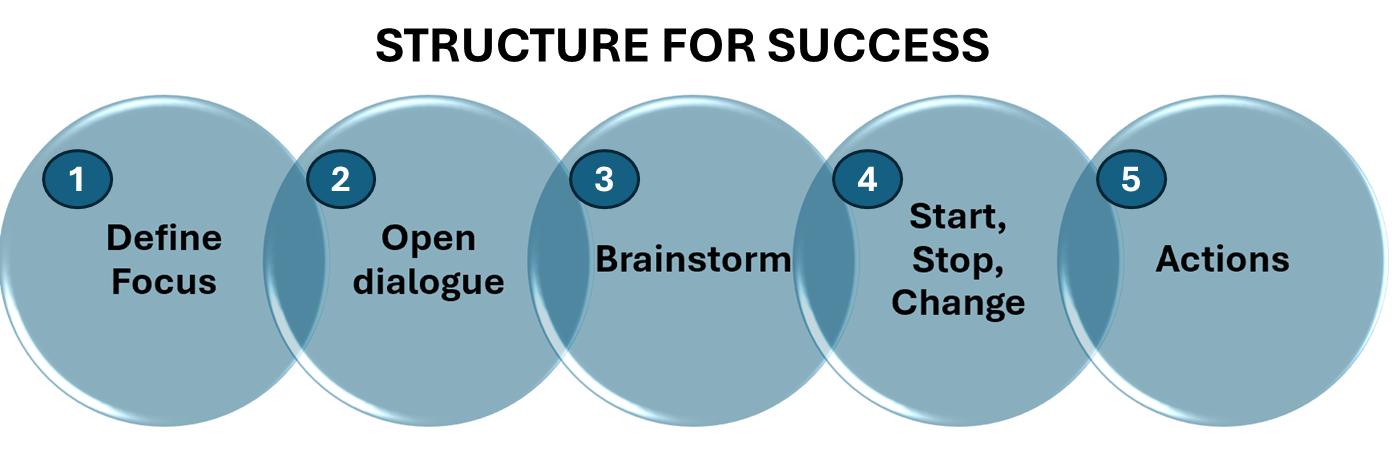
Here’s how to structure your session for success:

  1. Define the Focus: Clearly outline what the session is about. Are you looking to improve a specific process, boost safety, streamline workflows, or enhance customer/recipient satisfaction? Make sure everyone understands the goal before diving into discussions.
  2. Encourage Open Dialogue: Create a safe space for everyone to share their ideas, frustrations, and suggestions. Emphasize that all feedback is valuable and will contribute to positive change.
  3. Brainstorm Together: Work as a group to explore ways to make things better, smarter, and safer. This could involve improving the way tasks are done, optimizing the workspace, or enhancing the delivery of value to customers or the community.
  4. Capture Ideas: Use Stop, Start, and Change flipchart pages to organize ideas. After brainstorming, categorize the suggestions:
  • Stop: What isn’t working and needs to stop?
    • Start: What new actions, processes, or tools should be introduced?
      • Change: What existing processes could be improved with a few adjustments?

5. Assign Actions: Once ideas are gathered, assign ownership for each action. Ensure there’s follow-up so the insights gained from the session translate into real improvements. Also, set up a follow-up recurring meeting to review how things are going to discuss if you need to change or improve how you are implementing actions to be more successful and avoid obstacles to success.

By following this structure, you’ll ensure that your team collaborates effectively and walks away with actionable steps to make meaningful changes.

Keep Stakeholders in the Loop

After the meeting, it’s important to keep key stakeholders, such as your supervisor or others involved in the implementation, informed about the progress. Provide them with an update on the discussions, including the proposal for items to start, stop, or change. This transparency ensures they are aware of the team’s efforts and can offer support as needed. Additionally, ask for their feedback and suggestions. This will help ensure that no key opportunities for improvement are missed and that the plan is as comprehensive as possible. Engaging others in this way enhances collaboration and strengthens the overall success of the initiative.

Now It’s Your Turn to Change the Game

Taking a structured approach to what you start, stop, and change can really improve how your team works and help you reach your sustainability goals. I encourage you to take a fresh look at your team, your environment, and how you get things done. Find ways to not only make customers happier and save money, but also to reduce waste, save resources, and lessen your impact on the planet. Involving your team in this process will help everyone work smarter and feel more motivated as they see their ideas making a difference. Whether you’re working or volunteering, these changes can lead to a more rewarding and sustainable experience. Now is the time to act—start looking for where you can make a real difference for your team and the environment.

Protect Your Organization: Your Risk Assessment Step-by-Step Guide


In today’s world, unexpected things happen. That’s why it’s important to be prepared. This free template download below will help you identify potential problems and figure out how to fix them. You can keep your organization safe and strong by staying ahead of risks.

Remember, this isn’t a one-time thing. You need to keep reviewing and updating this checklist to make sure it’s always relevant. With a little effort, you can create a stronger organization that is able to withstand life’s little surprises.

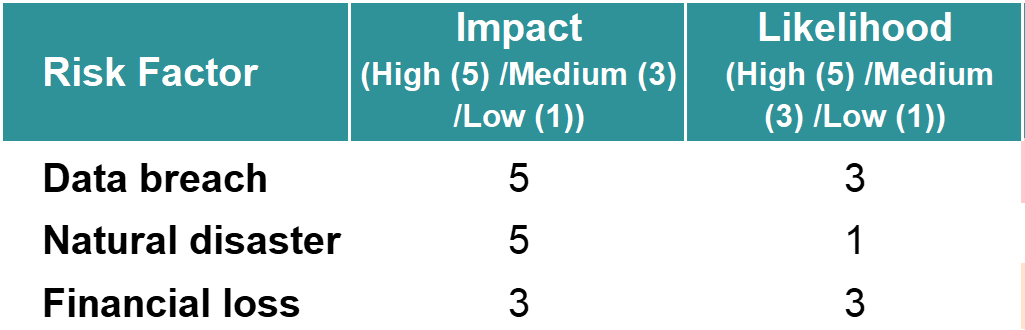
Here are two examples of big problems that can hurt an organization:

  1. Hackers stealing information: Bad guys can steal important stuff like customer data or company secrets. This can ruin your reputation and cost you a lot of money.
  2. Mother Nature strikes back: Hurricanes, floods, or earthquakes can damage your business and disrupt operations.

A Risk Assessment: Your Roadmap to a Safer Future

In today’s uncertain world, risks are everywhere. From financial losses to reputational damage, the potential consequences can be severe. That’s where a risk assessment comes in. By identifying potential threats and understanding their impact, you can take proactive steps to protect your organization.

So, what exactly is a risk assessment? It’s like a crystal ball, helping you see potential problems before they happen. Think of it as a map that guides you through the dangers ahead. By understanding the risks you face, you can develop strategies to avoid or reduce them.

But how do you do it? It’s actually simpler than you might think. Let’s break it down into two key steps:

  1. Identify the risks: Think about all the things that could go wrong. Financial losses? Safety issues? Reputation damage? Write them down.
  2. Assess the impact and probability: For each risk, figure out how bad it would be if it happened (the impact) and how likely it is to happen (the probability).

By combining these two factors, you can rank the risks that pose the biggest threat to your organization. Then, you can create a plan to tackle them.

Have a strategy for risk management

A strong risk management plan is like a safety net for your business. By spotting potential problems and having a plan to deal with them, you can protect your money, keep your good name, and build a stronger, more stable company.

  • Find potential threats: By understanding the risks you face, you can take proactive steps to prevent or mitigate them.
  • Protect your assets: Effective risk management helps safeguard your organization’s financial resources, reputation, and operations.
  • Make informed decisions: Risk strategies give valuable insights that can inform smart decisions and resource allocation.
  • Guarantee long-term sustainability: You can build a more resilient and sustainable organization by managing risks effectively.

What is risk?

A risk is simply a potential problem or danger. It’s something that might happen in the future that could cause harm or loss to your organization. Think of it as a threat that you need to be prepared for.

A risk assessment is a proactive tool that helps you discover potential threats to your organization and develop strategies to mitigate their impact. By understanding the risks you face, you can take steps to avoid or manage them effectively, protecting your assets and ensuring long-term success.

Unpacking the two ratings

What is the meaning of risk impact?

Impact refers to the potential consequences or severity of a risk event. It measures the harm or damage that could result if the risk occurs. For example, a high-impact risk might involve significant financial loss, reputational damage, or operational disruption.

How to look at probability or likelihood

Probability refers to the probability of a risk event occurring. It measures the chances that the risk will materialize. For example, a high-probability risk is more likely to happen than a low-probability risk.

By considering both the impact and probability of a risk, you can focus your efforts on mitigating the most significant threats to your organization.

Assessing Risks: A Step-by-Step Guide

Identify Potential Risks:

  • Brainstorm a list of potential risks that could affect your organization. Consider risks that could impact your financial situation, the way you are able to run your organizational processes, your reputational, and risks that relate to legal issues – think about compliance and adhering to legal requirements and regulations.

2. Evaluate Impact:

Assess the potential impact of each risk on a scale of 1-5 where you use either a 1 a 3 or a 5 to rate the impact of every risk you noted in case they happened:

  • 1: Low impact (minor financial loss or inconvenience)
  • 3: Medium impact (noticeable financial loss or disruption)
  • 5: High impact (significant financial loss, reputational damage, or operational disruption)

3. Assess Probability:

  • Estimate the probability of each risk occurring on a scale of 1-5. Use a number 1, 3, or 5 to rate the probability or likelihood that the risks you have would happen:
    • 1: Very low probability
    • 3: Medium Probability
    • 5: High Probability

4. Calculate Overall Risk:

  • The download template below will multiply the impact rating by the probability rating to determine the overall risk level.
  • Rank risks based on the calculated overall risk score. The higher the score, the more important it is to have a plan to avoid it, lower its impact (mitigation), or manage it if there is no way you can avoid it.

5. Develop Risk Strategies

This is where you spot potential problems and make a plan to deal with them. It could be to protect your money, keep your good name, and build a stronger, more stable organization.

Here are some types of strategies that might be needed:

  • Risk Avoidance: Remove or avoid the risk completely by putting some form of protection in place to ensure it can’t easily happen.
  • Risk Reduction: Instead of just letting problems happen, take steps to make them less likely or less harmful. Or you could say it is about implementing measures to reduce the likelihood or impact of the risk.
  • Risk Transfer: Instead of taking on the risk yourself, pass it on to someone else, like an insurance company.
  • Risk Acceptance:  Sometimes, risks are unavoidable. Instead of trying to stop them completely, be prepared for them. Have a backup plan in case things go wrong.

Taking Action: Protecting Your Organization

Once you’ve identified and assessed your risks, it’s time to act. Focus on the risks with the highest scores and implement your mitigation strategies. Remember, a risk assessment isn’t a one-time thing. Review it regularly to make sure it’s still relevant and up to date.

Share your risk assessment with key leaders in your organization. Their insights can help you refine your strategies and check to be sure they align with your overall business goals. By actively managing risks, you’re taking a proactive step toward protecting your organization and securing its long-term success.

Data Privacy Essentials: Your Compliance Starter Kit


Navigating the complex world of data protection can be overwhelming, especially for small organizations like charities and businesses.

The Perils of Data Breaches

When personal data falls into the wrong hands, the consequences can be devastating. Individuals may become victims of identity theft, financial loss, or emotional distress. Trust, once broken, is difficult to rebuild. Organizations face reputational damage, monetary penalties, and legal repercussions. Moreover, a data breach can erode public confidence in digital services, hindering innovation and economic growth. Safeguarding personal information is not just a legal obligation but a moral imperative.

Compliance

The General Data Protection Regulation (GDPR) has set a new global standard for data privacy in Europe. At this time there are several countries worldwide with similar compliance requirements – from Australia’s Privacy Act to California’s Consumer Privacy Act (CCPA), organizations across the globe are grappling with the complexities of safeguarding personal information.

Free draft forms and guidelines

Data protection can be a real headache, especially for small businesses and charities. That’s why this toolkit of draft forms and policies is here to help you get started with practical templates to help you stay compliant without the hassle.

Think of these draft documents as your trusty sidekick, providing a solid foundation for your data protection journey.

The toolkit has the following elements:

Data Protection draft Policy Template: Establish clear guidelines for handling personal data.

Data Breach draft Incident Report: Outline steps to take in case of a data breach.

Auditing and Monitoring draft Procedure: Maintain data protection compliance through regular checks.

Drat Data Subject Access Request (DSAR) Form: Efficiently handle requests for personal data.

Draft Data Protection Impact Assessment (DPIA) Form: Assess the potential risks of data processing activities.

While these may be a handy starting point, remember, that data protection is about more than just paperwork. To really protect your donors’, your employees’, your vendors’, and customers’ info, you’ll need to build a solid system that covers everything from training your staff to dealing with data breaches to having a process to report incidents, investigate and draw up an incident report and understanding the data you have and know if you have any risks if that data leaks out somehow.

  • Data protection impact assessments: You need to start out by identifying and managing high-risk data processing activities and making sure you address any high risks you identified in the process. Conduct regular assessments (maybe once a year) to identify potential vulnerabilities and implement appropriate data protection safeguards. [There is a draft form for that in the templates.]
  • Employee Training: Regular training to ensure staff understands their data protection responsibilities and can identify and prevent potential risks.
  • Data Minimization: Collect and retain only the necessary personal data and give them examples to help them understand what personal data is.
  • Rights of those whose data you have: Implement procedures to handle data access requests – they generally have the right to erasure or update of data you store, and other rights include the right to ask to see the personal data you keep on them. [There is a draft form that people can use to request access to the personal data you have]
  • Supplier Management: Ensure data processors comply with data protection requirements through contracts and oversight.
  • Incident Response: Develop a clear plan for responding to data breaches, including notification procedures. And make sure everyone knows which number to call or which email to use to report a suspected data breach. [there is draft information in the templates for how to report an incident and also questions to ask when talking to someone reporting a potential data breach.]
  • Continuous Monitoring and Review: Regularly assess data protection practices to identify and address potential vulnerabilities.

By combining the templates with these additional measures, you can help your organization build a strong foundation for data protection compliance and protect the privacy of your data subjects.

Will you love it?


Your dream job – will it be all that you are hoping for?

When you consider a job change or a pivot, you may need to go and talk to people who are doing that job or role right now to answer some of your questions. Before you make a change you probably would need to understand the qualifications or certifications that are important and maybe understand what a typical day is like in that role? If you don’t have the certifications that would be a great way to make sure you prioritize getting the most essential certifications first. If you don’t like the way the typical day goes in that other role you are thinking about, perhaps it is not for you? Perhaps it is good to know more before you jump?

Desktop research first

A lot of this information is available online if you, for example, search for those job vacancies online – you can find out which qualifications or certifications are most required for the role you are considering changing towards. The job vacancies can also show what kinds of competencies and skills recruiters are looking for. Just bear in mind, sometimes they just ask for the moon and the stars in job vacancies to try and ensure they get a really good person who can satisfy a long wishlist (hard to do in most cases!) So, desktop research only goes so far…

Who can you talk to?

Knowing how the typical day goes in a role like the one you want, is not usually so easy to find out by doing online internet searches. This is where you would need to look to your own network of contacts – family members, friends, colleagues or ex-colleagues, and others in sports teams or clubs with you. When you have gone through all the people you know, and perhaps you did not find any or enough people who can help you, you may have to start looking online. Use social media platforms to find people who are in the role you would like to have. If you use LinkedIn, you might be able to see if you know someone or through your network may be able to contact someone who does what you would like to do in the future. If you have no direct links to a person you can often still reach out to them via a message. Your objective would be: Find someone who now has or someone who did have your dream role in the past so you can ask him/her some questions about it. That way you can have more clarity regarding how much might you love this role you are dreaming about?

Plan your next steps

Before you approach anyone for a meeting or a discussion around the questions you have, what targets and specific objectives do you want to set for yourself?

How many people you should approach with your questions? (Is 3 enough, or is a minimum of 5 your target? How many experts in this role do you need to talk to?) In some cases, it may be hard to answer the question because you don’t know if the first two people will give you quality answers or not? Set yourself a guideline target if you are not sure. (Tip: 15 may be too many! If you have not identified the right people to talk to, you may end up with too many discussions. If you find the right 3 and they are willing to spend 20 minutes with you on your key questions, it may be enough!)

Make a list of the people you know who may be able to answer the questions- we will talk about them in a moment. And think specifically about how they may be able to help. If you just ask just anyone you know or post it on your social media page, you may not get quality answers so think carefully about how each of the names you write down can help you. Is he/she currently in the role you are thinking of changing to? Is he/she a mentor or guide who can help me work out the steps to take? Is he/she working for a company or department that hires people for the role I am interested in? Was he/she in such a role in the past?

Start listing the specific questions which you would like to have answered. Here are some question options to consider:

The questions are about:

  • Find out what knowledge you might need. Once you know that, you can look for courses or certificates or volunteer options to help you gain the knowledge you need.
  • Which experiences would be important to have demonstrated in the past to get a role/job like this one? If you do not yet have that, how can you get those experiences? (ask for special assignments in your current role or consider a volunteer role)
  • Which key competencies or skills does it take to succeed in this role? How do your competencies and skills compare to that? If you have to fill in some learning gaps, how can you do that?
  • Are you possibly idealizing this role? Are there downsides you have not considered like a lot of travel and being away from your family and friends? Maybe there are some standby or nightshift requirements? Are you aware of that and does that fit in with your decision-making criteria?
  • In the greater scheme of things – how does this role or job contribute to success in a company? Is there something great about this role that you have not yet realized or understood? Does that motivate you to make time to fill in the knowledge and skills gaps that you discovered?

Keep your momentum

Set yourself small tasks to achieve every week to move forward in understanding more about the role/job you are interested to have in the future:.

  1. What will you do and complete this week?
  2. What will you do the week after?
  3. Which day and at what time of the day each week will you check to see how you are doing against your planning (Did you complete the tasks you set yourself to achieve in the last week?)

To succeed at moving forward you need forward planning, checking back at least once per week to see how far you have come on your plan once you have started. And you need to set yourself targets to achieve in the next few days (be specific) to keep your momentum. That is how you keep your plan alive for moving towards your career move or change!

Mentoring Agreement


Mentoring usually takes place between someone with experience and someone who needs advice and training in specific areas. Starting the process of mentoring duos sometimes skip the step where they talk about how we agree to go through this process together. What is important to you? What is important to me? What can each of us commit to in order for this to work well for both of us?

This free template below helps you to structure a conversation around what the mentor and mentee specifically agree to commit to. How many hours per month/quarter would we like to spend talking through specific topics?

Feel free to add additional items which would be important to discuss during the first meeting when you (mentor and mentee) agree on how to proceed. This kind of discussion may seem unnecessary, but covering these items upfront can save a lot of disappointment and misunderstandings later when items you might have imagined would be obviously included in your mentoring agreement vary from what the other person may have thought. It is not a contractual agreement as much as it is a summary of what you do or don’t want to commit to for the duration of the mentoring relationship.

When it comes to time commitments, it is also advisable to agree for the mentoring process to have a set time period – 12 months or 18 months. And when that time comes, review what has been achieved and learned and whether it makes sense to continue the mentoring relationship or to agree to end it at that time.

Clearly defining the development objectives to be addressed helps to steer the direction of mentoring discussions. What is it that the mentee needs to know, needs to be able to do, and would like to be able to understand? The more detailed this section is, the easier it might be for either the mentor or the mentee to recognize when the mentoring relationship has helped to achieve those outcomes and it may be time to evaluate whether it makes sense to end the mentoring relationship or continue it with new development objectives.
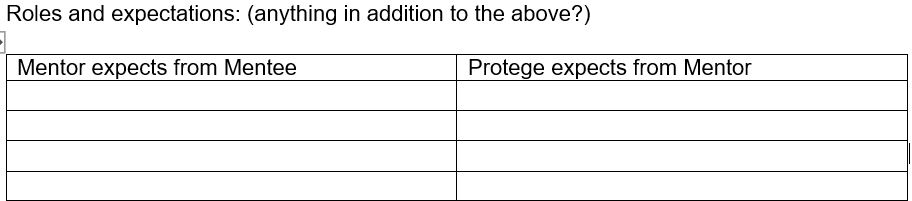
Considering the agreements discussed during the first section, are there any other expectations that each has of the other and which are useful to mention specifically? For example, the mentor may have the expectation that the mentee would devote time to read specific books or articles every week. Are those expectations realistic for the mentee? If he or she has other obligations which may make it difficult to meet that expectation, it is best to discuss them early on to avoid a misalignment later on in the mentoring relationship.

The full template can be downloaded below – it is a *.pdf file and it can be imported into MSWord for edits.

This file can be very useful to ensure that mentors and mentees are aligned early on in their association which gives their mentoring relationship the best chance to be successful!

Rotational Development Assignments – an Example


This post assumes a few starting points. For one, it assumes that you have a few leaders whom you would like to develop using a few specific developmental areas. When you review this example, you will notice that the areas shown here are typically associated with development of first-time or mid-level leaders. This example can help you take your own leadership development ideas a step further by defining specific steps, and processes which would make it easier to communicate your vision to stakeholders at your company – offering a well-considered program that includes all the elements that are important to developing leaders, their managers, executives considering succession planning, and also new recruits with dreams of building a great career at your company.

Defining outcomes

Which observable outcomes – behaviors – are important for successful leaders to display at your company? Can you define this per competency? Understanding what exact outcomes that your program strives to achieve makes it easier to select the right people for the program (those with development needs in these areas), evaluate the progress of developing leaders in your program (learning to lead with desirable behaviors), and also to understand where specific leaders may need more support with their own personal development plans.

Here is an example of defined outcomes and you will notice the columns to the right have spaces to insert names of possible program candidates. This would be a way to consider nominations when they are discussed by the program committee to decide on the next intake of leaders for the rotational assignment program.

Governance & Structure

Before you start to implement your ideas, take a moment to consider who are the key participants and stakeholders in this program? And have you thought of how you need to support each stakeholder’s needs and prepare them for their expected participation?

Basic processes would include:

  • Selection (nominations could be an additional process if you would not pre-select possible candidates using seniority or other criteria) – on what basis will multiple raters who know candidates propose and support nominated candidates?
  • Performance evaluation process – before the program starts and also at key stages during and at the end of each assignment.
  • Promotions and salary increase eview processes for program participants – checking thatyou are at least paying them at or above local market rates to ensure you are not endangering their retention.
  • Mentoring process for the benefit of participants – supporting developmental goals.
  • Performance feedback process to participants and the oversight committee in general.
  • Orientation process for managers whom program participants would report to during their rotational assignments.

Executive Sponsor for the program

It is important to understand who would be the sponsor at the executive level – involved in ensuring that the program meets strategic objectives and delivers on the agreed benefits. These would be the reasons why the program would be approved for funding and resource allocation like for example a program coordinator etc. Build a relationship with this stakeholder and ensure that he/she has all the information needed to feel comfortable with the progress you are making with the implementation or maintenance of the program on an ongoing basis.

Oversight committee

This may be a group of operational leaders, some group support (functional) leaders, and perhaps a mentor or two. The oversight committee may also be involved in the nomination and/or selection of participants and may also be a part of the audience when program participants are asked to conduct presentations about their projects as part of the program, The oversight committee might also at least annually evaluate possible risks to success and may suggest mitigating actions or improvements to avoid or manage risks to successful outcomes of the program.

Mentors

If you have dedicated internal and/or external mentors meeting with program participants on a regular basis it would be important to involve them by giving them an understanding of the strategic and operational expectations of the program. They would also need to be familiar with the measures of success and how they are defined and evaluated. The success of developing leaders would be very reliant on this group of people offering key support to them. For this reason, mentors should also be asked for (at least) annual feedback on their experiences as mentors and be able to share improvement suggestions and possible risks that need further consideration and action. Mentors should also be able to informally meet with the program manager to monitor program outcomes – understanding how the program is progressing in terms of outcomes achieved, number of development goals closed, number of participants being mentored, number of successful placements in higher roles for those coming out of the program, etc.

Managers of participants

There are aspects of a rotational program that differ from someone having a new team member to support departmental or divisional performance objectives. While the expectation is that these managers would invest their time and resources to accelerate the learning of participating leaders, these program participants will be expected to leave the managers’ groups at the end of the assignment. This concept may be challenged on a regular basis and common arguments include program particianpts being instrumental to maintaining successful client relationships (the client asked for him/her to be on the next project) and how their departures may pose risks to current projects (without his/her key knowledge on this project we cannot guarantee successful outcomes). Such issues would need to be resolved and escalated as needed to avoid participants getting stuck on one rotation.

Program participants

Not everyone considered to have the ability to function at higher leadership levels aspires to those outcomes. It is important to understand the drivers, ambition, and engagement of each participant being considered for participation in the rotational development assignment program. This, on top of his/her performance and development needs being identified and documented in a development plan. . Once a program participant has been confirmed the communication process starts including the next steps, the program contents and objectives, the processes, and what would be required from him/her while on the rotational assignment program. Being introduced to those who are involved in the process would also be important – the new manager for the duration of an assignment and the assigned mentor would be two important links to make. Ensure a feedback loop to understand the success and risks of the program seen from the eyes and experience of program participants.

Annual process(es)

In this example, the annual processes are relatively simple and include an annual intake of new participants, formal communications, obtaining feedback from key stakeholders, presentation by participants about projects they worked on, and talent review discussions on the development of each leader in relation to succession planning objectives and strategies.

Developmental Roles

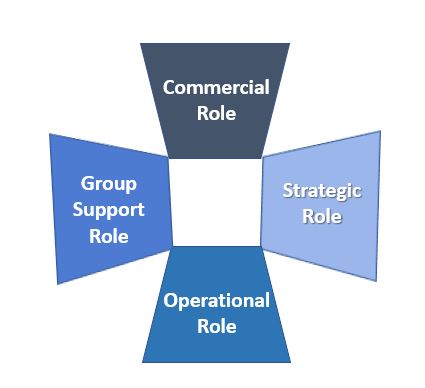
In general, rotational roles fall into these four categories (see graphic below).

Commercial roles could include sales support, marketing, external communications and sometimes includes roles that have direct interfacing with key customers – account roles. A key objective of commercial roles would be to ensure participants understand how money is made, reported, and the levers which could improve profitability, and the processes that are involved in converting operational success to money in the bank. This rotational assignment also provides an understanding of the level of customer satisfaction and where clients would like to see improvements or innovations. For more senior roles in a commercial function, the development objective could include understanding risks and opportunities and establishing a high-level plan to address both with internal initiatives and even external solutions like a merger or acquisition to address challenges and risks to customer satisfaction and the ability to deliver on customer expectations – given observed and expected changes in the marketplace, competitor offerings, etc.

Operational roles usually offer the ability to understand the daily activities and decisions which could lead to meeting or missing operational outcomes. This usually relates to impacts to the Profit and Loss Statements of a company. In these kinds of rotational assignment roles, participants learn to understand the challenges that project teams experience in delivering products or services that are attractive in the marketplace. They also learn how operational delivery can lead to optimal profitability. Concepts like LEAN, Circular economy, and agile are often concepts that are learned during assignments in operational roles.

Strategic roles are often assigned at one of the larger offices or to shadow a senior or executive leader involved in strategic projects and initiatives. During this assignment participants usually learn more about risk management, organizational strategies, and projects. Sometimes they could be involved in supporting due diligence activities for a possible merger or acquisition and may be exposed to considerations regarding organizational structure changes or changes to the legal structure of a company. During these assignments, participants understand how the company evaluates its internal and external strengths and opportunities along with possible organizational weaknesses and risks. In that landscape, the company will set strategies in motion to improve its competitiveness, its financial outcomes (P&L, Cashflow and/or balance sheet), and its ability to outmaneuver the competition in key areas. This could be as a result of acquiring and/or launching new innovative solutions or getting closer to the customers and how customers’ wishes are being met.

Group Support roles are often either in Human Resources or possibly in Procurement or any other group support (functional leadership) role where that specific participant can learn to more fully understand the challenges of balancing the needs of its shareholders, customers, employees, and supply chain partners.

How to start

Putting together a Rotational Assignment Program can take some time during the early stages and it would be very important to understand the strategic needs and objectives of the company when it comes to succession planning and key skills needed by the leaders of tomorrow. Talk to as many possible stakeholders as you can to build a successful business case and change plan addressing all concerns and needs of key stakeholders in the success of the rotational assignment plan. Talk to experts who have developed a program like this to garner any tips regarding pitfalls that they needed to navigate. Finally, commit to continue learning as you go. Get feedback and act on it and use the data gathered to drive continuous improvement activities. Use the feedback to ensure the program continues to deliver outstanding benefits in a fast-changing world which impacts your ability to attract and retain key talent on a continuous basis.

Useful posts to help with the preparation and communication of stretch/developmental assignments:

Onboarding Plan Template


Onboarding Plan Template

One of the key reasons that companies lose new hires with some experience is that they fail to support these new hires adequately during their first few months. In some companies, it can be quite hard to understand how things work there, how to fit in and be successful, feel valued and included. Having a written onboarding plan from the start is a great way to bring more clarity to the person and also help them understand expectations during the crucial early months in their new roles in the new company.

The onboarding plan can be written as early as during the recruitment process. In one best-case scenario, it was shared with a senior executive right after his interview with the CEO. It was such an unexpected and appreciated action that the executive commented how refreshing he found the transparency and it made him see the hiring company as head-and-shoulders above the competition which led to him accepting the offer and joining the company a few months later.

The Process

While the plan can help clarify the set-up and structure for a new hire, it is important to set up review meetings with the newly hired managers or key hires. In some cases, reviews with an HRBP could be useful to understand for example how performance management is organized and how the process works. Such review moments could also clarify talent development programs and processes, which is useful to know for the new hire regarding his/her own career but also for helping the new hire manage the development actions for those who report to him/her.

Review meetings with the manager that the new hire reports to could help identify priorities and understand where to connect with more people or build additional internal or external relationships. The manager can also answer questions about activities planned to ensure desired outcomes are achieved after 30-days, 60-days, and 90-days as captured in the onboarding plan.

The people side of success

The template captures not only the tasks and activities needed to succeed in a new role but also identifies people with whom to build relationships. These are important relationships and contacts that the new hire would need to establish and maintain to ensure his/her success in the long run. They could be key client contact personnel or contacts from key suppliers or subcontractors. They could also be internal – people who know how things work and who can advise on the best course of action to get something done at that company.

And it is also important to identify people who can be trusted to keep things to themselves and who could advise on who to talk to before moving in specific directions for changes the new hire would like to implement. Either the HR Director/HRBP or the new hire’s manager may be helpful to identify who those contacts may be.

Note that confidants or advisors may also be external people such as professional coaches or consultants.

Accountability

While it is important from a company’s perspective to ensure key new hires are provided with onboarding plans, completing the details and setting priorities to accomplish the outcomes defined in the plan lie with the new hire. The success of the new hire is only partially dependent on helping him/her get up to speed faster by having review meetings and an onboarding plan and giving him or her access to professional helpers and advisors. The new hire remains accountable for his or her own performance and following through on the items recorded in the onboarding plan.

When both the process of onboarding works well and the new hire holds himself/herself accountable for the outcomes produced, the risks of failure due to onboarding gaps are lowered and retention success is more likely in the medium to long term!

Useful posts for new employee/ new manager onboarding and orientations :

https://jo-anngarbutt.org/2015/09/15/new-employee-on-boarding-checklist-template/

https://jo-anngarbutt.org/2016/03/01/starting-right-new-managerleader-and-team/

4 Common Disconnects on Multi-Cultural Teams


Working on multicultural teams you may have had moments of wondering what he or she just meant by that comment? Or why will he or she not make a key decision so an activity can move forward? Cultural perspectives and ways of life may be one of the reasons that could explain those incidents.

It is fun to meet people from other cultures and learn about their lives and experiences. And at first it may be interesting to learn how their cultures vary from your own, but once you work on a project together and it is remote working, including long hours and tight deadlines those differences can start to cause friction on the team. This can slow down progress and impact team morale. Being aware of the most common inter-cultural disconnects can prevent team members from blaming it on a person and instead enter into a discussion to unpack the root cause of a lack of action, lack of decision-making or the exact opposite – too many fast actions without thinking or making decisions without considering consequences.

4 Areas of misunderstanding that can impact inter-cultural teams

Some things are smart to do in order to ensure the team understands required project outcomes and approaches to use. Aspects would include clarifying the definition of done, outlining project phases and deadlines, assigning roles and responsibilities and having regular meetings to monitor and understand progress and resolve issues that are hindering progress or pose a risk.

Some aspects may need additional attention if your team consists of a few members from very different cultures.

1. Managing to deadlines

This relates to how important team members believe deadlines are. Some may see them as a guideline while others will suffer anxiety and will work longer hours to make sure the are met. In some cultures, there is a strong emphasis on being for example exactly on time for an appointment while in other cultures it may be okay to be a few minutes late for business meetings and perhaps even a few hours late for a social engagement.

Cross-cultural impact:

  • Make sure all team members understand the consequences, knock-on effects and penalties which may be triggered if the team missed deadlines. Monitor progress and have follow-up conversations if team members are falling behind to ensure they understand the importance of their activities being completed on-time.
  • Ensure team members understand the priorities they should place on various aspects of the work that needs to be done by the deadline. Ensure it is also clear exactly what “done” means. Do you expect quality checks to be done too or just a first draft of the outcome to be available? Should it be print-ready or just ready for an internal review or further discussions?

2. Clear Role Expectations

There are differences in cultures around the meaning of “in charge” or the Subject Matter Expert (SME). In some cultures, it is customary to take the word of such a person as a mandate to perform a specific task or action exactly according to what he/she said. In other cultures, SMEs and leaders are considered more “accessible”, and dialogue is welcomed when one does not agree with a requirement or task assigned by the one “in charge.” This difference can cause confusion on teams including many different cultures. To what degree can and should instructions be discussed and challenged vs accepted? Are those in expert roles or roles with authority prepared to deal with challenging discussions and comments – if the project team will operate in a culture of open discussions?

Cross-cultural impact:

  • Have a role discussion at the start of the project and include what would be great questions to ask each role and how interaction is expected to take place on the project to maximize positive team outcomes.
  • Be sure to have further discussions highlighting best-practices during the project and as new team members join, who may have missed the original discussions around the different project roles and how to best interact with them.

3. Conflict resolution

Conflict shows up differently in each person – some people speak up and go to the “max ” to be heard and understood while others take their thoughts, feelings and especially resentment underground and do not speak out. This means that conflict can be hard to resolve and to feel comfortable that all thoughts and concerns are on the table and discussed before decisions are made. Some cultures are more likely to speak up and make sure their opinions are voiced while others might patiently and politely wait to be asked for an opinion and speaking out of turn (from their perspective) may be seen as impolite or disrespectful. In some cultures open disagreements are best avoided to maintain a cordial/good relationship with others on the project.

Cross-cultural impact:

  • Use more than one channel to check in with team members and get feedback – ask in meetings, but also check in with individual team members between meetings to understand if there is any part of the path forward chosen which concerns them.
  • If any team members are especially aggressive in voicing opinions, perhaps a quiet word might help that person to still voice opinions, but possibly in a less forceful way to avoid antagonizing anyone from a culture where a forceful (overly enthusiastic ) communication style might cause discomfort.
  • Provide training in non-violent communication and voicing messages with a healthy balance between listening and advocating. Help team members to constantly improve in understanding each other’s styles to help communication and collaboration efforts on the project.
  • When a conflict does occur, address it in a culturally-sensitive way if the disconnect could be related to a cultural difference in perspective. The objective should be to solve and address project issues in a helpful way without causing negative impacts to collaboration on the project.

4. Navigating with many languages

We all know of situations where people from the same country with the same language find it hard to communicate successfully with understanding and openness. When a team consists of many different cultures, this can be so much more confusing and frustrating.

Cross-cultural impact:

  • Agree from the start of the project to follow a few guidelines such as: For the chosen project language, native speakers are to slow down and use simple ways to bring their points across. And native speakers of the main project language will be patient with non-native speakers trying to get their thoughts across. If there is a large language ability gap between the native-speakers and other team members consider some language classes to bridge the gap.
  • Consider asking presenters/speakers at planned meetings to send out specific agenda items and a summary paragraph of the issues to be raised and discussed at least a day before the meeting. That would help non-native speakers to prepare ensuring they understand the issues and are able to fully participate in the conversation at the meeting.
  • When there are significant differences in levels of language abilities on the team, meetings may take longer, and collaboration may also be a little harder especially in a virtual/remote environment. Be sure to take this into account when planning project timelines and deadlines.

Plan ahead to succeed

Knowing you may be starting up a project with a multi-cultural team, schedule team-building activities for team members early on. This will help them get to know each other as humans/people. Establishing trust early on, can avoid frustration turning into conflict and delays in reaching project team deadlines.

Create team opportunities to get to know more about each other’s cultures. This could bridge the gap in understanding each other’s perspectives and avoid labeling, misunderstandings, and internal team misalignments..

Set continuous learning as one of the core values of the team and live it, encourage it and keep bringing the team back to what can be learned from successes and failure as the project progresses. Having a curious and learning mindset is a great way to avoid major disconnects between team members as they will engage in inquiry and advocacy vs judgment and labelling as a default behavior.