Learning from Leavers: The Power of Exit Surveys -Template


Understanding the Why Behind Employee Departure

Employee turnover can be costly and disruptive. To address this challenge effectively, we must delve deeper into the reasons why people leave. By analyzing exit data and conducting thorough exit interviews, organizations can identify underlying issues and implement targeted retention strategies.

Unexpected employee resignations can often be alarming. More so if the resignations come from star employees whom you had high hopes for in terms of future expert or leadership roles at your company. How will it impact your project and your team, you may wonder? The question I would ask is, was it avoidable?

The Exit Interview helps with gathering feedback on employees’ decisions to leave the company and what next steps they are planning to further their careers elsewhere. This structured interview can greatly support your ability to narrow down the reasons for the exit and whether you have any large internal issues to address to avoid more people leaving the company.
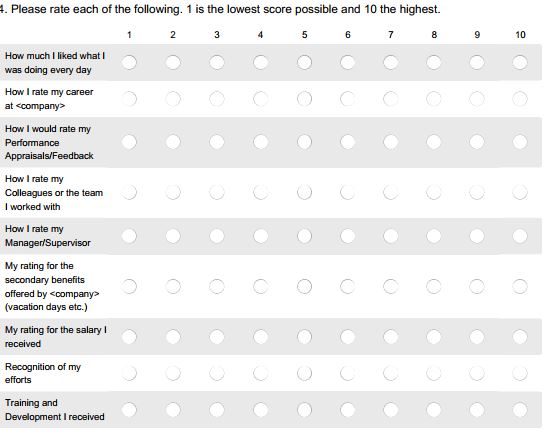
While it appears to be a written survey, it works well as an interview conducted in person and then the interviewer (usually from HR) can complete the survey later in order to capture the answers from exiting employees in a structured way. Based on your company set-up and employee conditions you may want to add some questions or statements to be rated. Just avoid overloading the employee with too many questions. Perhaps you can remove some of the existing questions if you decide to add any?

Tips:

  • You could choose to use this as a survey which the departing employees complete independently. I would however recommend that you ask these questions as part of an exit interview conducted in person as it offers the opportunity to ask follow-up questions to clarify answers to make sure you really understand the factors that led to the decision to leave the company.
  • There is a good chance that the departing employee may not tell you the truth. Sometimes they are afraid you may give them a bad reference in the future if a prospective employer calls you up. Other times they may be worried about being the whistle-blower on an existing organizational issue in terms of potential impact on any friends they still have at the organization. It may be worth considering the use of an outsourced vendor to gather feedback from departing employees before or just after they have left.
  • Do take the time to review feedback received from exit interviews to determine whether you or anyone else at your company may need to take action to improve a situation, revise benefits, improve communications to employees on specific topics, etc. These actions may be exactly what is needed to prevent other employees from leaving for similar reasons.
  • Mind confidentiality around these interviews. Be sure to be honest with the departing employee on who will get to know about the information shared and stick to the agreement.
  • Talk to those employees who remain with the company and make sure they understand how much you value their continued service and loyalty to the team/organization. When a prominent person leaves – whether a subject matter expert or a much-liked leader – people may start wondering about their own careers and consider leaving too. Taking employee retention actions and communicating especially to those in key roles will go a long way toward putting people’s minds at rest.

Employee turnover is inevitable, but it doesn’t have to be detrimental. By conducting thorough exit interviews and analyzing the data, you can transform departures into opportunities for growth. By identifying and addressing the root causes of turnover, you can create a more engaged and loyal workforce, ultimately strengthening your organization’s overall performance.

Onboarding Checklist: Set New Hires Up for Success


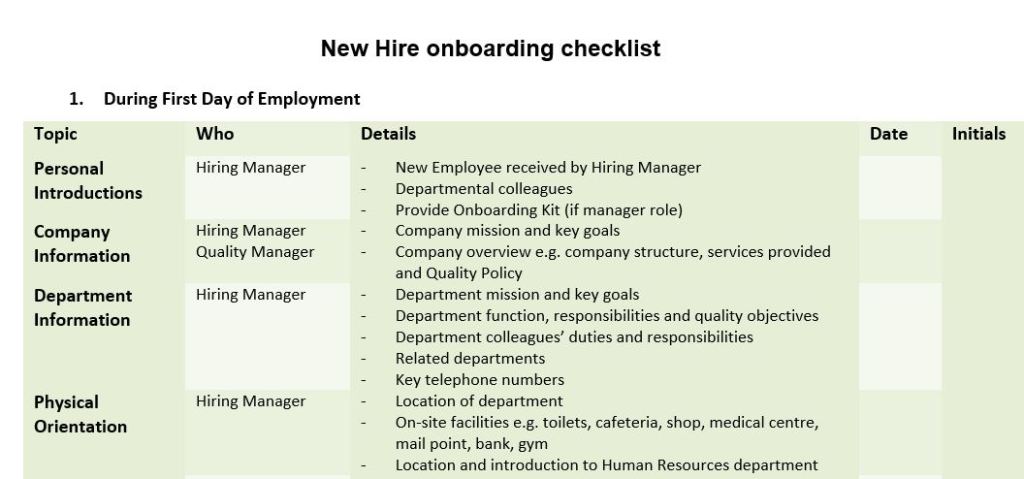
First impressions matter, especially when it comes to new hires. A well-structured onboarding process is crucial for setting employees up for success. By providing clarity, support, and a warm welcome, you can accelerate their productivity and boost job satisfaction. This process can be more successful when you create a plan and share it with the hiring manager and the new hire..

Onboarding: Your New Hire’s First Impression

A strong onboarding process is essential for employee satisfaction and retention. It’s not just about paperwork and introductions; it’s about setting new hires up for success from day one. By providing clear expectations, necessary tools, and a supportive environment, you can accelerate their productivity and foster a sense of belonging. Let’s explore how a well-structured onboarding checklist can make a difference.

People centered HR Processes MODEL

Laying the Groundwork for New Hire Success

A successful onboarding experience starts before a new employee even walks through the door. By planning and coordinating tasks in advance, you can create a seamless transition. This involves everything from communicating expectations to the new hire to aligning key stakeholders. The key players in setting up the plan and ensuring that everyone is ready to support the necessary meetings and onboarding discussions are usually the HR business partner and the Hiring manager. Effective onboarding isn’t just about paperwork; it’s about setting the stage for long-term employee satisfaction and productivity.

This template is a basic version and you should add your own additional items to help new employees understand your industry and company plus know how to navigate the office building, and business better. If the new employee will be in a customer-facing role you may need to include introductions to customers too.

A well-structured onboarding process is your secret weapon for talent retention and productivity. By providing a clear roadmap for new hires, you not only accelerate their ramp-up time but also create a positive and lasting first impression. Remember, a smooth onboarding experience sets the tone for an employee’s entire tenure.

How to record Job Applicant Interview results


Hiring the right person is crucial for your team’s success. Without a structured approach to evaluating candidates, unconscious biases can creep in, leading to suboptimal hiring decisions. By capturing detailed impressions during the interview process, you can make data-driven choices that benefit your organization.

For instance, the “like me” bias can influence hiring decisions. We all have gut feelings about people, and it’s natural to connect with some candidates more than others. However, relying solely on intuition can lead to hiring mistakes. A structured interview process helps you balance your gut instinct with objective data. By capturing detailed notes and using consistent and defined evaluation criteria, you can make more informed and unbiased hiring decisions.

The downloadable template (below) helps you gather precise feedback from candidates, ensuring their qualifications, experience, and job approach align perfectly with the job’s needs. Avoid making decisions about whether or not to hire a person during the interview. Instead, focus on gathering the relevant data needed to make those decisions. Using a structured interview record can go a long way toward helping you do just that.

Continue reading “How to record Job Applicant Interview results”

From Skills Gap to Training Plan: A Strategic Approach


Training departments are usually expected to provide an annual plan showing training classes and learning interventions which will be offered over the course of the year. Managers want to see when they can plan to send employees to attend specific training courses and they also would like to see that the training plan addresses key areas where performance improvement may be needed for their departments or business units. Lastly, there is also usually the need to create a budget for the planned training. All of these focus areas are covered in the templates that can be downloaded below.

What kind of training should you provide?

Consider the following sources of information which could help:

  • Company strategies for growth and developing into new markets or expanding in existing markets – what skills would be needed?
  • Based on current performance – which skills need to be introduced and which skills should be improved upon?
  • Looking at employee career goals, which skills do you need to focus on in order to help move employees to being promotion-ready?
  • Which skills do managers believe would help their teams succeed better given performance targets and customer demands?

Summary of the kinds of Training Needs to Identify

Tools and Templates

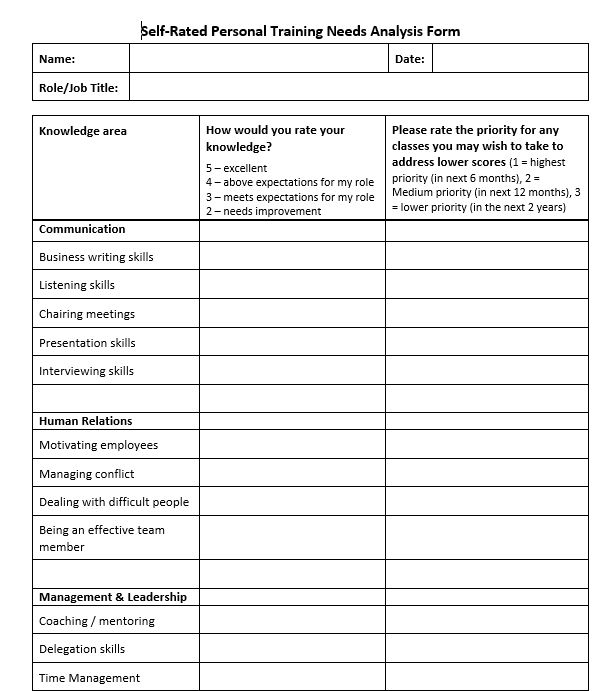
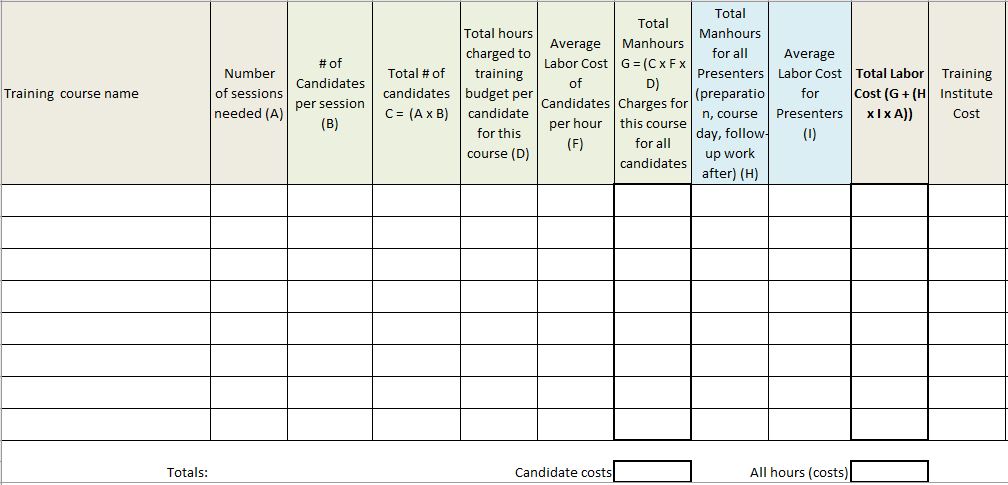
Here are three tools that can help you with conducting a training needs analysis. The first tool highlights individual training needs per employee and is based on employee self assessments. The second tool is a training needs view from a manager’s perspective focusing on the top 3 highest training needs for each employee in his/her group/team/department. The last tool helps you budget for the planned training.

  • Self-rated individual training needs. The quality of the results you obtain from this tool depends on whether you have a good career development tool/framework in place, motivated employees who maintain and work on their own development plans on an on-going basis and whether your managers/supervisors provide quality performance feedback to employees on a regular basis.
  • Manager assessment of department/team. Using knowledge of employee performance in his/her department, the manager selects the top 3 courses that each employee would need to improve own performance and/or to grow further in his/her career. Be sure to share course details with the managers too – what is the duration of the course and what aspects of the topic is covered?
  • Training needs and budgeting. This spreadsheet helps you budget for the planned courses. Check actual spending against this estimate to track the accuracy of your original budget and accurate allocation of items charged to your training budget.

Tips for training needs analysis:

  • Create a training needs analysis process that you follow consistently every year. This helps managers get into a rhythm of providing you with the required information on time for you to submit budget requests for the following year/quarter.
  • Be clear with managers which part of the training costs would be booked to their own budgets. For example – where do employees charge their time when they are in a training class? To your budget or to their manager’s budget?
  • Ask yourself how much training does it make sense to provide internally vs using an external vendor. Make wise trade-offs in terms of training costs, best value for money, expertise needed to provide the training etc.
  • Determining the training plan for the following year should also include a good review of the training evaluations and feedback obtained from course participants during the lasts year. Are your current training classes good enough or do they need to be improved or outsourced?